Clothes Moths
(Webbing clothes moth, Common clothes moth)*Tineola bisselliella*
Identification & Appearance
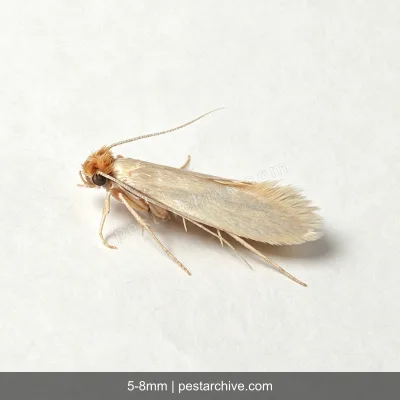
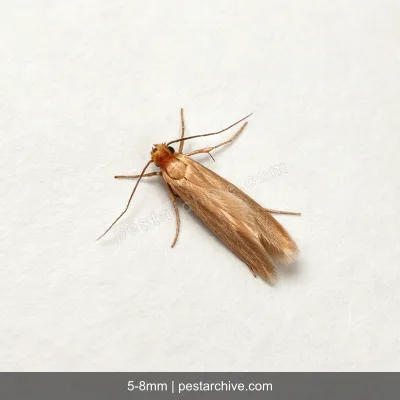
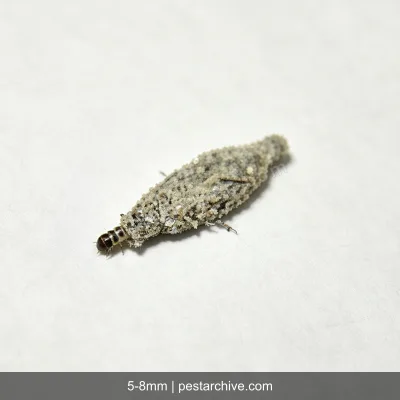
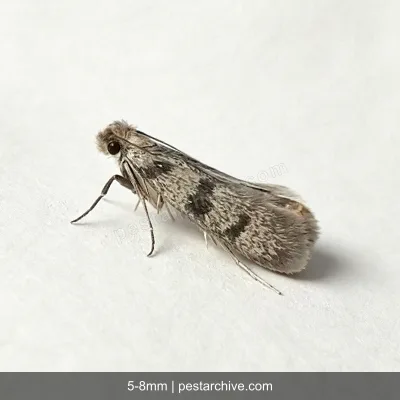
Clothes moth larvae are among the most common household fabric pests. Adult moths measure 5-8mm with a wingspan of 10-15mm, pale yellow to golden in color, with a tuft of yellowish-brown hairs on the head. Their narrow, lance-shaped forewings distinguish them from other stored-product moths. Adult clothes moths have reduced mouthparts — they do not feed at all and exist solely to reproduce. Larvae are white to pale yellow, spindle-shaped with dark brown heads; mature larvae reach 7-10mm. The two most common household species are the webbing clothes moth (Tineola bisselliella) and the case-making clothes moth (Tinea pellionella). Webbing clothes moth larvae spin silken tubes and tunnels where they live and feed; case-making clothes moth larvae construct portable tubular cases from silk and food debris that they carry with them. Clothes moths undergo complete metamorphosis: egg, larva, pupa, adult. The larval stage is the only damaging stage, lasting 30 days to several months depending on temperature and food. Adults live only 2-4 weeks, dying after mating and egg-laying. Under favorable conditions (22-28°C, 60-70% humidity), 2-3 generations per year are typical.
Habits & Hiding Places
Clothes moth larvae feed on keratin, specializing in animal-derived fibers: wool, cashmere, silk, down, hair, fur, and leather. Plant fibers (cotton, linen) and synthetics are generally unaffected. Indoors, they concentrate in: wardrobes and clothing storage — the highest-risk area. Long-stored wool sweaters, cashmere coats, down jackets, and wool blankets are most vulnerable. Carpet edges and beneath sofa cushions — where fiber lint and debris accumulate, providing habitat. Storage rooms and closets with long-stored wool products — common breeding sites, especially prevalent in second-hand clothing stores and charity clothing collections. Adult moths are nocturnal, resting on walls or in dark wardrobe corners during the day and becoming active at dusk. Females lay eggs in fabric folds and crevices; larvae begin feeding immediately upon hatching and spin silk for protection. Larvae are photophobic, usually hiding in clothing folds and under carpet edges. Adult flight is limited — they typically do not stray far from their emergence site. The primary source of household clothes moths is introduction through used wool clothing, old carpets, and similar items. Keeping clothes clean and shortening storage cycles for wool products effectively reduces infestation risk.
Health Risks & Damage
- Clothes moth larvae chew irregular holes and etched damage into wool, cashmere, silk, and other luxury fabrics. A cashmere sweater fed upon continuously in a hidden spot for weeks can develop multiple holes of varying sizes, causing hundreds to thousands of yuan in damage. Damage is often only discovered when switching seasonal wardrobes, by which time larvae may have already moved to other garments.;
- Webbing clothes moth larvae spin silk while feeding, leaving white silken tunnels and granular frass on fabric surfaces. Case-making clothes moth larvae leave tubular cases attached to clothing that are extremely difficult to remove. These contaminants render even lightly damaged garments unwearable.;
- Larval shed skins, frass, and silk webbing can be allergens, triggering skin itching and rhinitis in sensitive people. Larval bristles may also cause contact dermatitis.;
- Clothes moths are among the world's most significant pests of wool products and collectibles. In museums and heritage collections, they pose an enormous threat to animal-fiber artifacts (wool textiles, felt items) — once established, they cause irreversible damage to priceless collections.
Common Species
There are 3 common fabric-damaging pests in homes, each with distinct feeding habits and identification features.
Webbing Clothes Moth
Tineola bisselliellaAdults about 6–8mm, wingspan about 12–16mm, pale golden to light brown overall. Larvae spin silk tubes and tunnels on fabric surfaces where they live and feed; tunnels contain feces and fabric debris. Prefers wool, fur, silk, and feathers. The most common household fabric pest.
Case-Making Clothes Moth
Tinea pellionellaAdults about 6–8mm, slightly darker than webbing clothes moths, forewings with 3 dark spots. Larvae construct portable silk cases (about 10mm long) that they carry while moving across fabrics; the case color changes with the fabric being consumed. Prefers wool, blankets, and down products.
Brown House Moth
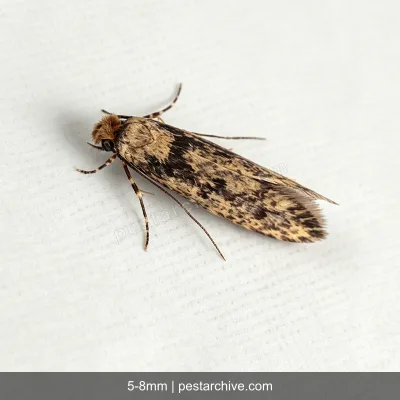
Hofmannophila pseudospretellaAdults are the largest of the 3 at about 10–14mm, dark brown with spotting. Larvae have the broadest diet — feeding not only on wool and fur but also on grains, seeds, dried fruits, cork, and various organic materials including paper. Commonly found in storage rooms, bird nests, and animal bedding. More cold-tolerant; can survive in unheated attics and storage rooms.
Season & Region
Cosmopolitan. Primary active period in summer and autumn (Jun–Oct). Larvae feed on wool, hair, fur, and feathers. High temperature and humidity accelerate reproduction. Overwinters as larva or pupa in concealed locations.
| Region | Active Period | Peak Season | Notes |
|---|---|---|---|
| N. Hemisphere Temperate | May–Oct | Jun–Aug | Summer heat drives peak reproduction |
| N. Hemisphere Subtropical | Apr–Nov | May–Sep | Longer active season; highest density in humid season |
| Tropical | Year-round | Rainy season | Year-round reproduction |