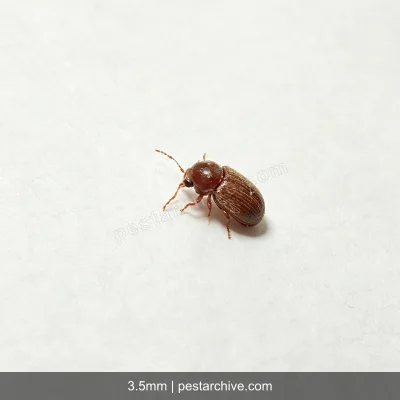
Drugstore Beetles
(Biscuit beetle, Bread beetle, Herbarium beetle)*Stegobium paniceum*
Identification & Appearance
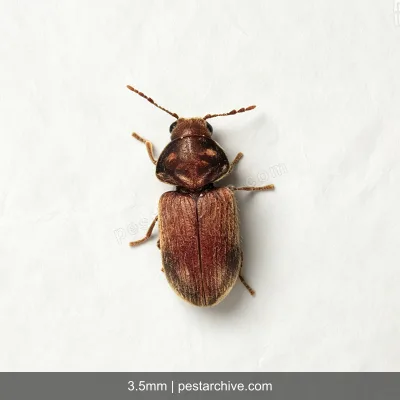
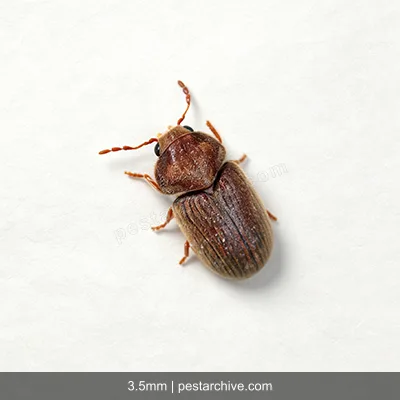
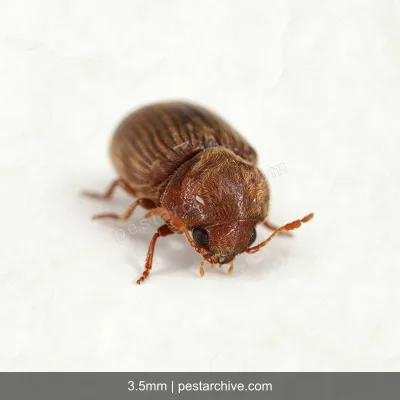
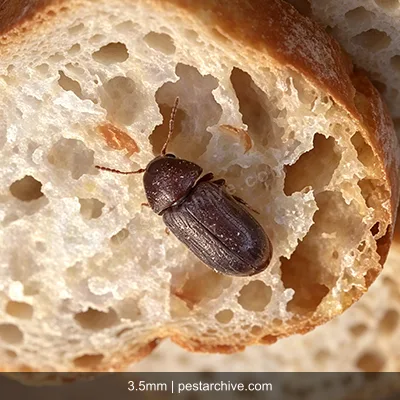
Drugstore beetles (Stegobium paniceum) closely resemble cigarette beetles but differ in having the terminal 3 antennal segments elongated and leaf-like (versus serrated). Adults measure 2-3.5mm, elongate-oval, dark brown to reddish-brown. At 25-30 C, the cycle takes 6-10 weeks with 3 generations per year. They prefer starchy and aromatic plant materials: Chinese herbs, spices, tea, dried flowers, bookbinding, and paper. Globally distributed, especially common in southern China.
Habits & Hiding Places
Drugstore beetles infest Chinese herbs (dang gui, dang shen, astragalus, goji berries, poria), spices (Sichuan peppercorn, star anise, cinnamon, cloves), tea, dried flowers, books, and paper. Indoors, they concentrate in herb cabinets, spice drawers, and bookcases. Larvae develop entirely within host materials. Adults are weak fliers with slight phototaxis. Year-round breeding in heated homes.
Health Risks & Damage
- Larvae bore into precious herbs, destroying quality and medicinal value.;
- Spices lose aroma and become contaminated with insect fragments.;
- Larvae damage bookbinding and paper, harming book collections.;
- Body fragments and frass are allergens triggering rhinitis and asthma.;
- Core prevention: seal herbs and spices in glass or metal containers, freeze new purchases at -18 C for 72 hours.
Season & Region
Cosmopolitan. 2–3 generations per year; overwinters as larva. Optimal temperature 20–25 °C, RH ≈70 %. Adults capable of flight; thanatosis reflex; prefer dim light; often fly at dusk or on overcast days. Larvae damage herbal medicines, dry biscuits, grains, books, etc.
| Region | Active Period | Peak Season | Notes |
|---|---|---|---|
| N. Hemisphere Temperate | Apr–Oct | Jun–Aug | High density in warm season |
| N. Hemisphere Subtropical to Tropical | Year-round | May–Sep | Year-round reproduction in southern regions |