Aphids
(Plant lice, Greenfly, Blackfly)*Aphis gossypii* / Aphididae
Identification & Appearance
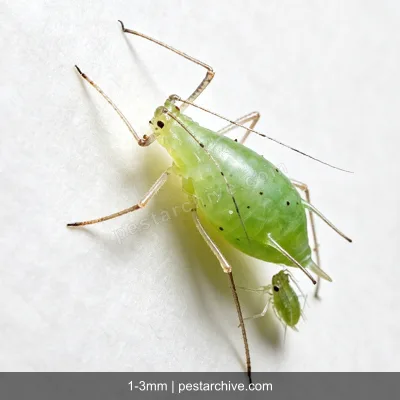
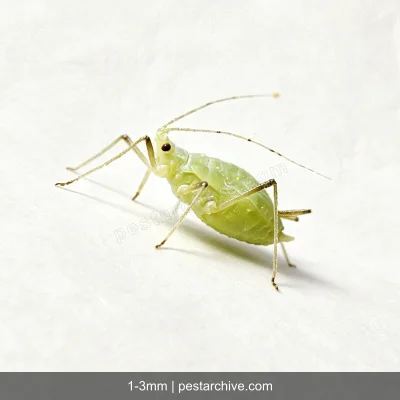
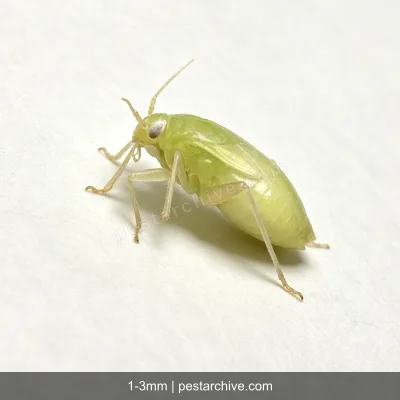
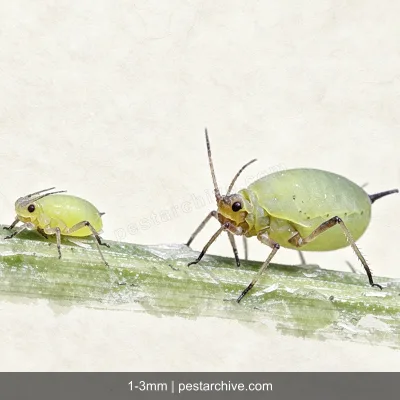
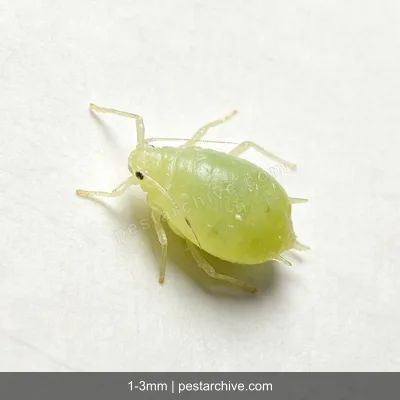
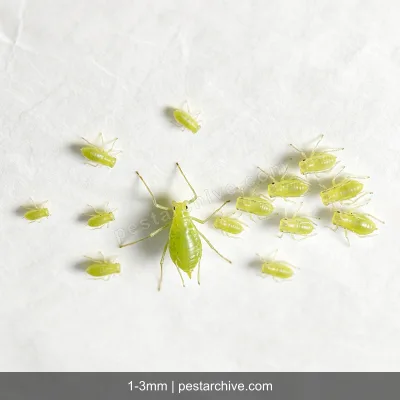
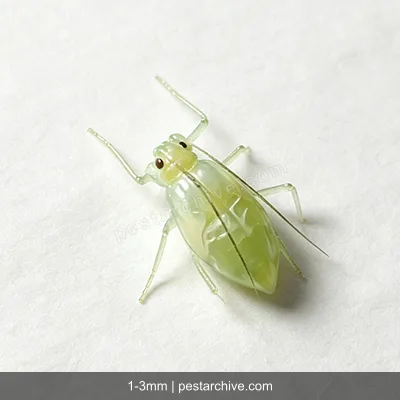
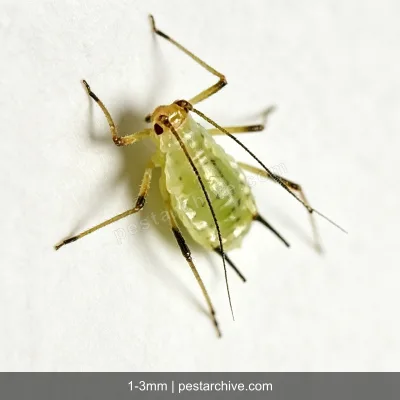
Aphids (superfamily Aphidoidea) are among the most common and fastest-reproducing pests of houseplants and gardens. Over 5,000 species exist worldwide. Common household species include cotton aphids (Aphis gossypii), green peach aphids (Myzus persicae), and rose aphids (Macrosiphum rosae). Adults measure 1-3mm, soft-bodied, pear-shaped, with color varying by species (green, black, brown, yellow, red). They have long antennae and a pair of cornicles (tail pipes) at the abdomen tip — a key identification feature. Their reproduction is extraordinary: in warm seasons, females reproduce parthenogenetically and are viviparous (giving birth to live young without mating). Nymphs mature in 7-10 days and immediately begin reproducing. Populations can double every 3-5 days.
Habits & Hiding Places
Aphids feed on plant sap, preferring the most tender tissues: new shoots, buds, and leaf undersides. Indoors, they cluster densely on new growth of roses, chrysanthemums, jasmine, pothos, and other ornamentals. They concentrate along leaf veins on the underside. Ants are often found with aphids — ants feed on aphid honeydew and actively protect aphids from predators, even carrying them to new plants. Winged aphids disperse by wind and flight to new hosts; wingless aphids crawl or hitchhike on tools and clothing. Aphids are most active in spring and autumn; populations dip in extreme summer heat. They breed year-round in heated homes.
Health Risks & Damage
- Dense clusters on new growth cause leaf curling, yellowing, and premature drop. New shoots stop growing; buds shrivel and fail to open. Hundreds of aphids on a single rose shoot can kill all new growth within 1-2 weeks.;
- Honeydew drips onto leaves and surfaces, promoting sooty mold that blocks photosynthesis.;
- Aphids vector over 100 plant viruses (green peach aphid alone). Virus damage far exceeds direct feeding damage.;
- Honeydew and body fragments can be indoor allergens.;
- Physical methods: rinse with water, spray with soapy water, introduce ladybugs. Chemical control should target early nymph stages and rotate products to prevent resistance.
Season & Region
Cosmopolitan. Spring and summer are the primary developmental seasons; two annual damage peaks: Apr–Jun and Sep–Oct. Warm, dry conditions (15–25 °C) maximize reproduction. Strong positive phototaxis toward yellow. Year-round occurrence on indoor potted plants and in greenhouses. Overwinters as eggs.
| Region | Active Period | Peak Season | Notes |
|---|---|---|---|
| N. Hemisphere Temperate | Apr–Nov | Apr–Jun、Sep–Oct | Bimodal peaks in temperate zones; overwinters as eggs |
| N. Hemisphere Subtropical to Tropical | Year-round | Apr–Jun、Sep–Oct | Year-round reproduction; two damage peaks |