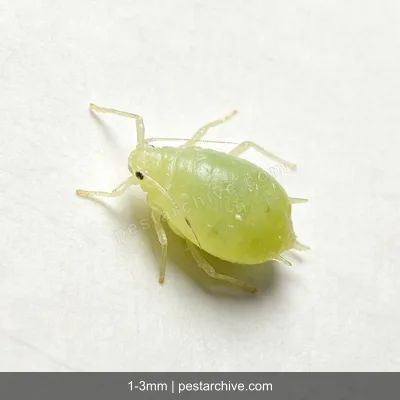
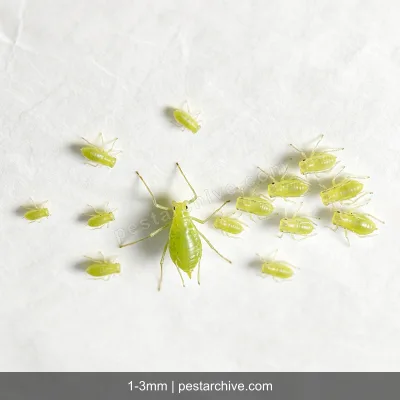
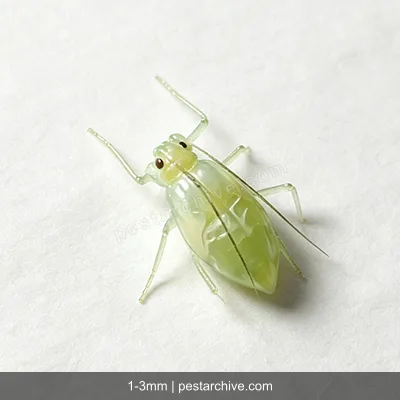
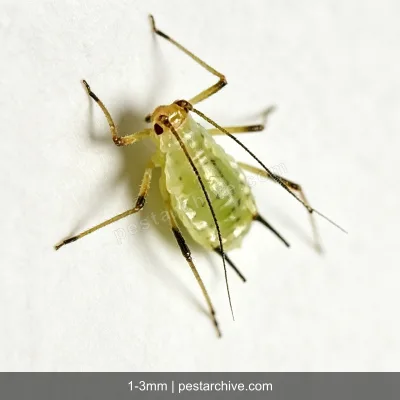
Aphids Control & Removal Guide
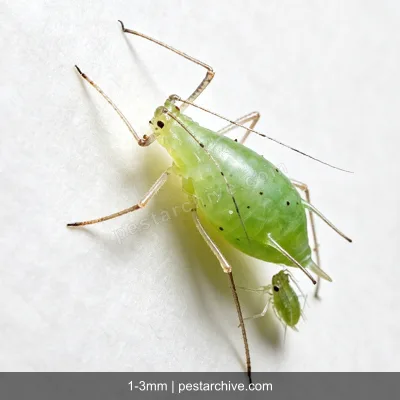
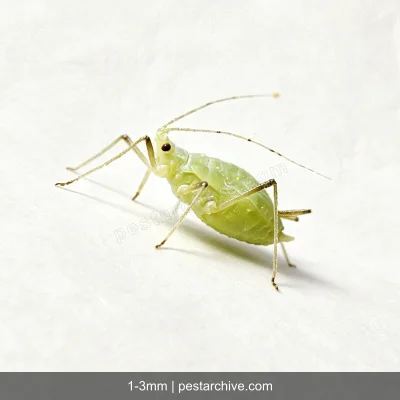
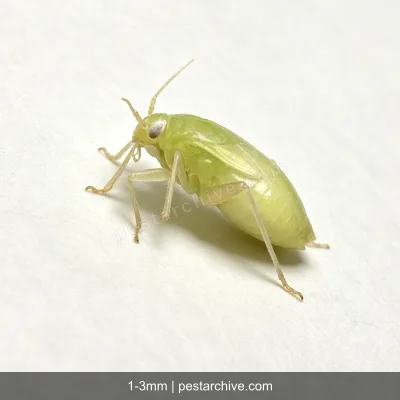
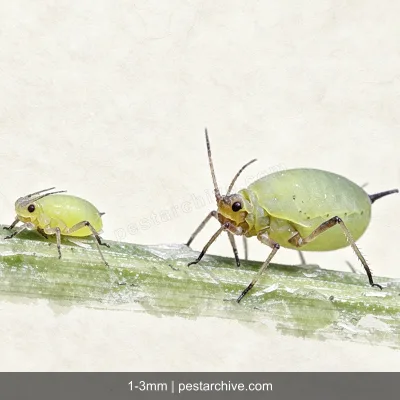
(Plant lice, Greenfly, Blackfly)*Aphis gossypii* / Aphididae
How They Get In
- New plants carry aphid eggs and nymphs; inspect new shoots and leaf undersides before purchase.
- Winged aphids enter through window gaps and screens on air currents.
- Aphids from outdoor weeds and flowers spread to indoor plants by wind or crawling.
- Ants carry aphids to new plants while tending them for honeydew.
How to Get Rid of Them
- Pre-Treatment: Isolate heavily infested plants. Prune dense aphid clusters on new shoots. Wipe leaf undersides with a damp cloth. Remove pets, children, and food.;
- Key Zones: New shoots and buds (highest concentration), leaf undersides (along veins), stem crevices, pot soil surface, balcony corners.;
- Application: Close-range fine spray directly onto aphid clusters. Spray from all angles into curled leaves. Cover leaf undersides from below. Spray stem crevices in lines.;
- Post-Treatment: Let dry in ventilated area. Repeat at 7-day intervals — populations double every 3-5 days. Avoid spraying open flowers.;
- Prevention: Control ants to reduce aphid protection and transport. Rinse plants with water or soapy water as safe physical methods. Introduce ladybugs for natural control. Maintain good ventilation — overcrowded plants favor aphid outbreaks.
Prevention & Follow-Up
Check the backs of tender new growth and flower buds regularly. If you spot clusters of aphids, blast them off with a stream of water or wipe them away with a damp cloth. Prune off heavily infested shoot tips and throw them out. Keep ants under control on your balcony—ants farm and carry aphids from plant to plant. Space your plants so air circulates freely and avoid overcrowding. Plant flowers that attract ladybugs on your balcony—they are natural aphid predators and will help keep the population in check.