

Norway Rats
(Brown rat, Sewer rat, Wharf rat)*Rattus norvegicus*
Identification & Appearance
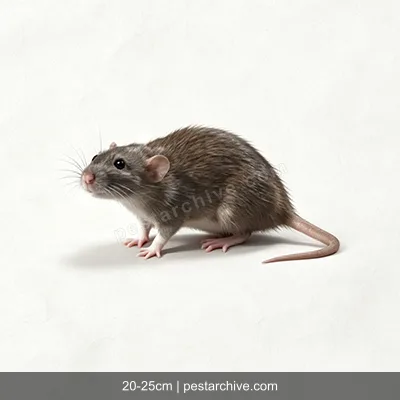
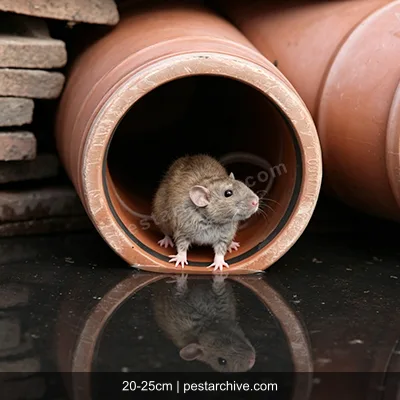
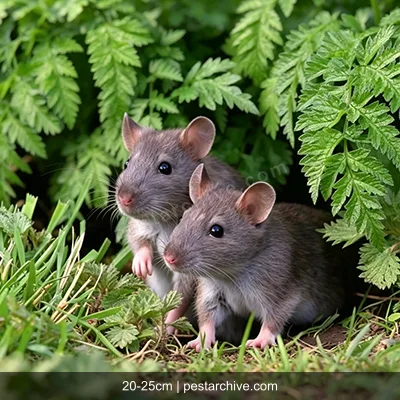
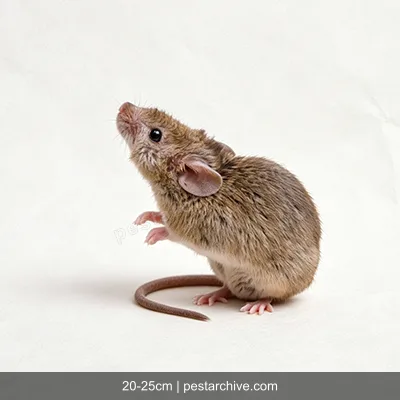
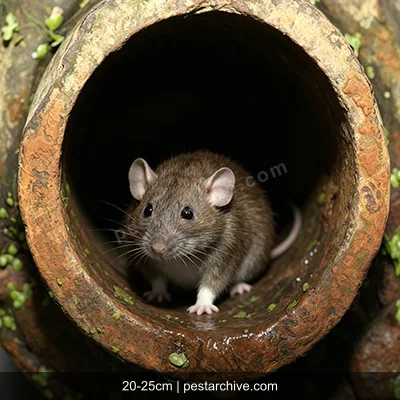
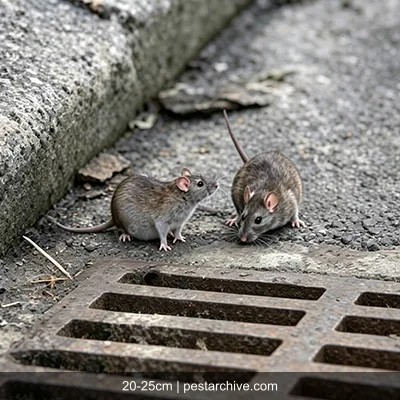
Norway rats (Rattus norvegicus), also called brown rats or sewer rats, are the largest commensal rodents. Body length 20-25cm, tail 15-20cm (shorter than body). Back is reddish-brown to gray-brown; belly is gray-white. They have a heavy, robust body, blunt muzzle, small ears held close to the head, and a thick, nearly hairless tail. They are excellent swimmers and burrowers. Daily food consumption is 15-30 grams, preferring grains, meat, and fish. They require regular access to water.
Habits & Hiding Places
Norway rats are nocturnal, most active after dusk. Their home range is larger than house mice, reaching 30-50 meters. They follow walls and burrow in soil around building foundations, in basements, and in sewers. They breed year-round with peaks in spring and autumn, producing 6-12 pups per litter and 3-6 litters per year. They typically stay below ground level (basements, crawl spaces, sewers, burrows); climbing ability is less developed than roof rats.
Health Risks & Damage
- They gnaw electrical wiring, pipes, wood, and even concrete, causing fires, water damage, and structural compromise.;
- They transmit serious diseases: leptospirosis, rat-bite fever, salmonellosis, and hantavirus.;
- Urine, feces, and dander trigger allergies and asthma.;
- A single female can produce 30-70 offspring annually; populations can rapidly spiral out of control.;
- They can attack and bite humans, especially sleeping children and the elderly. Rat bites require immediate medical attention.
Season & Region
Common in urban environments and port areas globally. Two reproductive peaks per year: spring and autumn. Year-round breeding possible; active both indoors and outdoors in warm environments.
| Region | Active Period | Peak Season | Notes |
|---|---|---|---|
| N. Hemisphere Temperate | Year-round | Spring(Mar–May)、Autumn(Sep–Nov) | Bimodal reproductive peaks |
| N. Hemisphere Subtropical to Tropical | Year-round | No distinct seasonal peak | Year-round activity; nearly aseasonal reproduction |