Signs of a Rat Infestation in Your Home







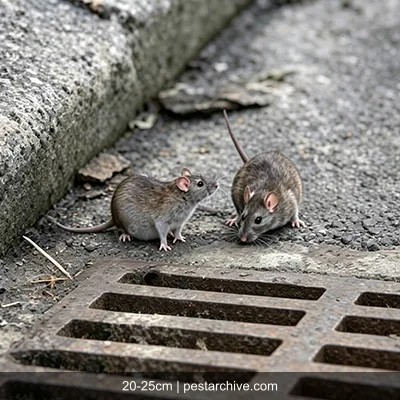
Most people discover a rat problem only when they actually see a rat — usually at night, scurrying along a wall or across the kitchen floor. But by the time you spot a live rat, the infestation is already well established. A single Norway Rat colony can number 10–50 individuals, and rats are nocturnal — you are unlikely to see them during daylight.
The smarter approach is to recognize the early warning signs that rats are present, so you can intervene before the population explodes.
### Sign 1: Droppings
Rat droppings are the single most reliable indicator. Norway Rat droppings are:
- Size: 15–20 mm long, 4–7 mm thick — significantly larger than mouse droppings (3–8 mm).
- Shape: Spindle-shaped with blunt ends (mouse droppings have pointed ends).
- Quantity: 40–50 droppings per rat per night. A cluster of dozens means multiple rats.
- Location: Found along walls, near food sources, inside cabinets, and in hidden areas (crawl spaces, behind appliances).
Fresh droppings are dark, soft, and glossy. Old droppings are gray, dry, and crumble easily. The ratio of fresh to old droppings tells you whether the infestation is active and growing or declining.
### Sign 2: Gnaw Marks
Rats must gnaw constantly to keep their incisors from overgrowing. Look for:
- Wood: Chewed baseboards, door frames, and furniture legs. Fresh gnawing has light-colored wood exposed; old gnawing is dark and weathered.
- Wiring: Rats frequently chew electrical cables — a major fire hazard. Check wiring in basements, crawl spaces, and behind appliances.
- Plastic and rubber: Gnawed pipe insulation, plastic containers, and garbage can lids.
- Food packaging: Torn bags, chewed boxes, and punctured containers in the pantry.
### Sign 3: Rub Marks (Grease Stains)
Rats have oily fur. As they travel the same routes repeatedly along walls and around corners, they leave dark grease smears called "rub marks." These appear as:
- Dark streaks along baseboards and walls at rat-height (4–6 inches above the floor).
- Smudges around pipe penetrations, gap edges, and corner junctions.
- Fresh rub marks smear when you rub them with a gloved finger; old marks are dry and flaky.
Rub marks indicate established travel routes — placing traps along these routes maximizes catch rates.
### Sign 4: Tracks and Tail Drag Marks
In dusty areas (basements, crawl spaces, garages), you may find:
- Footprints: Four-toed front feet and five-toed hind feet. Hind feet are 15–20 mm long.
- Tail drag: A thin line between the footprints where the tail sweeps the dust.
Sprinkle a light layer of flour or baby powder on suspected travel paths and check the next morning for tracks — a low-cost, effective surveillance method.
### Sign 5: Burrows
Norway Rats are burrowers. Check:
- Foundation edges — holes 5–8 cm in diameter with smooth, packed earth around the entrance.
- Under sheds, decks, and concrete slabs — rats dig under structures for shelter.
- Along fences and walls — burrow entrances often have a fan-shaped mound of excavated dirt.
- In garden beds and compost piles — disturbed soil and holes indicate burrowing activity.
Active burrows have clear entrances with no debris blocking them; abandoned burrows fill with leaves, dirt, or cobwebs.
### Sign 6: Nests
Rats build nests from shredded paper, fabric, insulation, and dried plant material. Look for:
- Nests in wall cavities, behind appliances, inside upholstered furniture, and in attic insulation.
- Accumulations of shredded material in undisturbed corners.
- A musky, ammonia-like odor in enclosed spaces — rat urine has a strong, distinctive smell.
### Sign 7: Noises
- Scratching and gnawing — heard at night from walls, ceilings, and under floors.
- Squeaking — rats vocalize, especially young rats in nests.
- Running sounds — rapid footfall sounds along ceiling joists or in crawl spaces at dusk and dawn.
### Sign 8: Pet Behavior
Dogs and cats often detect rats before humans do. If your pet:
- Stares fixedly at walls, cabinets, or appliances.
- Paw frantically at floor-level gaps.
- Becuddenly becomes agitated in specific rooms at night.
- Brings you a dead rat (cats in particular).
These behaviors indicate your pet is hearing or smelling rats that you have not yet noticed.
### What to Do When You Confirm Signs
Once you have identified two or more of these signs:
- Inspect your property for entry points — gaps ≥½ inch around foundations, pipes, doors, and vents.
- Seal all entry points immediately — see our Norway Rat Removal Guide for detailed exclusion methods.
- Set snap traps along identified travel routes — use rub marks, droppings, and tracks to guide trap placement.
- Remove food sources — store food in sealed containers; secure garbage; clean up pet food and birdseed.
- Monitor weekly — check for new droppings, rub marks, and tracks to assess whether the population is declining.