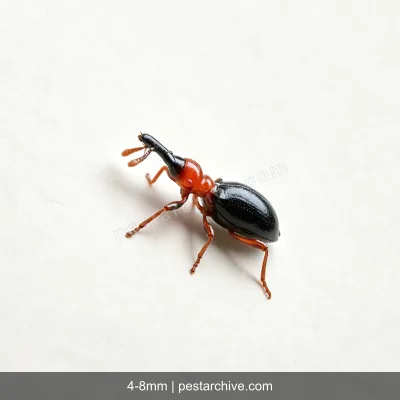
Sweet Potato Weevils
(Sweetpotato weevil)*Cylas formicarius*
Identification & Appearance
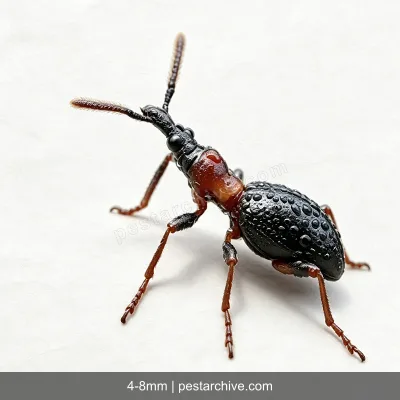
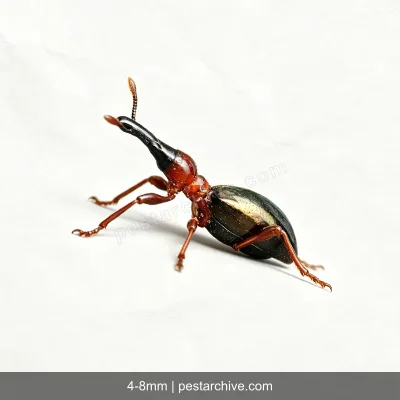
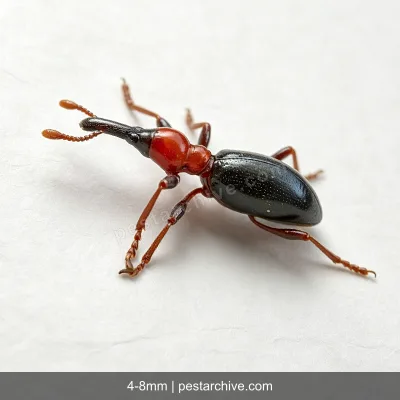
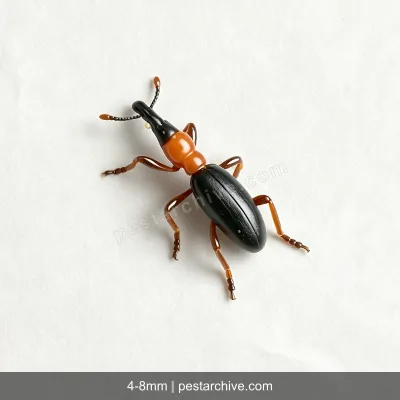
Sweet potato weevils (Cylas formicarius) are the most important pests of sweet potatoes in both storage and field. Adults measure 4-8mm, elongate, black-brown to reddish-brown, resembling large ants. The head is elongated into a slender snout. Larvae measure 5-9mm, white to pale yellow, legless, C-shaped. They bore inside sweet potato tubers, creating irregular tunnels. At 25-30 C, the cycle takes 4-6 weeks with 4-6 generations per year. This is a quarantine pest in many countries.
Habits & Hiding Places
Sweet potato weevils are specialized pests of sweet potatoes. Larvae bore and feed inside tubers; adults feed on tuber surfaces, stems, and leaves. Indoors, they concentrate in sweet potato storage areas. Adults emerging from infested tubers are active in kitchen corners and balconies. They are active at 25-30 C; refrigeration at 10-15 C significantly slows development. In home storage, weevils typically come from infested purchased sweet potatoes.
Health Risks & Damage
- Larvae tunnel inside tubers, filling them with frass. Infested potatoes rot, develop bitter off-flavors, and are completely inedible.;
- Feeding wounds allow pathogens to enter, accelerating rot.;
- Infested potatoes contain bitter terpenoid defense compounds and should be discarded.;
- One infested potato can spread to the entire batch within 1-2 months at room temperature.;
- Prevention: consume sweet potatoes quickly, store in cool ventilated conditions, inspect regularly.
Season & Region
Cosmopolitan in warm regions. Damage occurs successively from late Mar to early Nov; heaviest damage Jul–Oct. 4–8 generations per year in southern regions with overlapping generations. Adults overwinter in tubers, weeds, and soil crevices. Prefer dry conditions over wet; photophobic.
| Region | Active Period | Peak Season | Notes |
|---|---|---|---|
| N. Hemisphere Subtropical (S. China) | Mar–late-Nov | Jul–Oct | Southern sweet potato production areas; drought years worsen damage |
| Tropical (S. China lowlands) | Year-round | Jun–Oct | 6–8 generations per year |