How to Prevent and Control Sweet Potato Weevils?
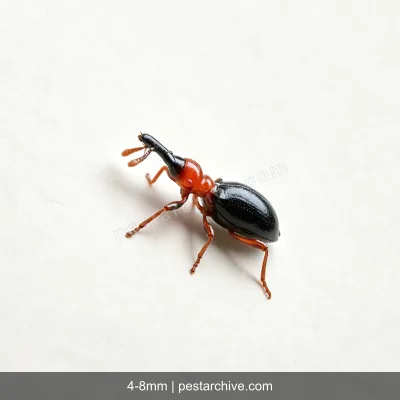
What's Eating My Sweet Potatoes?
If your sweet potatoes have holes in them, it's almost certainly the sweet potato weevil (also called the sweet potato weevil). This pest is one of the most troublesome insects in sweet potato cultivation and storage.
What Does the Sweet Potato Weevil Look Like?
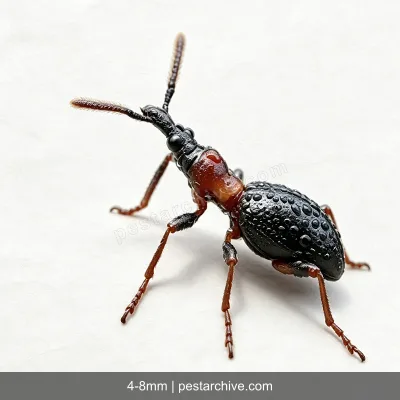
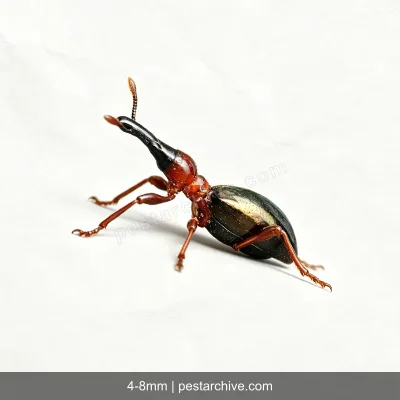
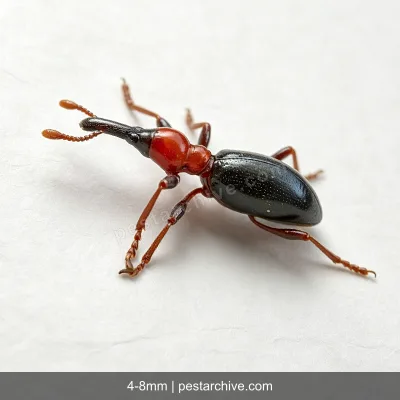
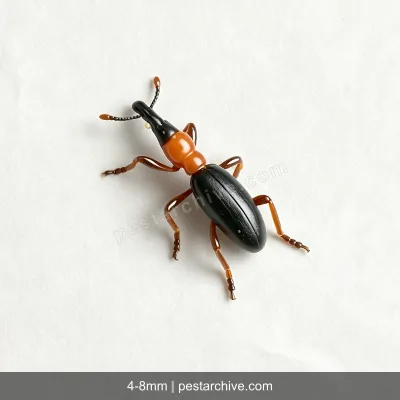
- Adult: A slender beetle, about 5-8 mm long, with blue-black or dark blue metallic sheen. Its head extends forward into a long "snout" resembling an ant's, but it's not an ant — it belongs to the family Brentidae in the order Coleoptera.
- Larva: Milky white, legless, with a pale brown head. The body curves ventrally into a C-shape, about 5-7 mm long.
How Does It Damage Sweet Potatoes?
Both adults and larvae damage sweet potatoes, but in different ways:
Adult damage:
Adults chew small holes into the surface of tubers above ground to lay eggs. They also feed on stems and leaves. They hide under soil cracks and dead leaves during the day and come out to feed in the early morning, evening, and at night. Adults play dead when startled — they tuck in their legs and freeze.
Larval damage (most severe):
After hatching, larvae burrow directly into the tuber and feed while excreting. Infested tuber flesh undergoes the following changes:
- The flesh gradually turns blackish-brown or yellowish-brown
- It develops a bitter taste and a distinctive foul odor, becoming completely inedible
- The inside of the tuber is riddled with winding tunnels packed with frass
- Damaged tubers are prone to secondary fungal and bacterial infections, accelerating rot
How to Confirm It's Sweet Potato Weevil
If harvested sweet potatoes have pinhole-sized black dots on the surface (egg-laying holes), and cutting them open reveals blackish-brown tunnels and white larvae, you can be fairly certain it's the sweet potato weevil. Severely infested sweet potatoes may look perfectly fine on the outside, but when you cut them open, the inside is entirely black and completely inedible.
What to Do If You Find Them
- In the field: Promptly dig up and remove infested tubers and plants from the field. Do not leave them in the soil
- In storage: Pick out and discard infested tubers. Do not store them together with healthy ones
- For healthy tubers: Store in a dry, ventilated area (10-15°C / 50-59°F, 60-70% humidity is optimal). Don't pile them too deep
- Prevention: Dry tuber surfaces promptly after harvest. Remove any damaged tubers before placing them in storage
- Before planting next year, avoid continuous cropping in previously infested fields. Crop rotation greatly reduces the pest source