
House Mice
(Field mouse, Deer mouse)*Mus musculus*
Identification & Appearance
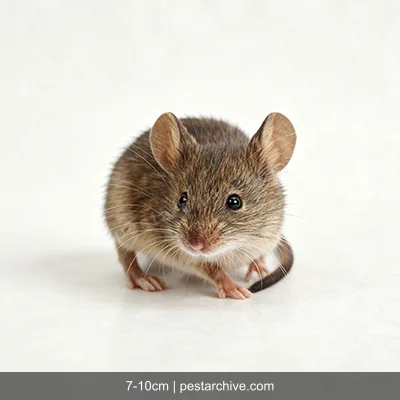
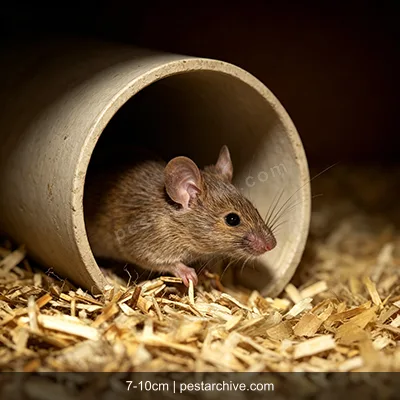
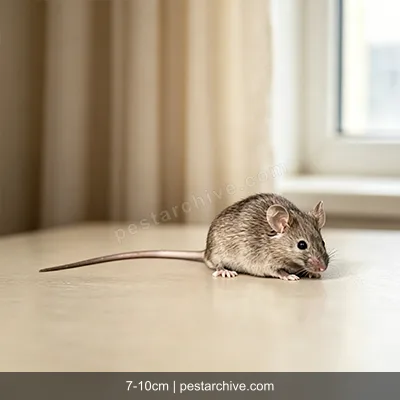
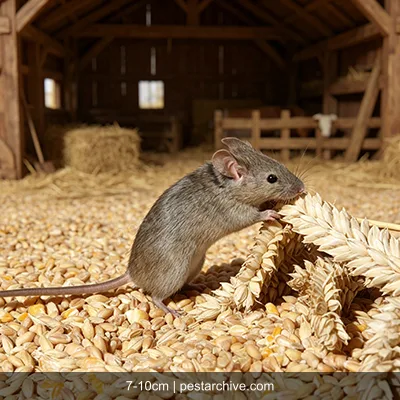
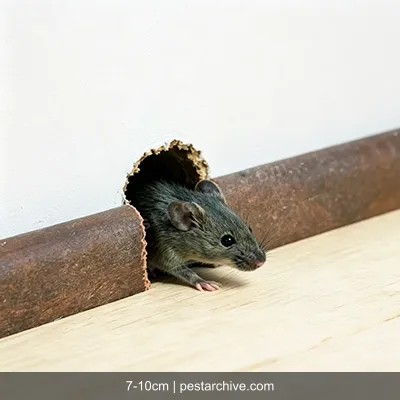
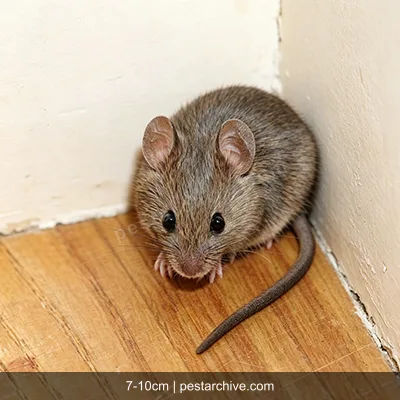
House mice (Mus musculus) are the most common rodent pests in homes. Body length 7-10cm, tail roughly equal to body length. Back is yellowish-brown to gray-brown; belly is gray-white. They are small and slender with a pointed snout, relatively large round ears, and a tail with ring-like scales. House mice are curious and explore new objects readily, traveling along walls and edges (thigmotaxis). Their home range is small, typically 3-9 meters. They eat 3-4 grams daily, preferring grains, seeds, and nuts but also consuming insects and meat.
Habits & Hiding Places
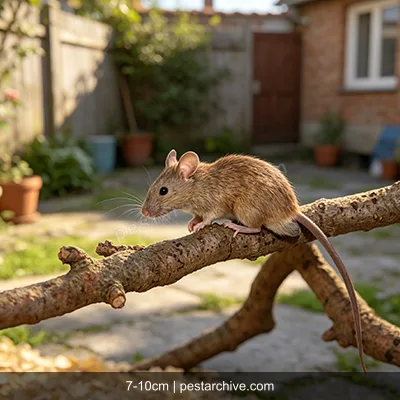
House mice are nocturnal, most active at dusk and dawn. In heated indoor environments, they are active and breed year-round. Their home range is just 3-9 meters around the nest. They follow walls and edges, leaving urine and feces trails containing pheromones. They typically stay at ground level or low elevations; climbing ability is moderate. Their most remarkable ability: they can squeeze through openings as small as 6mm.
Health Risks & Damage
- They gnaw electrical wiring, insulation, wood, and plastics, causing electrical fires and property damage.;
- They transmit diseases including Salmonella, leptospirosis, lymphocytic choriomeningitis virus (LCMV), and hantavirus.;
- Urine, feces, and shed dander are potent allergens triggering asthma.;
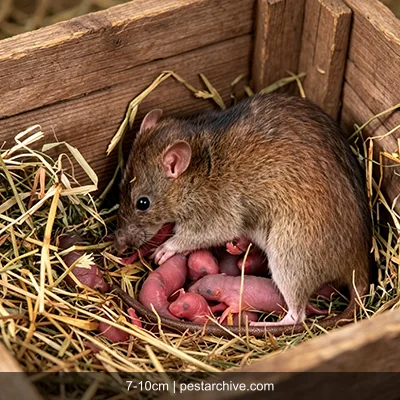
- Reproduction is explosive: females produce 5-10 litters per year, 4-16 pups per litter. Young reach sexual maturity at 6-10 weeks. Uncontrolled populations rapidly explode.;
- They chew through food packaging, contaminating stored food with feces and urine.
Season & Region
Cosmopolitan; year-round indoor activity. More frequently enters buildings to seek food and shelter as weather cools in autumn–winter. Small home range; typically active at ground level or low elevations.
| Region | Active Period | Peak Season | Notes |
|---|---|---|---|
| N. Hemisphere Temperate | Year-round | Autumn(Sep–Nov) | Peak indoor invasion in autumn–winter |
| N. Hemisphere Subtropical to Tropical | Year-round | No distinct seasonal peak | Year-round activity; slight autumn increase |