Do Ultrasonic Mouse Repellents Actually Work?

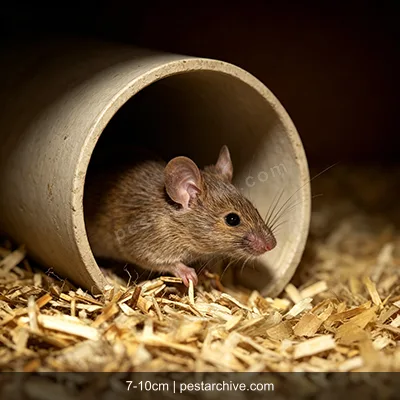
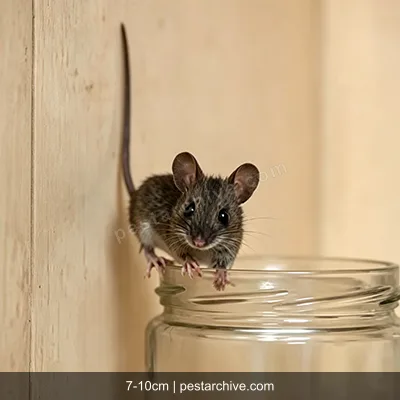
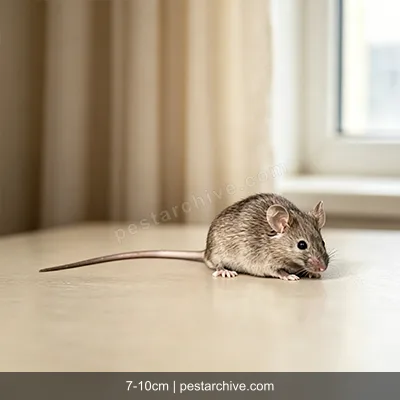

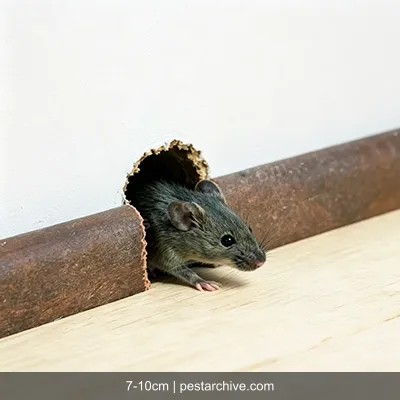


Ultrasonic pest repellers — small plug-in devices that claim to drive mice away by emitting high-frequency sounds — are one of the most widely sold and most thoroughly debunked pest control products on the market. Every major independent study over the past 40 years has reached the same conclusion: they do not work.
### How Ultrasonic Repellers Are Supposed to Work
The theory is simple: mice hear ultrasonic frequencies (above 20 kHz, the upper limit of human hearing), and these sounds supposedly irritate or frighten them enough to leave the area. Manufacturers claim that mice will abandon nests, avoid treated rooms, and eventually vacate the home entirely.
### Why They Fail — The Science
- Mice rapidly adapt to ultrasonic sound.
Multiple laboratory studies (Kansas State University 1984, University of Nebraska 1995, USDA 2001) found that mice initially show mild avoidance of ultrasonic emissions, but habituate within 2–7 days — they simply learn that the sound is not dangerous and resume normal behavior.
- Sound does not penetrate walls.
Ultrasonic waves attenuate rapidly and cannot pass through solid objects — walls, ceilings, floors, insulation, furniture, and even curtains block them. A device plugged into a kitchen outlet has zero effect on mice nesting in the wall cavity behind the stove, which is where mice actually live.
- Directionality is poor.
Even in an open room, ultrasonic coverage is uneven. Mice in corners, behind furniture, or under cabinets — exactly where they spend their time — receive minimal sound exposure.
- No effect on nesting behavior.
Studies that monitored mouse nesting in structures with active ultrasonic devices found no change in nest location, size, or occupancy. Mice continued to nest, breed, and forage in the same locations as untreated controls.
- No measurable reduction in mouse activity.
The most rigorous field test (USDA study, 2001) installed ultrasonic repellers in grain storage facilities with documented mouse populations and monitored for 12 weeks. There was no statistically significant difference in mouse activity between treated and untreated facilities.
### The FTC Has Acted Against False Claims
The U.S. Federal Trade Commission has issued warning letters and enforcement actions against multiple ultrasonic repeller manufacturers for making unsubstantiated claims. The FTC's position: there is no credible scientific evidence that ultrasonic devices repel mice or any other pest.
### What Actually Works Instead
Replace ultrasonic repellers with these proven methods:
- Exclusion: Seal every gap ≥¼ inch — this physically prevents entry. Sound cannot do this.
- Snap traps: Kill mice already inside — immediate, measurable results.
- Sanitation: Remove food and harborage — eliminates the reasons mice stay.
These three steps have been validated by decades of pest management research and are recommended by every major university extension program and professional pest management association.
### Why Ultrasonic Repellers Remain Popular
Despite complete scientific debunking, ultrasonic repellers continue to sell because:
- They require zero effort — plug in and forget.
- They feel "humane" — no killing involved.
- They are cheap — $10–20 per unit vs. professional exclusion and trapping.
- Marketing is aggressive — product packaging and online reviews (often from non-independent sources) create a perception of effectiveness.
The reality: spending $20 on an ultrasonic repeller wastes money that could purchase 10 snap traps and a tube of copper mesh — products with proven, measurable results.