Ticks
(Deer tick, Lone star tick, Dog tick, Seed tick)*Ixodes scapularis* / *Amblyomma americanum* / *Dermacentor variabilis*
Identification & Appearance
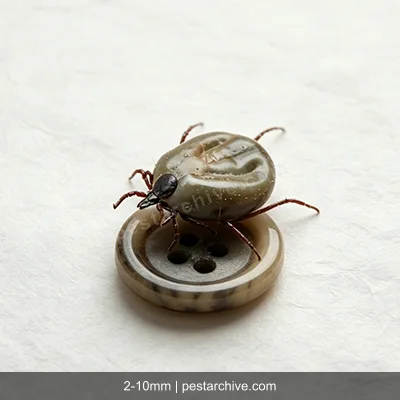
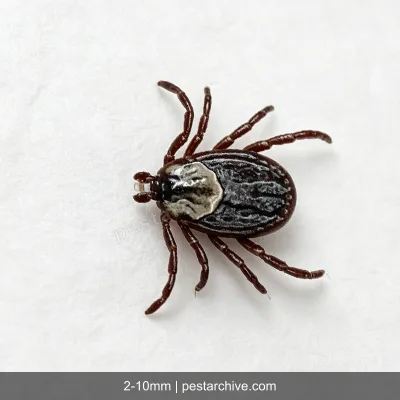
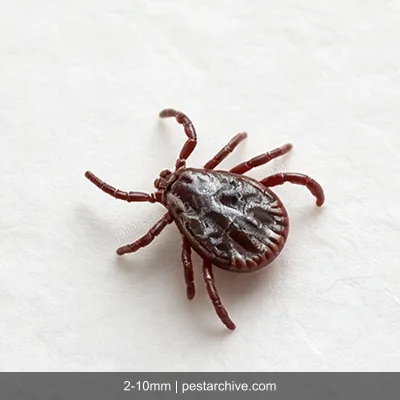
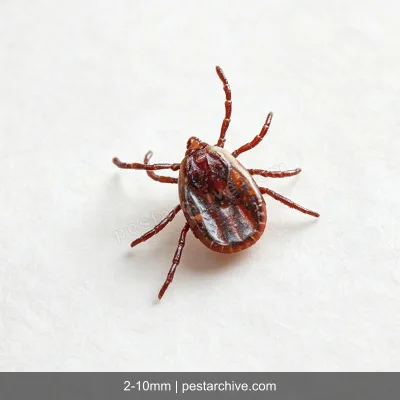
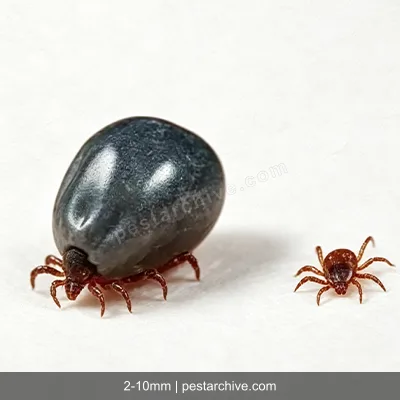
Ticks are blood-feeding external parasites belonging to the arachnid subclass Acari. Prior to feeding, adult ticks measure 2-10mm, with a gray-brown to reddish-brown flattened pear-shaped or shield-shaped body. Unlike insects, ticks have a fused body with no distinct head-thorax-abdomen segmentation. Their mouthparts are complex, consisting of chelicerae and palps with backward-facing barbs that anchor firmly into skin — hence the difficulty in removing an attached tick. Their flexible cuticle allows dramatic expansion during feeding, swelling to several times their original size, up to 2cm or more. Over 800 tick species exist worldwide. Common household-relevant species in China include Haemaphysalis longicornis and Rhipicephalus sanguineus. Ticks are three-host parasites, requiring a new host for each life stage: egg, larva, nymph, and adult. The full life cycle takes months to a year in the wild.
Habits & Hiding Places
Ticks enter homes primarily by hitchhiking on pets or people returning from outdoors. Ticks cannot fly but employ a unique foraging strategy called 'questing' — they climb to the tips of grass blades or shrub leaves and wait with forelegs extended, detecting approaching hosts through exhaled CO₂, body heat, and odor. Inside the home, ticks concentrate around: pet beds and surrounding areas (the primary indoor dispersal zone, where ticks drop off or crawl away from pets); balcony thresholds and door/window gaps (main entry routes, especially for ground-floor units with vegetation near windows); baseboards and carpet edges (indoor crawling and dispersal paths); and clothing storage areas (where outdoor clothes are kept, a common tick entry vehicle). Ticks generally cannot complete their life cycle indoors because they require over 80% relative humidity, but they can survive crawling indoors for days seeking a reattachment opportunity.
Health Risks & Damage
- Tick bites cause localized redness, swelling, pain, and warmth. Due to the barbed mouthparts, improper removal (twisting or jerking) can leave mouthparts embedded in the skin, leading to local infection, abscess formation, or granuloma requiring surgical extraction.;
- Ticks are the second most important disease vector after mosquitoes, capable of transmitting multiple serious pathogens: tick-borne encephalitis virus, Borrelia burgdorferi (Lyme disease), Anaplasma phagocytophilum (human granulocytic anaplasmosis), and severe fever with thrombocytopenia syndrome virus (SFTS bunyavirus, which carries a significant fatality rate). Different tick species transmit different disease profiles. Anyone bitten by a tick should monitor for fever, headache, or rash and seek medical attention if symptoms appear.;
- Once brought indoors, ticks can drop off pets and crawl through the home seeking a new host. They can survive days to weeks in dry indoor environments, requiring prompt and thorough removal.;
- Never remove an attached tick with bare fingers — use fine-tipped tweezers to grasp the tick as close to the skin surface as possible and pull upward with steady, even pressure. Do not twist or jerk. Disinfect the bite site with alcohol or iodine afterward.
Common Species
There are 3 common tick species in and around homes, with significant differences in the diseases they transmit. Species identification is critical for medical assessment.
Blacklegged (Deer) Tick
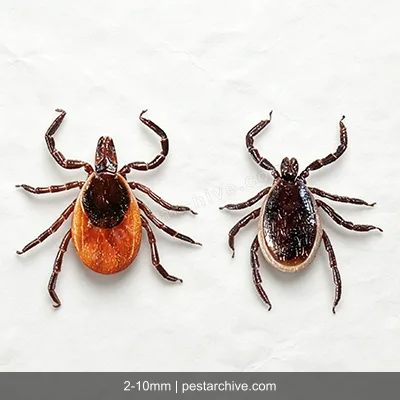
Ixodes scapularisUnfed adults measure about 3–5mm, black dorsal surface. Primary vector of Lyme disease caused by Borrelia burgdorferi. Nymph activity peaks May–July; adult peaks October–November and March–May. Found in deciduous and mixed forests, often questing on grass tips and shrub tops waiting for hosts.
American Dog Tick
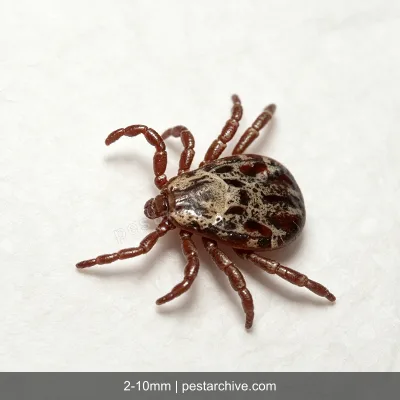
Dermacentor variabilisUnfed adults measure about 3–5mm, with white or gray markings on the scutum. Primary vector of Rocky Mountain spotted fever and tularemia. Active mainly during the day, most abundant in open grasslands and fields; adult activity peaks April–July.
Lone Star Tick
Amblyomma americanumUnfed adults measure about 3–5mm; females have a distinctive white spot on the dorsal surface. The most aggressive tick species, actively moving toward hosts. Bites can cause alpha-gal syndrome (red meat allergy) in humans — the only known arthropod capable of triggering a food allergy.
Season & Region
Cosmopolitan. Main active period Mar–Oct, peak May–Jul.
| Region | Active Period | Peak Season | Notes |
|---|---|---|---|
| N. Hemisphere Subtropical | Apr–Oct | May–Jul | Forested areas — *I. persulcatus*; hilly areas — *H. longicornis* |