Horse Flies
(Deer fly, Greenhead fly, March fly, Gadfly)*Tabanus bovinus* / Tabanidae
Identification & Appearance
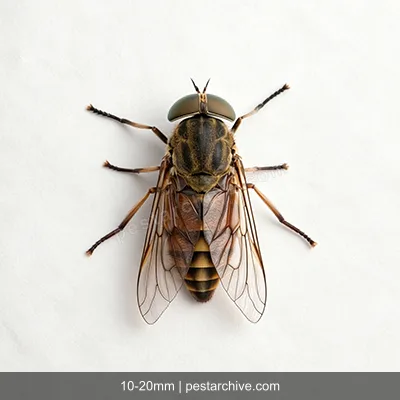
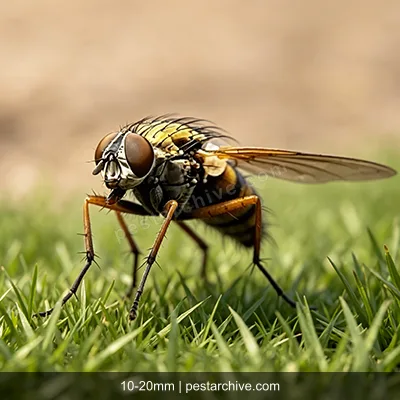
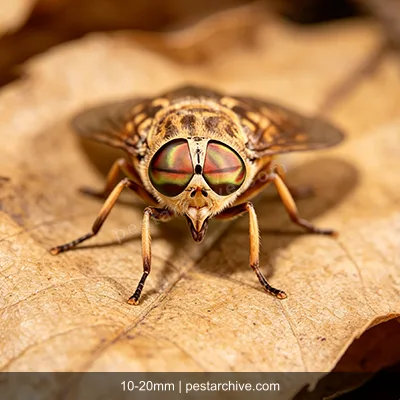
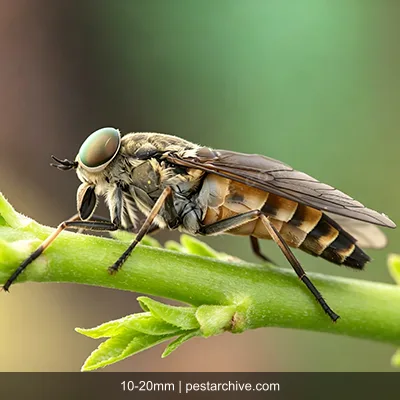
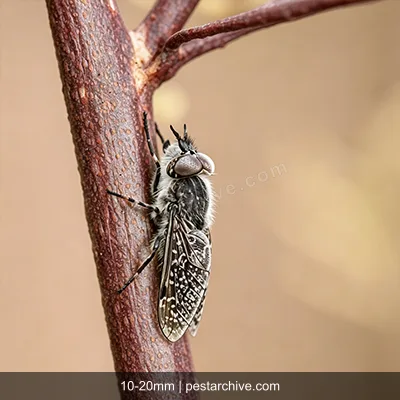
Horse flies, also known as deer flies or clegs, are large blood-feeding flies in the family Tabanidae. Adults measure 10-20mm with robust, gray-brown to black-brown bodies. Their most striking feature is their enormous compound eyes — occupying most of the head — with colorful iridescent stripes or spots. Wings are broad and produce a low buzzing sound in flight. Unlike the fine needle-like mouthparts of mosquitoes, horse fly mouthparts are blade-like and powerful — they slash the skin open, causing blood to pool, then lap up the blood. This is called the 'slash-and-sponge' feeding method. About 4,000 species are known worldwide. Common species in China include Tabanus mandarinus, Atylotus horvathi, and Tabanus trigonus. Horse fly larvae are predatory, living in water or moist soil and feeding on small aquatic organisms. In warm regions, they complete 1-2 generations per year.
Habits & Hiding Places
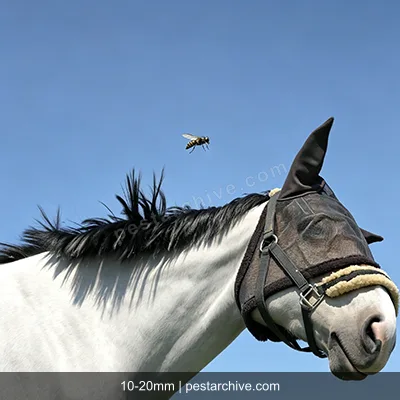
Horse flies are daytime fliers that favor bright, sunny weather; activity decreases on overcast or rainy days. They are exceptionally fast fliers — reaching speeds of 40-50 km/h — with strong flight capability and wide foraging ranges, traveling several kilometers from breeding sites to feed. Females require a blood meal to produce eggs and are attracted to dark-colored objects and CO₂ — drawn by the movement and scent of large animals and humans. Indoors, horse flies enter primarily through: doors, windows, and balconies (flying directly through open doors and wide windows); damaged or poorly-fitted screens (they can squeeze through gaps between screen and frame despite their size); and around trash cans and kitchen areas (odors that attract them to hover nearby). Horse fly larvae develop in ponds, ditches, rice paddies, and wetland environments. Homes near water bodies, pastures, or farmland face the greatest horse fly pressure in summer.
Health Risks & Damage
- Horse fly bites are immediately painful — their blade-like mouthparts cut into skin, creating a relatively deep wound that bleeds noticeably. The bite causes sharp stinging and burning pain. Localized redness, swelling, and a hard lump appear quickly, sometimes with oozing blood. Pain can persist for hours to days. Sensitive individuals may experience extensive swelling, fever, or even anaphylactic shock. Scratching readily leads to wound infection and suppuration with slow healing.;
- Horse flies are significant mechanical vectors of disease, capable of transmitting various pathogens including Francisella tularensis (tularemia/rabbit fever), Bacillus anthracis (anthrax), and various blood parasites. While transmission risk is low in modern urban settings, they remain a significant public health threat in rural and pastoral areas.;
- At 10-20mm, horse flies are large and produce an audible low buzz during flight. Once indoors, they cause significant disturbance and anxiety. Unlike mosquitoes or house flies, horse fly bites are intensely painful, and the flies persistently pursue their target until they either feed or are killed, severely disrupting indoor life and rest.
Season & Region
Cosmopolitan. Diurnal; prevalent near water bodies, pastures, and farmland.
| Region | Active Period | Peak Season | Notes |
|---|---|---|---|
| N. Hemisphere Temperate to Subtropical | May–Oct | Jun–Sep | Higher species richness in south; northern pastures peak in Jul |