Stink Bugs
(Brown marmorated stink bug, Shield bug, BMSB)*Halyomorpha halys* / Pentatomidae
Identification & Appearance
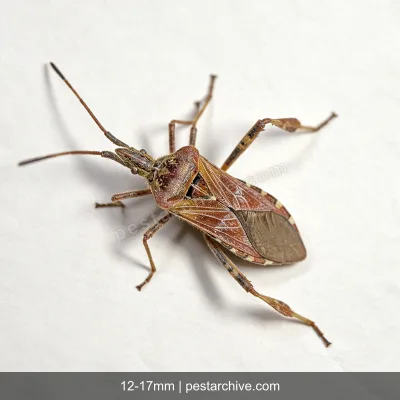
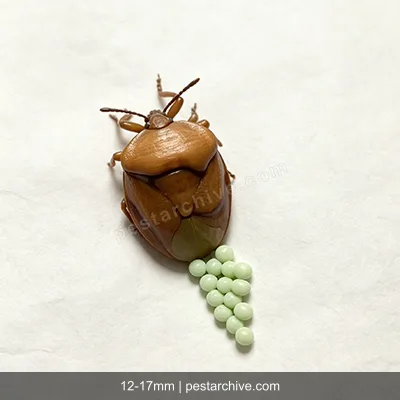
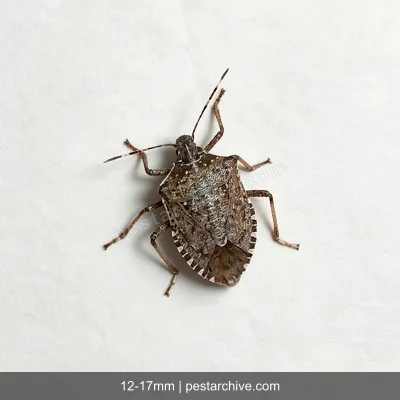
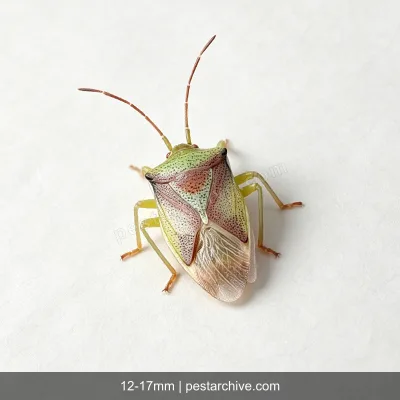
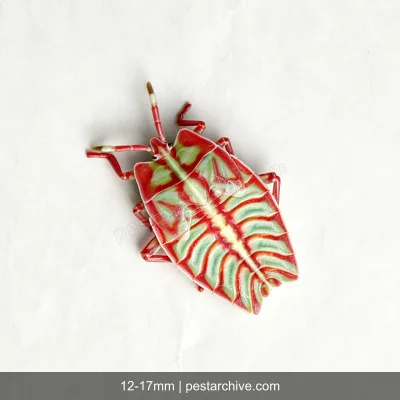
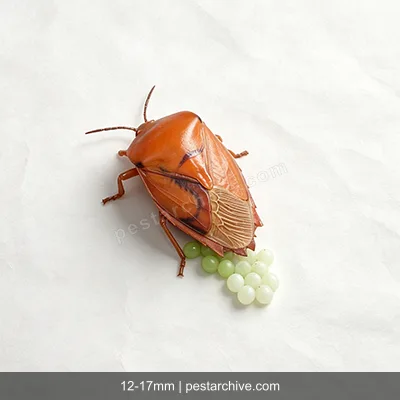
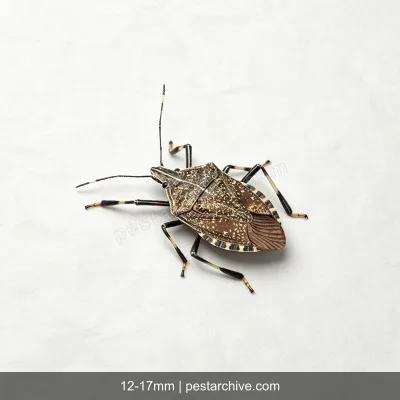
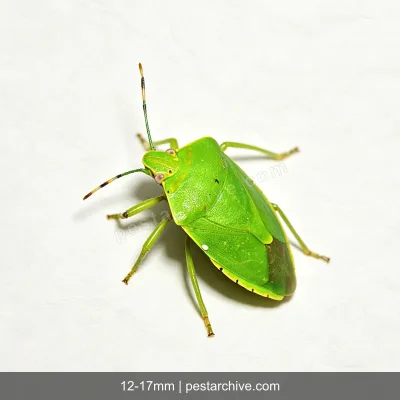
Stink bugs (family Pentatomidae) are shield-shaped true bugs. Common household species include the brown marmorated stink bug (Halyomorpha halys, 12-17mm) and Erthesina fullo (18-24mm). Adults are flattened oval or shield-shaped, gray-brown to green-brown, with dense punctures on the dorsal surface. The head is small with piercing-sucking mouthparts adapted for penetrating plant tissue and sucking sap. The most distinctive feature is their scent gland system — paired gland openings on the ventral thorax release a volatile, intensely pungent defensive fluid when the bug is disturbed. The odor is strong, persistent, and reminiscent of rotting cilantro or chemical solvent. The main chemical components are aldehydes such as trans-2-hexenal. Stink bugs are hemimetabolous: egg, nymph, adult. Nymphs resemble adults but lack wings. Under warm conditions, the egg-to-adult span is about 30-50 days, with 1-2 generations per year. Adults overwinter, migrating en masse toward buildings and wall crevices in autumn as temperatures drop. The brown marmorated stink bug, originally from East Asia, has invaded Europe and North America and become a significant invasive pest.
Habits & Hiding Places
Stink bugs feed on plant juices; in nature, they infest fruit trees, vegetables, and ornamental plants. Indoors, they are most commonly found on: windowsills and balcony frames (the classic stink bug resting spot — in autumn, adults seeking overwintering sites aggregate in large numbers on windowsills, balconies, and the sun-facing sides of building exteriors. Warm south- and west-facing windows have the highest concentrations); door/window gaps and AC duct openings (stink bugs enter through these gaps into indoor spaces or wall voids to overwinter. In older buildings, they can aggregate in thousands inside wall voids and ceiling spaces, re-emerging the following spring); curtains and window screens (indoor stink bugs land on curtains; pulling curtains closed can startle them into releasing their odor); and entry door walls and around hallway lights (phototaxis draws stink bugs to gather around lights at night). Stink bug seasonal pattern: emerge from overwintering sites in spring to feed and breed on plants; nymphs and adults are active on host plants through summer; adults migrate en masse toward buildings for overwintering in autumn (September-November). During overwintering, stink bugs are inactive and do not feed, re-emerging when temperatures rise in spring. They are capable fliers, traveling several kilometers to find overwintering sites. Homes near farmland, orchards, and green spaces face the greatest autumn pressure. High-rise units are less affected but can still experience entry through door/window gaps.
Health Risks & Damage
- The defensive fluid released when stink bugs are disturbed is intensely pungent and remarkably persistent — it can linger in a room for hours to days, contaminating curtains, clothing, and indoor air. Fluid on skin causes temporary irritation that resolves with soap and water washing. Eye contact causes stinging and conjunctival congestion; flush eyes promptly with water.;
- The odor produced by stink bugs can cause physiological discomfort in some people — nausea, dizziness, throat irritation, and appetite loss. In enclosed spaces where multiple stink bugs release fluid simultaneously, the concentration can force residents to temporarily leave the room.;
- During overwintering, large stink bug aggregations in wall voids and ceiling spaces produce ongoing odors as they die and decompose, and attract carpet beetles, ants, and other scavengers. Surviving adults emerging from crevices as temperatures rise in spring cause further indoor disruption.;
- Stink bugs do not bite humans, transmit diseases, or damage building structures or furniture. Their impact centers on the psychological discomfort and physical irritation from their odor. The brown marmorated stink bug is an important agricultural pest of fruit trees and vegetables, but indoors, stink bugs are primarily a nuisance issue.;
- Key control measures: physical exclusion — sealing door/window and wall gaps in autumn, installing tight-fitting screens, minimizing unnecessary nighttime lighting. Indoor stink bugs should be removed with a vacuum cleaner or swept into a container and released outdoors; avoid crushing or slapping.
Season & Region
Cosmopolitan in warm regions. Large-scale emergence after temperatures rise (from March). Adult oviposition period mid-Mar to early Oct, with peak egg-laying in Apr–May. Ejects corrosive defensive secretion when disturbed. Strong positive phototaxis; easily enters indoors through door/window gaps at night.
| Region | Active Period | Peak Season | Notes |
|---|---|---|---|
| N. Hemisphere Temperate | Apr–Oct | May–Jul | Emerges after spring warming |
| N. Hemisphere Subtropical | Mar–Nov | Apr–Jun | Oviposition peak Apr–May |