What Do Powderpost Beetles Look Like?
What Do Powderpost Beetles Look Like?
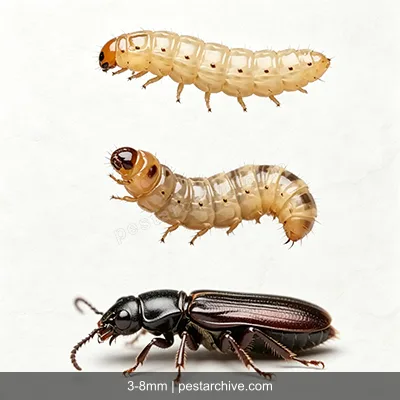
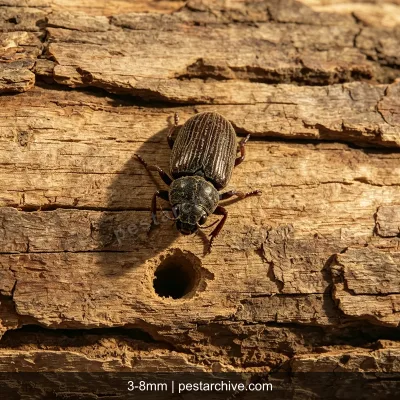
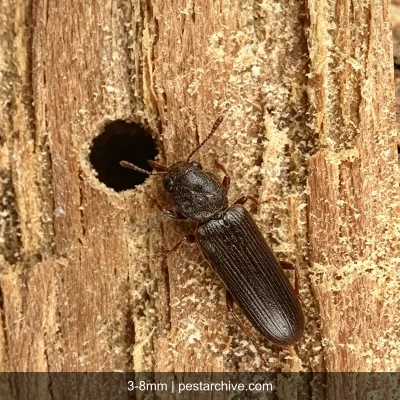
Powderpost beetles (fěn dù) are the most common type of wood borer, belonging to the family Bostrichidae or Lyctidae in the order Coleoptera. Knowing what they look like helps you spot them early and act fast.
What do the adults look like?
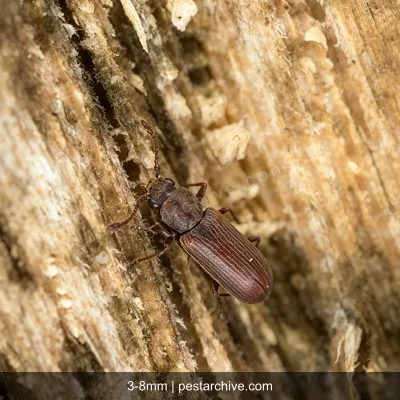
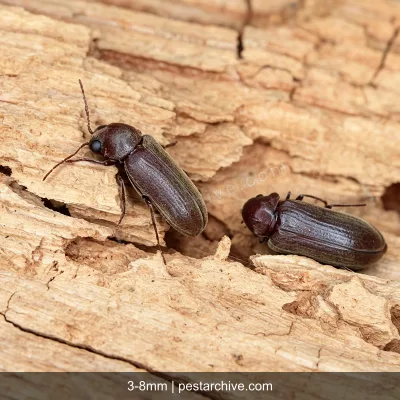
Adult powderpost beetles are very small:
- Body length: 3–5 mm, smaller than a sesame seed
- Shape: Cylindrical or elongated oval, slender body
- Color: Dark brown to reddish brown; some species are black
- Head: Tucked under the pronotum, so you can barely see it from above
- Antennae: Clubbed at the tips, like tiny drumsticks
What do the larvae look like?
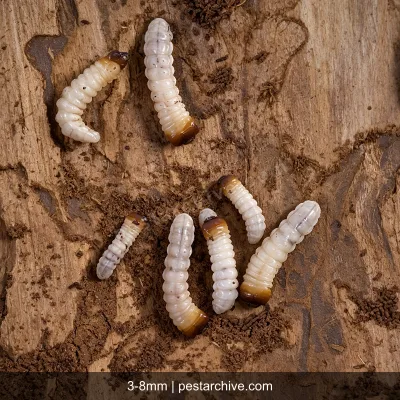
The larvae are the ones that do the real damage to wood:
- Body length: 3–6 mm, slightly larger than adults
- Shape: Creamy white to yellowish white, soft body curled into a C shape
- Thorax: Three pairs of tiny, reduced legs—barely noticeable
- Mouthparts: Chewing type, designed to gnaw through wood
Signs of powderpost beetle damage
Types of wood they attack
Powderpost beetles can live in both hardwoods and softwoods. They especially love:
- Softwoods like pine and fir
- Bamboo products (bamboo flooring, bamboo furniture)
- Engineered wood like plywood
Common items they damage
- Solid wood furniture (especially older pieces)
- Wood flooring (especially on ground floors where it’s damp)
- Wood beams and structural timbers
- Picture frames and wooden crafts
- Bamboo mats and blinds
Exit hole characteristics
When adult beetles emerge from the wood, they leave behind:
- Small round holes, 1–2 mm in diameter
- Fine, flour-like wood dust around the holes
- The wood surface looks peppered with tiny holes, as if shot with a pellet gun
How to tell powderpost beetles from other wood borers
Powderpost beetle holes are the smallest, most perfectly round, and leave the finest dust. If you see pinhead-sized round holes with fine powder around them on your furniture, it’s almost certainly powderpost beetles. Bigger holes and coarser dust usually mean a different type of wood borer.
How to tell if the infestation is active or old
Fresh holes have bright yellowish powder around them—touch them and the dust sticks to your finger. Old holes have smooth edges the same color as the wood, with no powder around them. If you only find old holes and no fresh dust, the borers have either left or died, and you don’t need to treat.