Does the appearance of small holes and wood shavings on wooden furniture mean there are borers?
Does the appearance of small holes and wood shavings on wooden furniture mean there are borers?
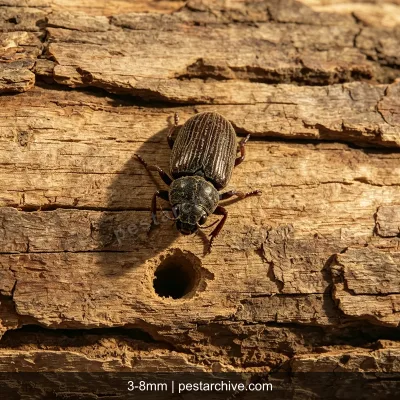
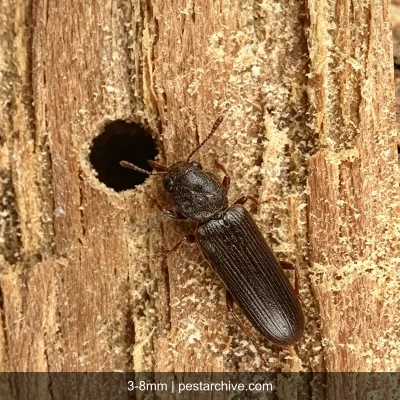
Small holes on wooden furniture accompanied by fine wood shavings do indicate wood-boring insects are present. The holes are about 1-2 mm in diameter; the falling powder is a mixture of frass and wood shavings expelled by the larvae. Here is a detailed explanation and how to deal with it.
Why does this happen?
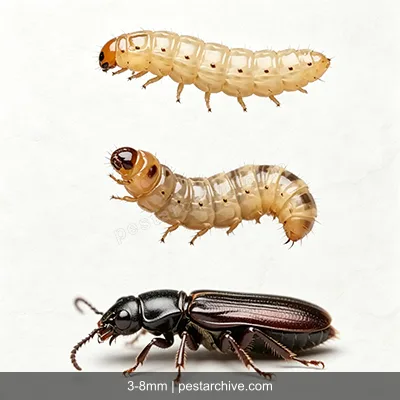
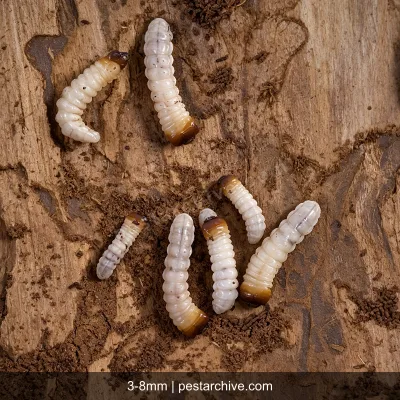
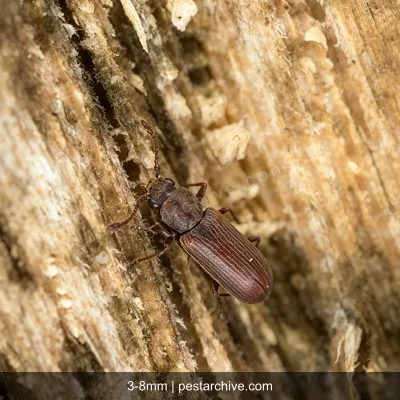
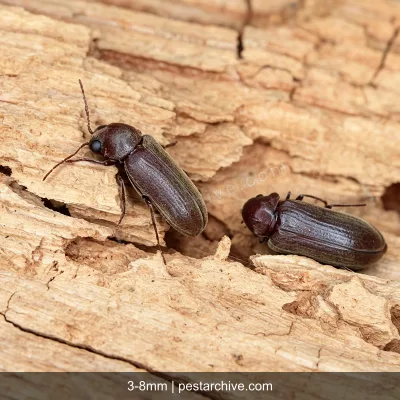
Wood borers (larvae of beetles such as furniture beetles and powderpost beetles) feed inside the wood. The larvae, 2-5 mm long, bore tunnels through the wood. When they mature into adults, they bore out through the surface, leaving behind small round exit holes. The fine powder is the mixture of frass and wood shavings expelled from the tunnels, commonly called "bore dust."
Life cycle of wood borers
The complete cycle is: adults lay eggs in wood cracks or old exit holes → eggs hatch into larvae → larvae bore and feed for 1-2 years → pupate → adults emerge, mate, and lay eggs again. So when you see exit holes, several generations may already be hiding inside the wood, which is why thorough treatment is needed.
Which furniture is susceptible?
- Old furniture and old wood — the longer they have been stored, the higher the risk.
- Pine furniture — softer wood preferred by borers.
- Old wooden flooring — especially in damp ground-floor environments.
- Wooden door and window frames — near walls and floors.
- Wooden crafts and antique furniture.
Damage severity
- Mild: a few scattered holes; the furniture structure is still sound.
- Moderate: many holes; tapping produces a hollow sound.
- Severe: the interior is hollowed out; the surface depresses with light pressure.
Emergency treatment
If borer damage is found, act immediately:
- Surface spraying — spray dinotefuran-containing household insecticide evenly over the holes and furniture surface; the liquid penetrating the holes kills larvae inside.
- Injection method — use a syringe to inject dinotefuran solution into the holes for more thorough results.
- Surface sealing — after treatment, seal the holes with wax or wood putty to prevent new adults from emerging.
- Environmental control — reduce indoor humidity (borers cannot survive in dry wood) and maintain ventilation.
Post-treatment observation
Check 1-2 weeks after treatment. If no new shavings appear, the infestation is under control. If new shavings appear, some larvae deep inside have survived and need to be treated again.