What is the difference between wood borers and longhorn beetle larvae?
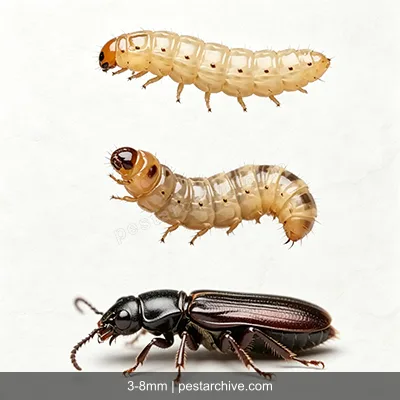
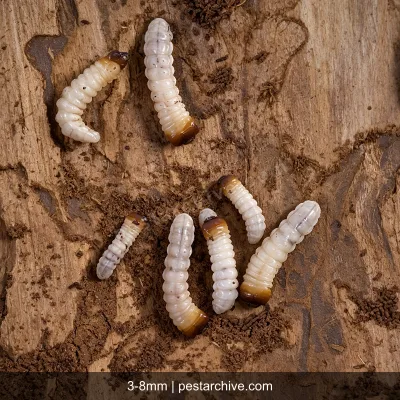
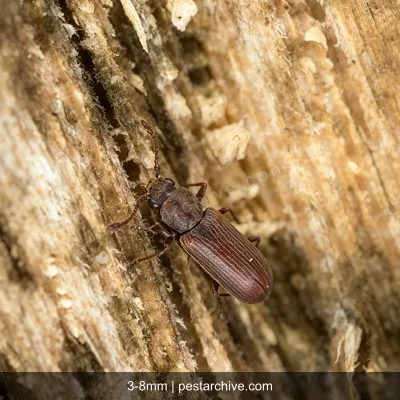
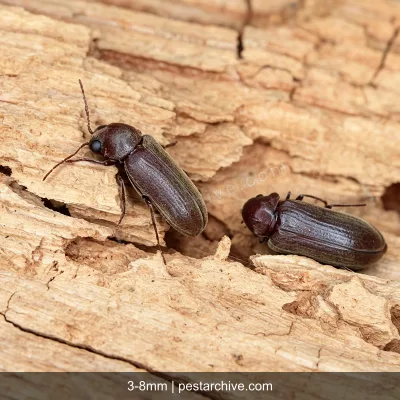
What is the difference between wood borers and longhorn beetle larvae?
Although both are wood-boring pests, wood borers and longhorn beetle larvae differ significantly in size, damage patterns, and severity.
Size difference
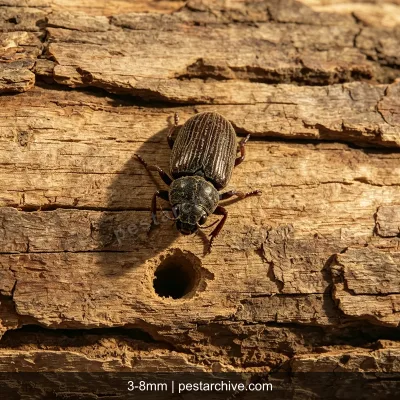
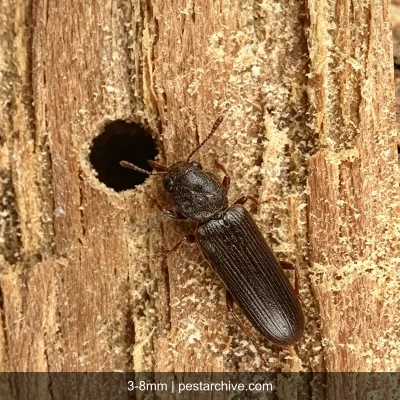
- Wood borers (powderpost beetle, false powderpost beetle larvae, etc.): very small, only 3-5 mm, like grains of rice.
- Longhorn beetle larvae: much larger, growing to 3-5 cm, as thick as a finger.
Hole difference
- Borer holes: small and round, 1-2 mm in diameter, like pinholes.
- Longhorn beetle holes: large and oval, 5-15 mm in diameter, as thick as a pencil or finger.
Frass (wood shavings) difference
- Borer frass: fine and flour-like, similar in color to the wood.
- Longhorn beetle frass: coarse shavings and particles, like sawdust, darker in color.
Wood damage difference
- Borers: create a network of fine tunnels; the surface looks riddled, but structural strength is not immediately affected.
- Longhorn beetle larvae: create large tunnels, hollowing out significant spaces inside the wood, severely compromising structural strength.
Wood preference difference
- Borers: mainly attack furniture, flooring, and wooden crafts — dry wood, commonly pine, poplar, and other softwoods.
- Longhorn beetle larvae: attack both live trees and freshly cut timber, as well as structural timber like beams and columns in buildings.
Damage cycle difference
- Borers: 1-2 generations per year; require ongoing control once found.
- Longhorn beetle larvae: larval stage lasts 1-2 years, slowly feeding inside the wood; damage is often severe by the time it is discovered.
An easy distinguishing feature
In the quiet of the night, listen close to the infested wood — if you hear a "clicking" gnawing sound, it is likely longhorn beetle larvae, as they are large and their chewing is audible. Borers are too small for their chewing to be heard.
Treatment
Both are treated similarly — injecting dinotefuran-containing household insecticide into the holes. However, longhorn beetle tunnels are larger and require more insecticide, and their damage is more severe, often requiring professional treatment.