What Do Drugstore Beetle Larvae Look Like?
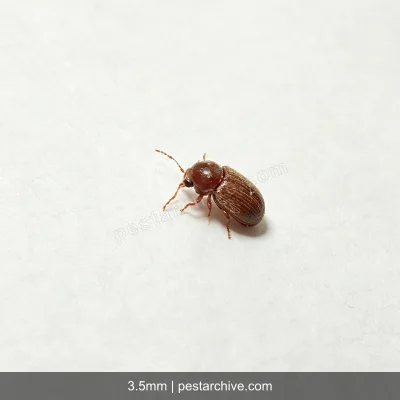
What Do Drugstore Beetle Larvae Look Like?
Drugstore beetle larvae are an important clue for identifying this pest. Learning to recognize them helps catch an infestation early and prevent large-scale herb damage.
Appearance
- Size: about 4–5 mm long; body curves ventrally into a typical C-shape
- Color: creamy white or pale yellow, with a slightly translucent quality
- Head: pale yellowish-brown or light brown, noticeably darker than the body; chewing mouthparts
- Thoracic legs: three pairs of short legs, but they move slowly and aren't skilled crawlers
- Body surface: wrinkled with sparse fine hairs — not smooth-looking
How They Differ from Common Stored-Product Pest Larvae
- Drugstore beetle larva vs. lesser grain borer larva: lesser grain borer larvae are plumper with a more pronounced C-curve; drugstore beetle larvae are slightly smaller and more slender
- Drugstore beetle larva vs. cigarette beetle larva: the two are very similar and hard to distinguish with the naked eye, but drugstore beetle larval antennae are slightly longer than those of cigarette beetle larvae (requires a magnifying glass to observe)
Life Habits
- Upon hatching, the larva immediately burrows into the herb or dried fruit flesh to feed
- It hides inside the herb, eating tunnels as it goes and defecating along the way
- Break open an infested herb and you'll see the larva wriggling inside, surrounded by granular droppings
- The larva spends its entire life hidden inside the food, avoiding light, until it's fully grown and pupates at the end of its tunnel
How to Detect Larval Infestation
- Check the herb surface for tiny pinhole-sized round holes (larval entry holes or adult emergence holes)
- Gently press the herb — if it feels hollow or soft, the interior may have been eaten out
- Break open any suspicious herb and check the inside for larvae or droppings
- Check the bottom of herb drawers or jars for fine granular droppings