Termites vs. Ants: What's the Difference?
What's the Difference Between Termites and Ants?
Many people can't tell termites and ants apart, but they're completely different insects. Termites belong to the order Isoptera, while ants belong to Hymenoptera. Here are the key differences.
Appearance
| Feature | Termite | Ant |
|------|------|------|
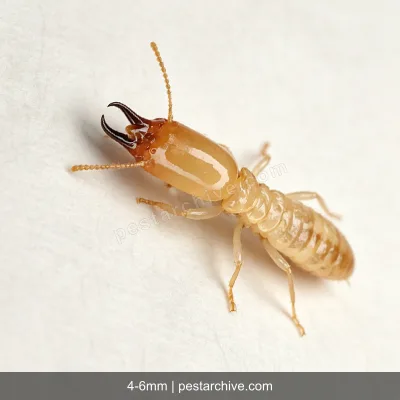
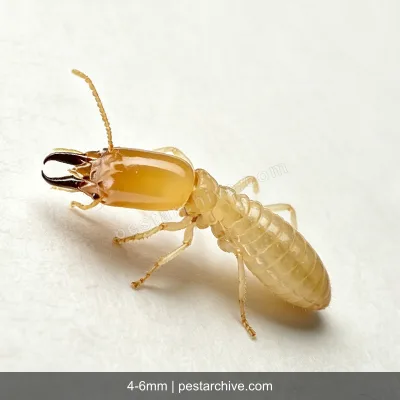
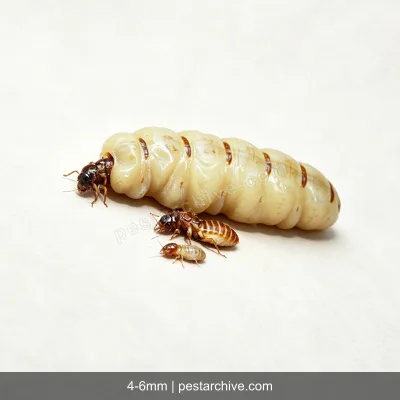
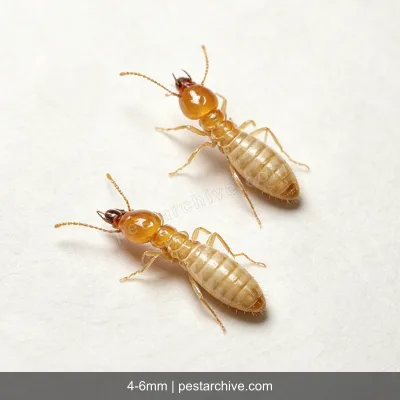
| Body color | White or light brown | Black, dark brown, or red |
| Body length | Workers 4–6 mm, soldiers up to 10 mm | Workers 2–8 mm |
| Waist | Thick waist, no visible narrow segment | Distinct pinched waist |
| Antennae | Beaded (straight and bead-like) | Elbowed (bent at a sharp angle) |
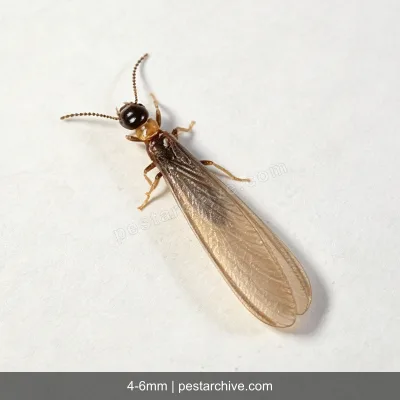
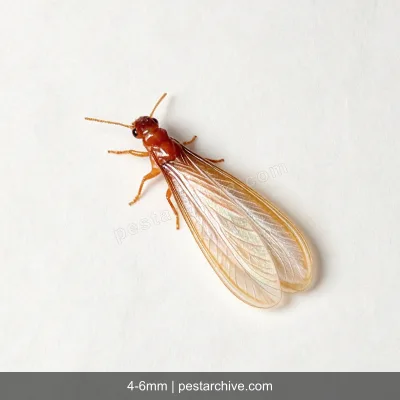
| Wings (winged stage) | Front and back wings equal in size | Front wings larger than back wings |
| Wing texture | Translucent, with fine dense veins | Clear or semi-transparent |
Behavior Differences
- Diet
- Termites eat wood and cellulose-based materials (paper, fabric, etc.), relying on gut microbes to digest the cellulose
- Ants are omnivores — they go after sweets, grease, protein, and other insects
- Activity patterns
- Termites avoid light. They build mud tubes for concealed travel and are rarely seen out in the open
- Ants don't mind light. They forage openly across floors and surfaces
- Where they cause damage
- Termites eat wood from the inside out
- Ants don't eat wood (carpenter ants only nest in wood — they hollow it out but don't consume it)
Quick ID Tip
If you see small, white or light brown insects with soft bodies and no pinched waist inside wood in your home, those are almost certainly termites. If you see dark-colored insects with a narrow waist running around on the floor or along baseboards, those are ants.