Springtails
(Snow fleas, Spring bugs)Collembola
Identification & Appearance
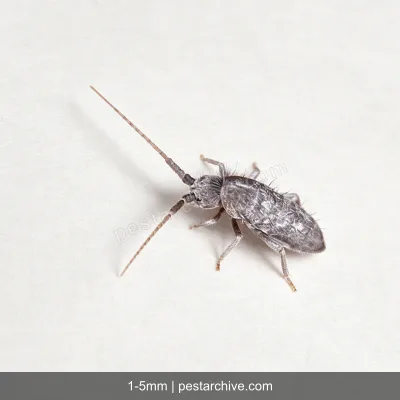
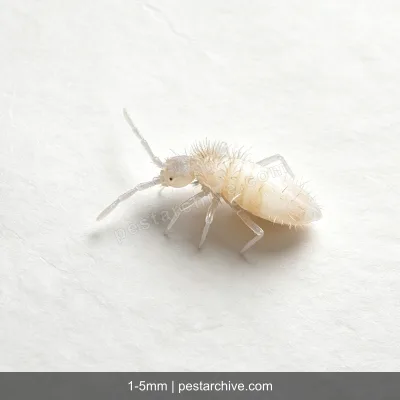
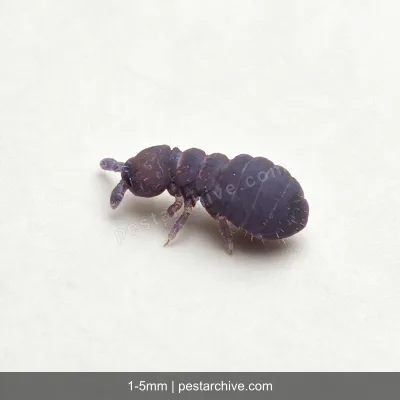
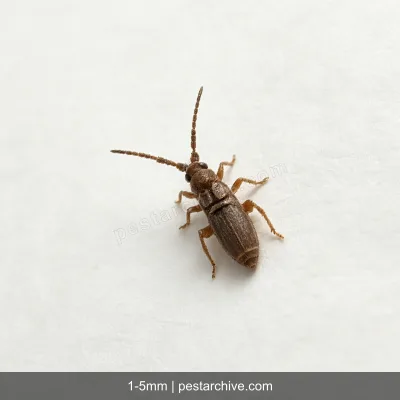
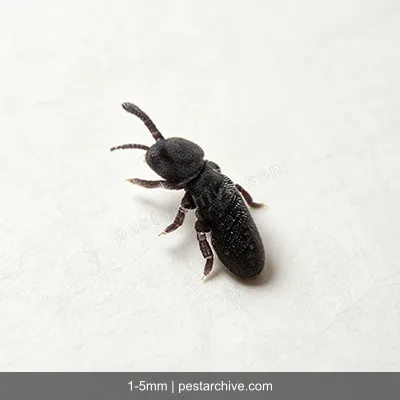
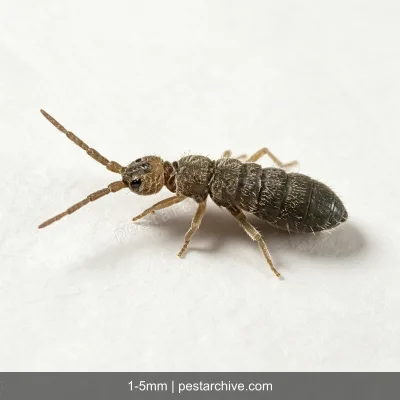
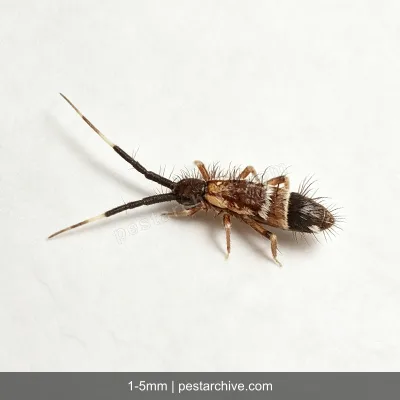
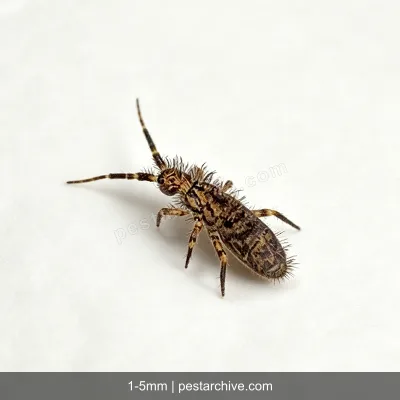
Springtails (Collembola) are ancient, tiny hexapods — classified in their own class Collembola rather than Insecta. Adults measure just 1-5mm, with varied coloration (commonly white, gray-brown, or black); some species have scales or hairs on the body surface. The most distinctive identification feature is the furcula — a forked springing structure on the ventral abdomen. When disturbed, the furcula releases, launching the springtail several centimeters into the air. Over 9,000 species are known worldwide. Common household species include Onychiurus armatus and Hypogastrura vernalis. Springtails are ametabolous — nymphs resemble adults. The egg-to-adult cycle takes about 4-8 weeks, with multiple generations per year. Springtails feed on decaying organic matter, fungal spores, and bacteria, playing a decomposer role in nature. They pose no direct harm to humans — they don't bite or suck blood — but their presence indoors in large numbers signals a moisture or mold problem. Springtails are often confused with fleas, but springtail jumps are lower and they have no parasitic habits, whereas fleas jump to find blood-meal hosts.
Habits & Hiding Places
Springtails are highly dependent on moisture and feed on humus, mold spores, and decaying plant matter. Indoors, they are most commonly found in: potted plants and surrounding areas (the classic springtail habitat — they feed on decaying roots and mold in potting soil surfaces and tray water); bathroom floor drains, tile grout, and corners (standing water and high humidity provide ideal conditions); balcony and outdoor passage crevices in damp areas (especially active after rain or watering); and baseboards and floor cracks subject to prolonged moisture. Springtail distribution correlates directly with humidity — they desiccate and die below 50% relative humidity. Large springtail populations are therefore a clear signal of elevated indoor humidity or hidden leaks. They are most commonly found in bathrooms, kitchens, and basements. Springtails are distributed worldwide from the Arctic to the tropics. In nature, they play an important role in soil ecosystems, but indoors they indicate excessive moisture. They move by jumping when startled, with leap distances up to dozens of times their body length.
Health Risks & Damage
- Springtails do not bite humans or transmit diseases, but heavy indoor populations (thousands can congregate) significantly impact living comfort. Their jumping activity around flower pots, bathrooms, and corners is disturbing, and their flea-like appearance and jumping behavior cause unnecessary alarm.;
- Heavy springtail populations can feed on potted plant root hairs and root surfaces, causing slow growth and leaf yellowing. In severe cases, root rot and plant death can occur. Dense springtail activity on pot soil surfaces also disrupts soil structure.;
- Large aggregations of springtails leave excrement specks on walls, floors, and furniture, affecting cleanliness. Dead springtail bodies accumulating in corners can decompose and attract other insects (such as fungus gnats).;
- Widespread springtail appearance is typically a warning sign of indoor moisture problems — indicating leaks, condensation, or poor drainage. Ignoring the springtail warning often leads to subsequent, more serious mold issues and structural damage.
Season & Region
Cosmopolitan in dark, humid environments. Summer and autumn (Jun–Oct) are the rampant population explosion period. Photophobic; hide during daytime under floor tile gaps, flowerpot bases, etc. Do not bite but cause alarm when present in large numbers.
| Region | Active Period | Peak Season | Notes |
|---|---|---|---|
| N. Hemisphere Temperate | May–Oct | Jul–Sep | Highest density during hot-humid season |
| N. Hemisphere Subtropical | Mar–Nov | Jun–Sep | Maximum density during Meiyu and summer–autumn |
| Tropical | Year-round | Rainy season | Year-round reproduction |