Booklice
(Psocids, Barklice, Paper lice)*Liposcelis bostrychophila* / Liposcelididae
Identification & Appearance
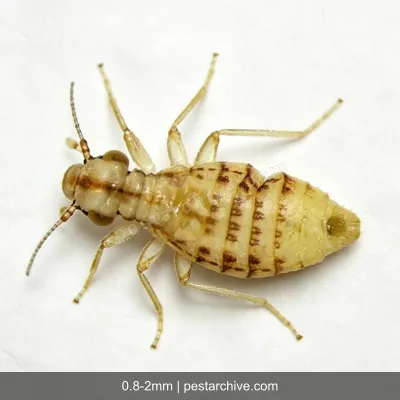
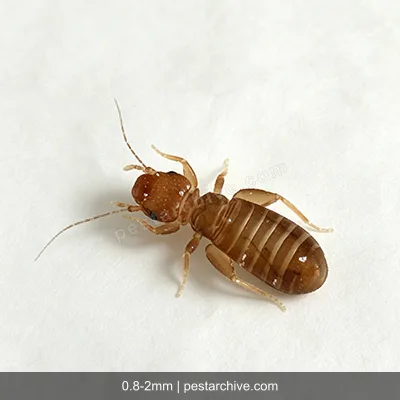
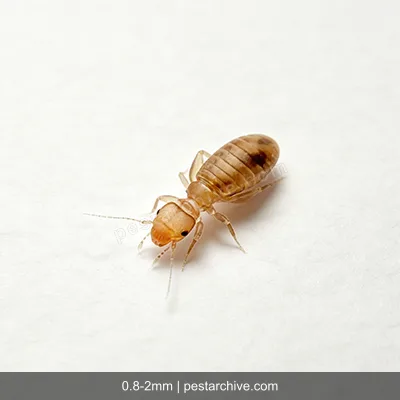
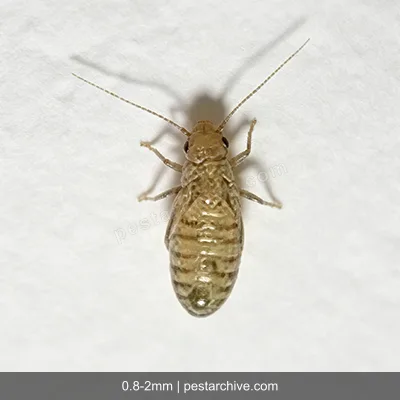
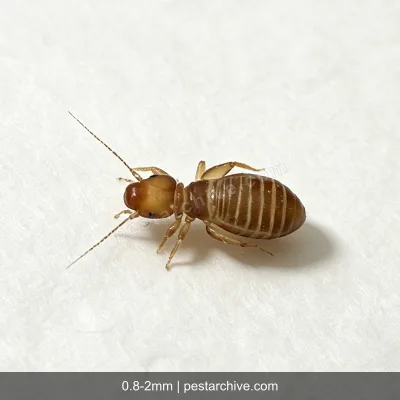
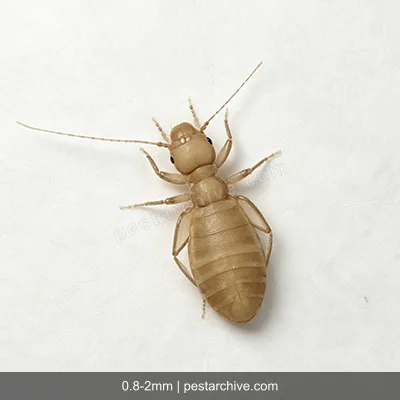
Booklice (psocids) are tiny insects. Common household species include Liposcelis bostrychophila and L. entomophila. Adults measure just 0.8-2mm, with gray-white to pale brown flattened soft bodies. They are wingless, with relatively large heads and chewing mouthparts. Booklice are hemimetabolous, going through egg, nymph, and adult stages. Under favorable conditions (25-30°C, humidity above 70%), the egg-to-adult cycle takes about 3-4 weeks. Notably, females of some species can reproduce through parthenogenesis — producing viable eggs without mating — laying 50-100 eggs in a lifetime. Booklice are agile crawlers but have lost the ability to fly. They are among the most common stored-product pests worldwide. Their tiny size means they're often only noticed when populations have grown substantially. Booklice do not bite humans, but their excrement and body fragments are potent allergens that can trigger more severe reactions in sensitive people than dust mites.
Habits & Hiding Places
Booklice feed on mold, fungal spores, starchy debris, and paper fibers. Indoors, they are most commonly found in: books and paper storage areas — the classic booklouse habitat. They feed on bookbinding glue, paper fibers, and mold growing between the pages. Old bookstores, libraries, and archives are especially affected. Grain storage areas — rice, flour, and feed provide starch-based food sources. Booklice often co-occur with flour mites in pantries. Baseboards, floor cracks, and behind furniture — accumulated dust and organic debris. Under mattresses and pillows — rarely-cleaned areas can harbor booklice when humidity is high. Booklice are extremely humidity-dependent — below 50% relative humidity, eggs cannot hatch and nymph survival plummets. Booklice outbreaks are distinctly seasonal, peaking during the southern rainy season. Sustained indoor humidity below 40% for several weeks will cause booklouse populations to naturally crash. Through parthenogenesis, booklice can establish large populations from a single individual within 30 days. They don't live on humans but are frequently found in bed areas because the warmth and moisture from sleeping bodies create a favorable microclimate.
Health Risks & Damage
- Booklouse excrement, shed skins, and body fragments are potent allergens, triggering allergic rhinitis (nasal congestion, sneezing, itching), conjunctivitis (eye itching, tearing), skin itching, and urticaria. Booklouse allergy is particularly common in tropical and subtropical regions. Some dust-mite-allergic individuals also show cross-reactivity to booklice.;
- Booklice feed on book pages, wallpaper, and cardboard, causing damage to books and documents — blurring text and creating surface erosion. In libraries, archives, and bookstores, they are significant pests capable of causing irreversible damage to valuable documents.;
- Booklice contaminate stored grains and dry goods, causing spoilage and off-odors in rice, flour, and feed. While contaminated grain can be screened and still consumed, some nutritional value is lost, and residual allergens may pose health risks.;
- In suitable conditions, booklouse density can reach extraordinary levels — thousands can aggregate in a single bookshelf or rice container, occurring in visible patches that impact living comfort. Booklice crawling on walls and furniture also leave tiny specks.;
- Booklice are among the world's major stored-product pests, with damage most severe in tropical and subtropical regions. When co-occurring with other stored-product pests like flour mites, control becomes significantly more difficult.
Season & Region
Cosmopolitan. Favors high temperature and humidity; optimal at 25–30 °C, RH >70 %. Hatching peak begins Mar–May, continuing through Oct. Population reaches annual maximum in Nov before declining with temperature.
| Region | Active Period | Peak Season | Notes |
|---|---|---|---|
| N. Hemisphere Temperate | Apr–Oct | Jul–Sep | Fastest reproduction in hot-humid summer; sharp winter decline |
| N. Hemisphere Subtropical | Mar–Nov | May–Sep | Longer active season; population maximum in Nov |
| Tropical | Year-round | Rainy season | Year-round reproduction |