Rice Weevils
(Snout weevil, Grain weevil, Maize weevil)*Sitophilus oryzae* / *Sitophilus zeamais*
Identification & Appearance
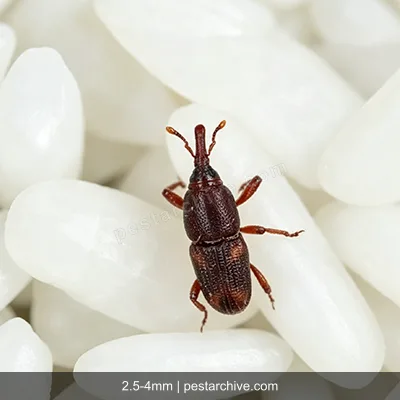
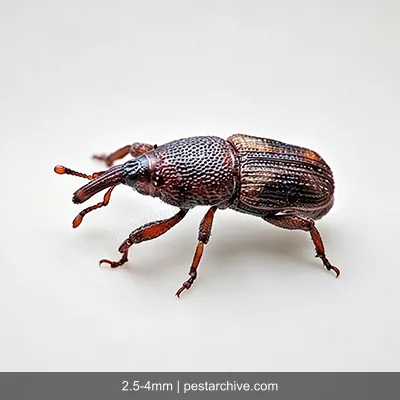
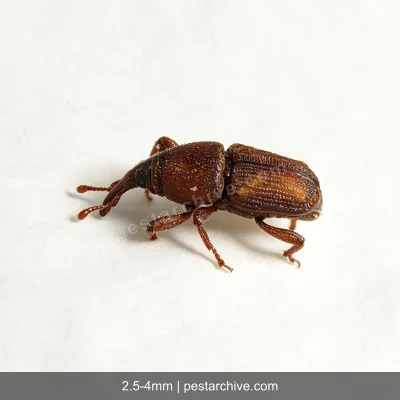
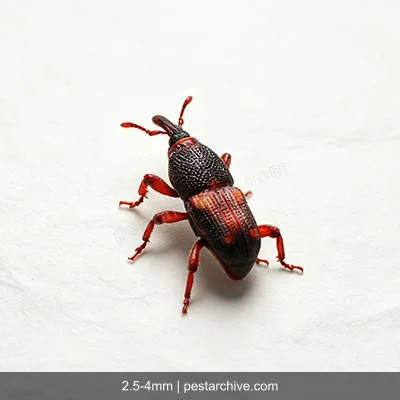
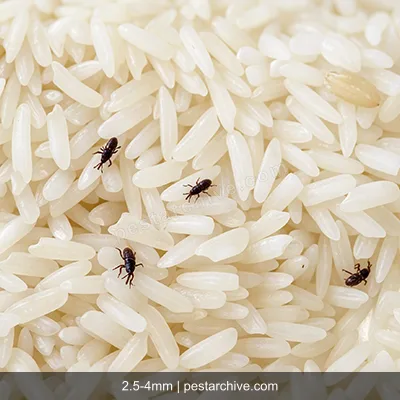
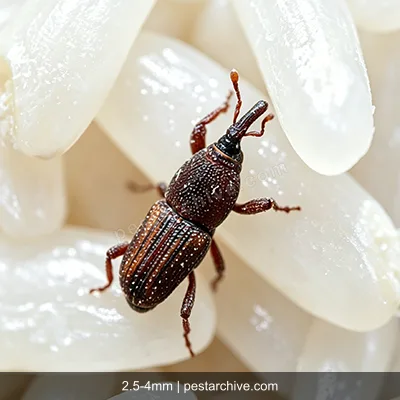
Rice weevils (Sitophilus oryzae) are among the most common stored-grain pests in households. Adults measure 2.5-4mm with an elongated snout (rostrum). The female chews a hole in a grain kernel, deposits an egg, and seals it. Entire larval development occurs inside the kernel. At 25-30 C, the cycle takes 4-6 weeks with 4-6 generations per year. They are capable fliers.
Habits & Hiding Places
Rice weevils feed on rice, wheat, corn, and other grains. Larvae develop inside individual kernels. Indoors, they concentrate in rice bins, grain cabinets, and storage rooms. Most active at 25-30 C; activity ceases below 15 C. Adults emerging from infested grain fly to new food sources.
Health Risks & Damage
- Larvae hollow out kernels from the inside. Heavy infestations cause 10-30% weight loss.;
- Weevil fragments and frass contaminate grain, degrading quality.;
- Populations explode rapidly with 2-3 generations in 2-3 months at room temperature.;
- They do not bite humans or damage structures. Prevention: buy small quantities, use sealed containers, freeze new grain.
Season & Region
Cosmopolitan; major stored-grain pest. Optimal temperature 25–30 °C, RH >65 %. Summer hot-humid season is the period of fastest population growth. Adults bore into grain kernels with mandibles; larvae develop entirely within the kernel. Year-round reproduction in southern regions; adults overwinter within grain mass in northern areas.
| Region | Active Period | Peak Season | Notes |
|---|---|---|---|
| N. Hemisphere Temperate | Apr–Oct | Jul–Sep | Fastest reproduction in hot-humid summer; adults overwinter |
| N. Hemisphere Subtropical to Tropical | Year-round | May–Sep | Year-round reproduction in south; highest density in hot-humid season |