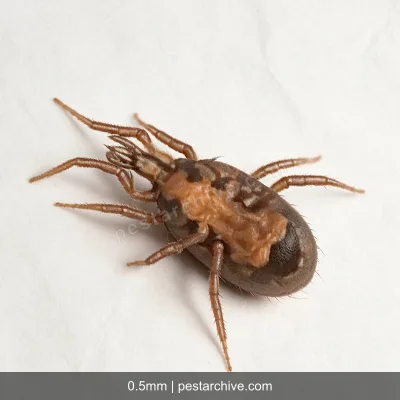
Rat Mites
(Tropical rat mite, Bird mite, Chicken mite)*Ornithonyssus bacoti* / *Dermanyssus gallinae*
Identification & Appearance
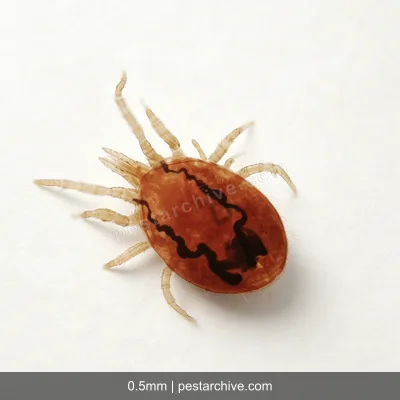
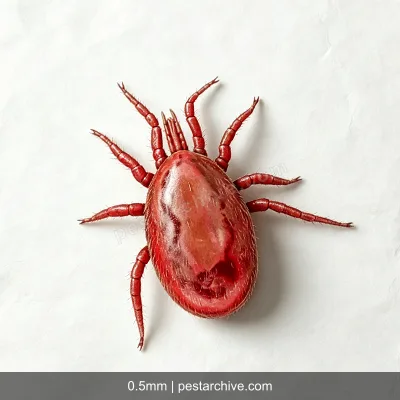
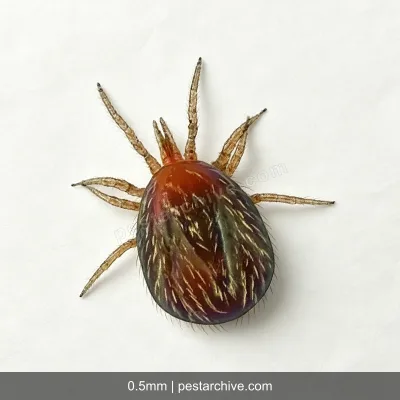
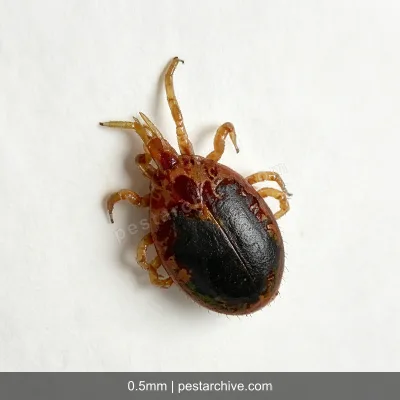
Rat mites (also called bird mites or rodent mites) are tiny parasitic or predatory mites in the family Laelapidae. Adults measure 0.2-0.5mm, brown, dark red, or black in color, with oval bodies and a dorsal shield plate. Their mouthparts may be piercing-sucking or chewing, depending on species and diet. The body surface bears setae (bristles). Over 8,000 species are known worldwide, with extremely diverse lifestyles: some parasitize birds and mammals to feed on blood, some prey on other small arthropods, and some feed on organic debris and mold. Common household species include the chicken mite (Dermanyssus gallinae, parasitizing poultry and birds), the tropical rat mite (Ornithonyssus bacoti, parasitizing rats), and the straw itch mite (Pyemotes tritici, predatory, commonly found in pet bedding and grain storage areas). Rat mites undergo a multi-stage life cycle: egg, larva, two nymphal stages, and adult, completing in about 1-3 weeks under favorable conditions.
Habits & Hiding Places
Rat mite habitat preferences vary by species and diet, but all favor warm, humid, organic-rich environments. Indoors, rat mites concentrate in: pet beds and surrounding areas (the highest-density zone — warm, humid with abundant pet dander, hair, and food debris providing ideal breeding conditions); mattresses and sofas (human skin flakes and body heat attract mite aggregation); carpets (fiber gaps accumulate dust, dander, and debris suitable for hiding and breeding); baseboards and under-furniture areas (dust-accumulating, hard-to-clean corners); grain storage areas (some species prey on stored-product pest eggs and larvae, naturally aggregating in pantries); and clothing storage areas (accumulated dust and dander on clothes can attract mites). When mites are abundant on pets, large numbers drop off in areas where pets spend time, then disperse throughout the house.
Health Risks & Damage
- Rat mite bites (or contact with their secretions) cause red papules or small blisters with itching. Sensitive individuals may develop noticeable dermatitis and allergic reactions. Scratching leads to skin breakdown and secondary infection. Allergenicity varies significantly by species — chicken mite and tropical rat mite bites produce more pronounced reactions.;
- Certain species (especially the tropical rat mite) can transmit disease pathogens between rats and humans, including hantaviruses (causing hemorrhagic fever with renal syndrome) and Orientia tsutsugamushi. Although the disease transmission risk from rat mites in urban households is far lower than from ticks, rodent control remains the key to eliminating rodent-source rat mite problems.;
- When rat mites proliferate, populations can reach thousands to tens of thousands, contaminating the living environment, grain storage, and clothing spaces. They are nearly invisible to the naked eye, so by the time they're noticed, they've usually spread widely. Rat mite control requires integrated measures: rodent elimination (if mites come from rats), pet bed cleaning, regular vacuuming, maintaining ventilation and dryness, together with bug spray treatment around the home.
Season & Region
Cosmopolitan. More prevalent in areas with high rodent density; closely correlated with rodent control status. Spring is the peak breeding season.
| Region | Active Period | Peak Season | Notes |
|---|---|---|---|
| N. Hemisphere Temperate | May–Oct | Jun–Aug | Summer peak |
| N. Hemisphere Subtropical to Tropical | Apr–Nov | May–Sep | Higher density in warm, humid seasons |