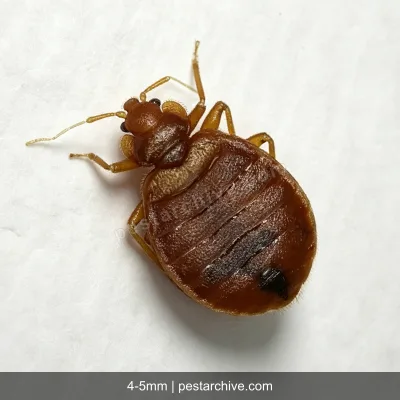
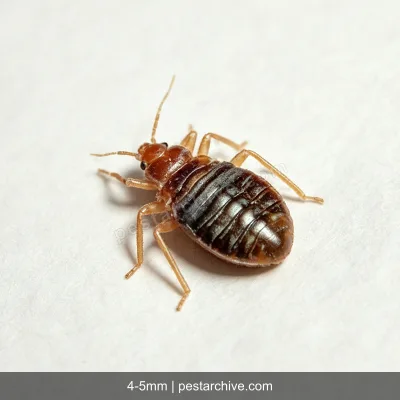
Bed Bugs
(Common bed bug, Tropical bed bug, Mahogany flat)*Cimex lectularius* / *Cimex hemipterus*
Identification & Appearance
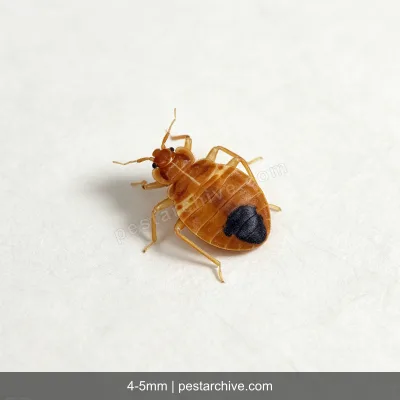
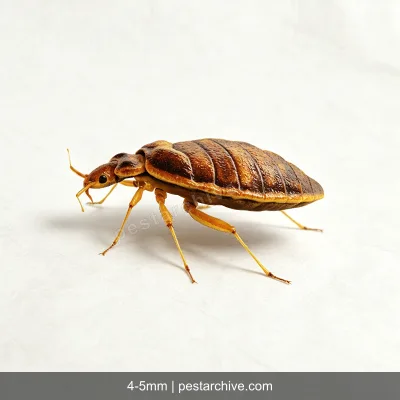
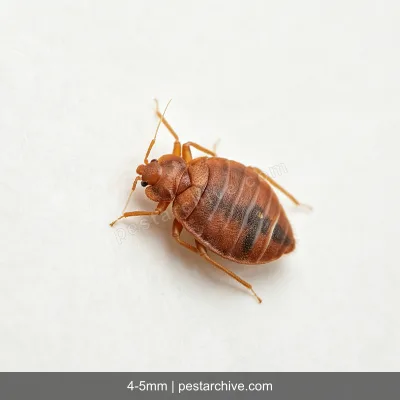
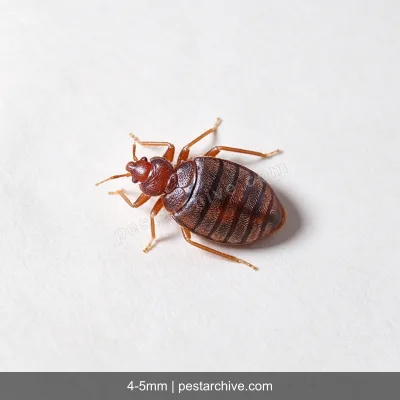
Bed bugs (Cimex lectularius) are nocturnal blood-feeding insects and one of the most dreaded household pests. Adults measure 4-5mm, with a flattened oval reddish-brown body resembling an apple seed. They have a small head with four-segmented antennae, prominent compound eyes, and vestigial wing pads — they cannot fly. When disturbed, bed bugs release a characteristic musty odor from scent glands, hence the name. They thrive at 20-30°C and become sluggish below 15°C. Bed bugs undergo incomplete metamorphosis: egg, five nymphal instars (each requiring a blood meal to molt), and adult. Under optimal conditions, the egg-to-adult cycle takes 4-8 weeks. Adults can survive 3-6 months without feeding — a key reason they are so difficult to eradicate. Importantly, there is currently no scientific evidence that bed bugs transmit human infectious diseases, distinguishing them from mosquitoes and ticks.
Habits & Hiding Places
Bed bugs are strictly nocturnal, hiding during the day in extremely narrow crevices and emerging at night to feed. In the home, they concentrate around sleeping areas: mattress seams, tufts, and labels are the most heavily infested zones; bed frame joints, headboard crevices, and behind baseboards are secondary harborages. They also hide in electrical outlets, behind loose wallpaper, in curtain folds, and inside furniture joints. Bed bugs are strongly attracted to CO₂ and body heat, enabling them to precisely locate sleeping hosts. A single female lays 200-500 eggs in her lifetime, cementing each egg into cracks. Nymphs must take a blood meal before each molt. Because all life stages cluster near the host's resting area, the bed and its immediate surroundings are always the epicenter of an infestation.
Health Risks & Damage
- Bed bug bites appear as red, intensely itchy papules or wheals, often arranged in distinctive linear or clustered patterns — the so-called "breakfast, lunch, and dinner" arrangement. Bites most commonly appear on exposed skin: arms, neck, shoulders, and back. Excessive scratching can lead to secondary bacterial infections, cellulitis, and in chronic cases, post-inflammatory hyperpigmentation.;
- The psychological impact of bed bugs is severe and well-documented — insomnia, anxiety, hypervigilance, and feelings of contamination are common. The World Health Organization recognizes bed bug infestations as a modern urban public health issue.;
- Bed bugs reproduce rapidly: one female produces 200-500 eggs, each cemented into crevices and highly resistant to physical removal. Adults survive 3-6 months without feeding; nymphs can survive weeks to months. Once established, professional-grade treatment is almost always necessary, and infestations readily spread to neighboring units through wall voids and utility conduits.
Season & Region
Cosmopolitan. *C. lectularius* optimal at 28–29 °C; *C. hemipterus* optimal at 32–33 °C. Temperate regions active May–Oct; subtropical to tropical regions active year-round except cold spells; density rises during seasonal transitions.
| Region | Active Period | Peak Season | Notes |
|---|---|---|---|
| N. Hemisphere Temperate | May–Oct | Aug | *C. lectularius* dominant; diapause in winter |
| N. Hemisphere Subtropical to Tropical | Mar–Dec | Apr–Jun、Sep–Oct | *C. hemipterus* dominant; increased activity during seasonal transitions |