Dust Mites
(House dust mite, European dust mite, American dust mite)*Dermatophagoides pteronyssinus* / *D. farinae*
Identification & Appearance
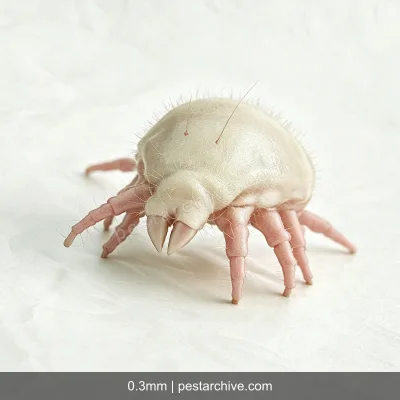
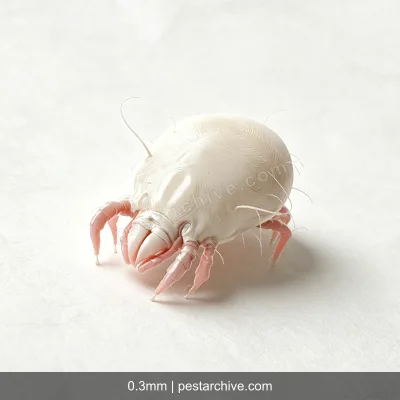
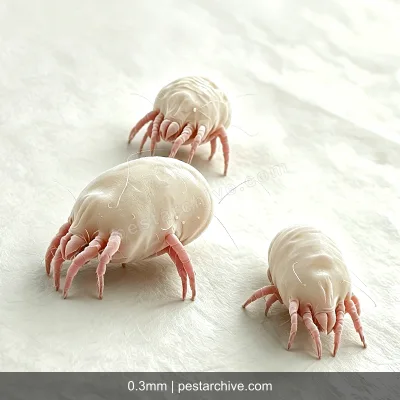
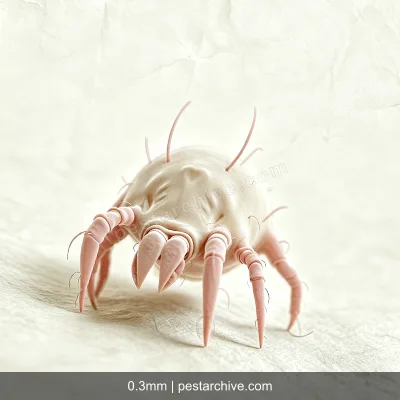
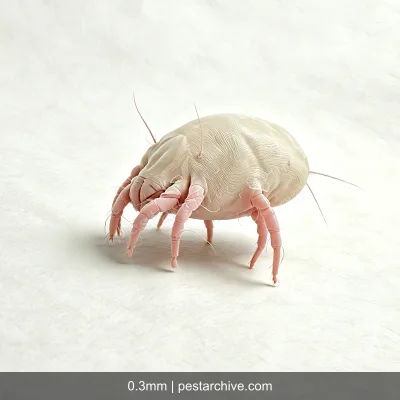
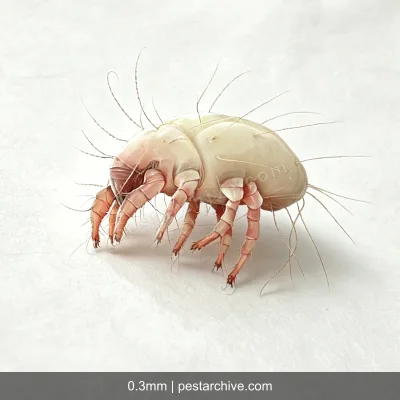
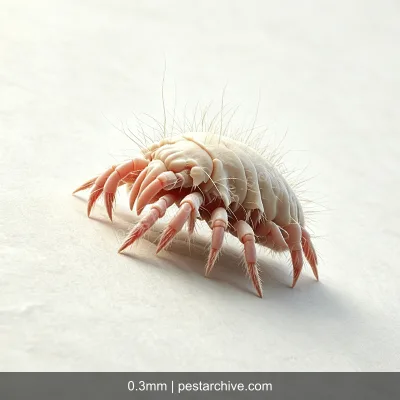
Dust mites are microscopic arachnids and the single most important indoor allergen source worldwide. Adults measure 0.2-0.3mm — invisible to the naked eye. The two predominant species are Dermatophagoides pteronyssinus (European) and D. farinae (American). Dust mites do not bite, sting, or transmit diseases. Their threat comes entirely from allergenic fecal pellets — each mite produces about 2,000 during its 2-4 month lifespan. The major allergen proteins Der p1 and Der f1 are potent asthma triggers. WHO recommends indoor levels below 2μg per gram of dust.
Habits & Hiding Places
Dust mites thrive in warm (20-25°C), humid (70-80% RH) environments wherever humans shed skin scales. Mattresses, pillows, bedding, upholstered furniture, carpets, and stuffed toys are the highest-concentration zones. A typical mattress harbors 100,000 to 10 million mites. They absorb water from the air rather than drinking — below 50% relative humidity, they desiccate and die. This makes humidity control the single most effective management strategy.
Health Risks & Damage
- Allergic Asthma: Dust mite allergens are the most common asthma trigger worldwide. Childhood sensitization is a major risk factor for persistent asthma.;
- Allergic Rhinitis: Chronic nasal congestion, sneezing, and runny nose often misdiagnosed as a perennial cold.;
- Atopic Dermatitis (Eczema): Dust mite exposure exacerbates eczema, particularly in children.;
- Sleep Disruption: Nighttime allergy symptoms from bedroom exposure cause poor sleep quality and daytime fatigue.
Season & Region
Cosmopolitan. Optimal temperature 20–30 °C, RH 70–80 %. Reproduction peaks in summer–autumn (Jun–Oct). Indoor heating sustains populations through winter. Autumn registers the highest annual population density.
| Region | Active Period | Peak Season | Notes |
|---|---|---|---|
| N. Hemisphere Temperate | May–Oct | Jul–Sep | Optimal 25–28 °C, RH 70–80 % |
| Tropical | Year-round | Rainy season | Year-round indoor reproduction; air conditioning use increases risk |