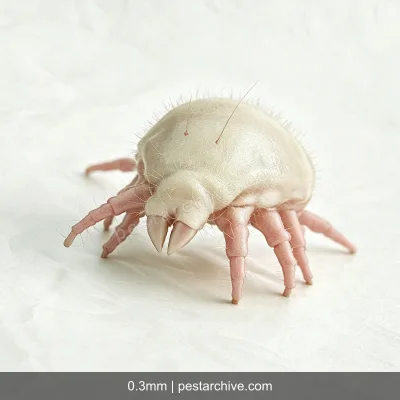
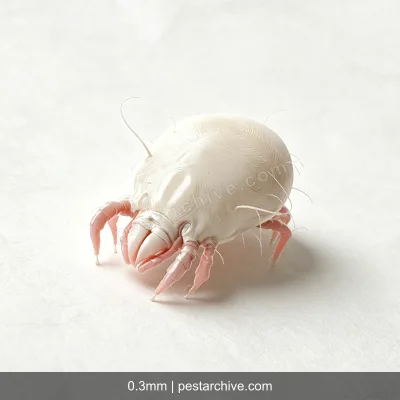
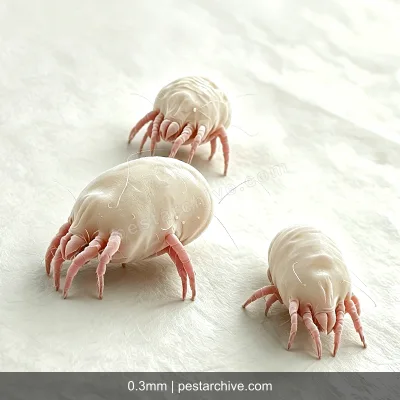
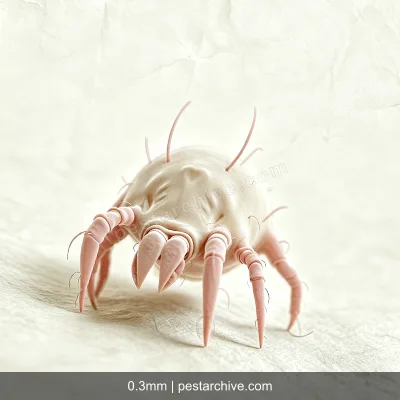
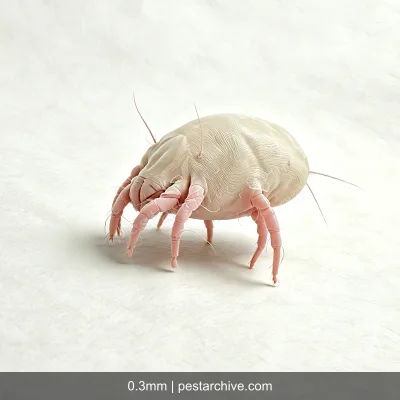
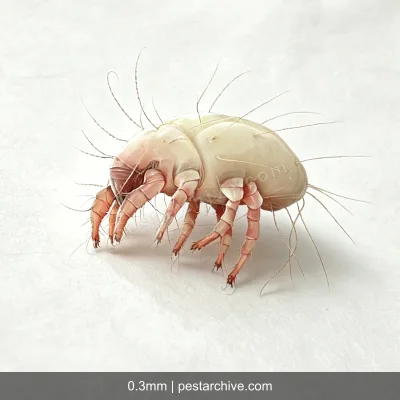
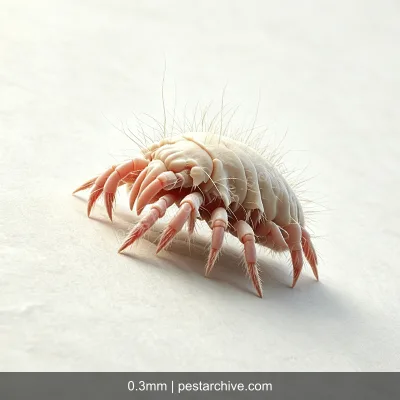
Dust Mites Control & Removal Guide
(House dust mite, European dust mite, American dust mite)*Dermatophagoides pteronyssinus* / *D. farinae*
How They Get In
Dust mites are ubiquitous in human dwellings worldwide — they are not invasive pests in the traditional sense. They enter on clothing, bedding, and furniture. Once established, they persist indefinitely if humidity and food (skin scales) are available. New homes become colonized within weeks of occupancy.
How to Get Rid of Them
- Humidity Control (Most Critical): Maintain indoor relative humidity below 50% using dehumidifiers or AC. Measure with a hygrometer. This alone is more effective than all other measures combined.;
- Bedding Encasement: Encase mattresses and pillows in certified dust mite-proof covers with pore sizes under 10 microns.;
- Weekly Hot Wash: Wash all bedding at 60°C or above. If hot water is unavailable, tumble dry on high for 30 minutes.;
- Remove Reservoirs: Replace wall-to-wall carpet with hard flooring. Use HEPA-filtered vacuum. Damp-dust weekly.;
- Air Purification: HEPA air purifiers in bedrooms reduce airborne allergens but are supplementary to source control. Focus on the bed first — you spend 8 hours breathing directly above the mattress.
Prevention & Follow-Up
Wash all bedding weekly in hot water above 55°C (131°F) and dry it in the sun or in a hot dryer. Use zippered, allergen-proof mattress covers and pillow covers to create a physical barrier that traps dust mites inside. Keep indoor relative humidity below 50% — run a dehumidifier or use your air conditioner's dehumidify mode. Vacuum mattresses, sofas, carpets, and curtains regularly using a vacuum cleaner with a HEPA filter. If anyone in the household has allergies, run a HEPA air purifier in the bedroom to cut down on airborne allergens.