Pillbugs
(Rollie pollies, Roly-polies, Woodlice, Sowbugs)*Armadillidium vulgare*
Identification & Appearance
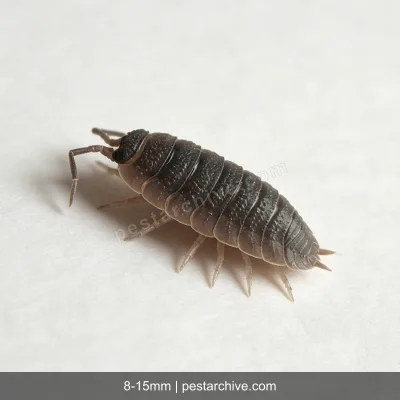
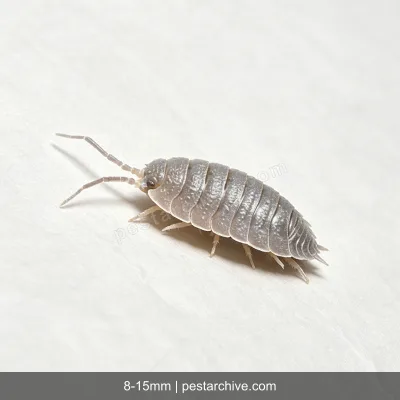
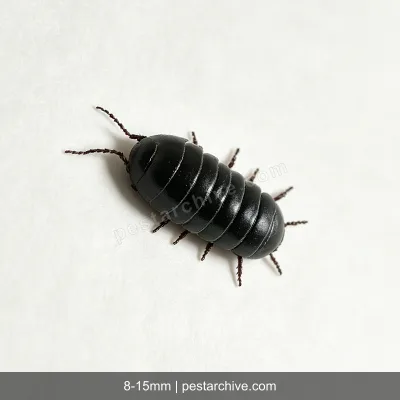
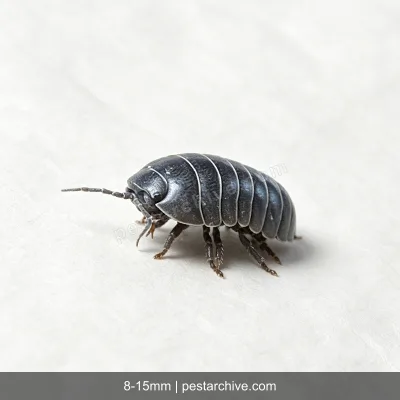
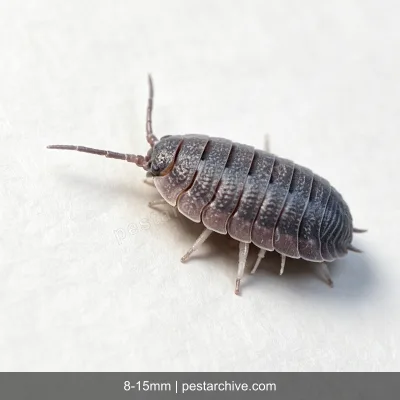
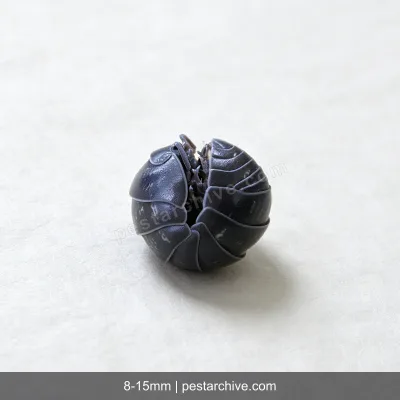
Pillbugs — also known as roly-polies, sowbugs, or woodlice — are terrestrial crustaceans in the order Isopoda, more closely related to shrimp and crabs than to insects. The most common household species is Armadillidium vulgare. Adults measure 8-15mm, with flattened oval bodies, gray-brown to black coloration, and a glossy dorsal surface. The body is covered by segmented armor plates, with one pair of antennae and seven pairs of legs (insects have only three pairs) — this is the key feature distinguishing pillbugs from insects. When disturbed, pillbugs roll into a tight ball to protect their ventral surface — their most distinctive behavior. Pillbugs develop gradually through multiple nymphal stages from egg to adult, taking about 2-3 months under favorable conditions. Females carry eggs in a ventral brooding pouch (marsupium); newly hatched nymphs remain under maternal protection for several days before dispersing. Pillbugs breathe through gill-like structures that must remain moist for gas exchange — they are thus highly dependent on damp environments and rapidly desiccate and die in dry conditions. They move slowly and are poor climbers, typically staying at ground level.
Habits & Hiding Places
Pillbugs feed on decaying plant matter, leaf litter, wood debris, and mold, playing a decomposer role in nature. Indoors, they are most commonly found in: bathrooms and washrooms (the most common indoor location — tile grout, around floor drains, and under sinks where it's dark and damp); around flower pots and indoor plant areas (hiding under pot trays, on soil surfaces, and under leaf litter, emerging at night); balcony and outdoor passage damp dark corners (aggregating under accumulated leaf litter and clutter); and ground-floor and basement areas (closer to soil, easier entry from outdoors). Their breathing gills must stay moist, so their activity rhythm correlates directly with humidity — most active at night or after rain when humidity is high, hiding in damp, dark refuges during dry daytime hours. They are extremely sensitive to dryness and cannot survive below 60% relative humidity. Pillbugs are widely distributed, especially common in temperate and subtropical regions. They are slow, non-aggressive, and roll into a ball to play dead when startled.
Health Risks & Damage
- Pillbugs pose no direct harm to humans — they don't bite or suck blood, don't transmit diseases, and don't damage building structures. However, dense populations in bathrooms, around flower pots, and in corners severely impact living comfort. Dead pillbug bodies accumulating in corners decompose and produce odors.;
- Pillbugs feed on potted plant tender roots, leaves, and seedlings, particularly damaging indoor seedlings and ornamental plants. Their activity in the pot soil surface disrupts the root microenvironment, causing poor growth. Severe pillbug aggregations can kill seedlings entirely.;
- Heavy indoor pillbug presence is a definitive moisture-problem indicator — signaling inadequate bathroom ventilation, floor leaks, or excessive plant watering. The fundamental solution is improving drainage and ventilation, not relying solely on bug sprays.;
- In rare cases, pillbugs can serve as intermediate hosts for certain parasites, but since pillbugs are almost never ingested by humans, this risk is negligible. Pillbugs differ from millipedes: pillbugs roll into a ball when disturbed; millipedes coil into a spiral.
Season & Region
Cosmopolitan. Prefers damp, dark environments. Summer–autumn (Jun–Sep) is the peak breeding and dispersal season; maximum abundance in Aug–Sep. Heavy emergence during Meiyu season due to elevated humidity. Rolls into a ball (conglobation) when disturbed.
| Region | Active Period | Peak Season | Notes |
|---|---|---|---|
| N. Hemisphere Temperate | May–Oct | Jun–Sep | Highest summer–autumn density; burrows deep into soil in winter |
| N. Hemisphere Subtropical | Apr–Nov | Jun–Jul(Rainy season)、Aug–Sep | Both Meiyu and late summer–autumn are peak periods |
| Tropical | Year-round | Rainy season | Year-round reproduction |