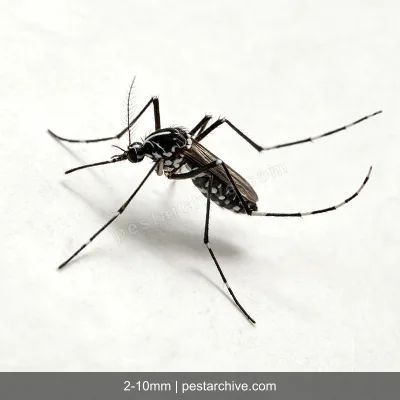
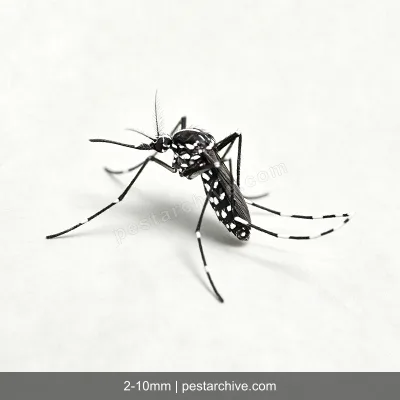
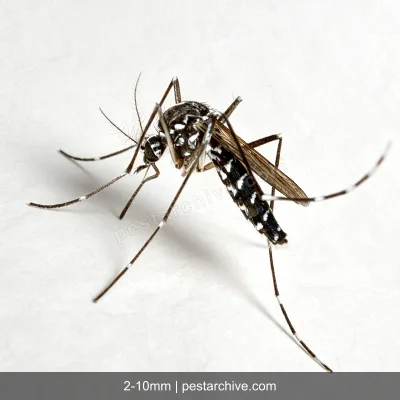
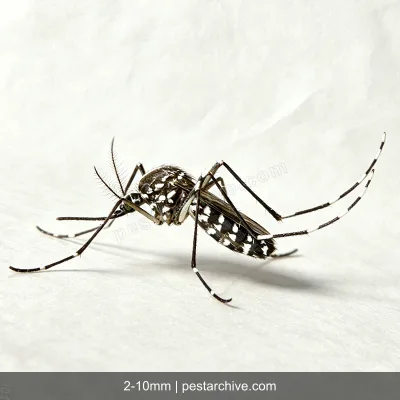
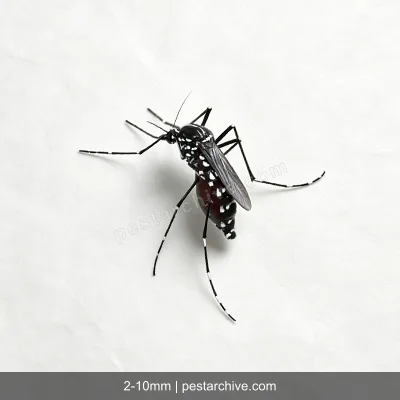
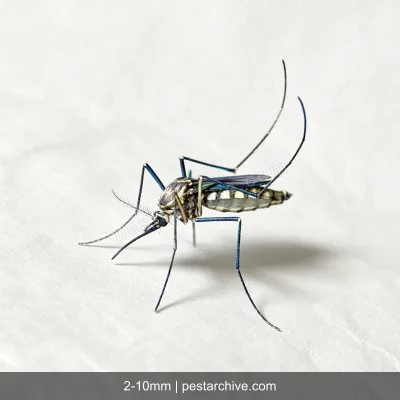
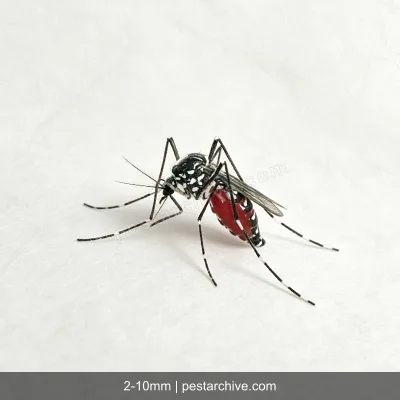
Asian Tiger Mosquitoes
(Tiger mosquito, Forest day mosquito)*Aedes albopictus*
Identification & Appearance
Asian tiger mosquitoes (Aedes albopictus) are among the most recognizable and aggressive mosquito species. Adults measure 2-10mm, jet black or dark brown, with distinctive bright white or silver stripes on the body and legs. They are aggressive daytime biters (peak activity at dawn and dusk) and are primary vectors of dengue fever, Zika virus, and chikungunya. Their eggs can resist desiccation and cold, surviving for months — making this species far harder to eradicate than Culex mosquitoes.
Habits & Hiding Places
Unlike Culex mosquitoes, Asian tiger mosquitoes are daytime biters (especially at dawn and dusk), highly aggressive, and extremely sensitive to movement, CO2, body odor, and heat. Females lay eggs individually on the inner walls of moist containers rather than on the water surface. They prefer small water containers (discarded tires, flower pots, coconut shells, bamboo stumps, tree holes, and tin cans) rather than large water bodies. Flight range is short (typically under 200 meters from the breeding site), concentrating activity around residential yards and immediate surroundings.
Health Risks & Damage
- Bites are painful and intensely itchy.;
- Primary vector of dengue virus — severe cases progress to dengue hemorrhagic fever, which can be fatal.;
- Vector of Zika virus — maternal infection during pregnancy can cause fetal microcephaly.;
- Vector of chikungunya virus — causing severe, lasting joint pain.;
- Vector of yellow fever virus and eastern equine encephalitis virus.
Season & Region
Native to Southeast Asia; now invasive across global tropical and subtropical regions. Peak activity May–Oct (subtropical). Eggs are desiccation- and cold-resistant, surviving for months.
| Region | Active Period | Peak Season | Notes |
|---|---|---|---|
| N. Hemisphere Subtropical | Apr–Nov | May–Oct | Widespread in southern regions |
| Tropical | Year-round | Rainy season | Year-round reproduction |