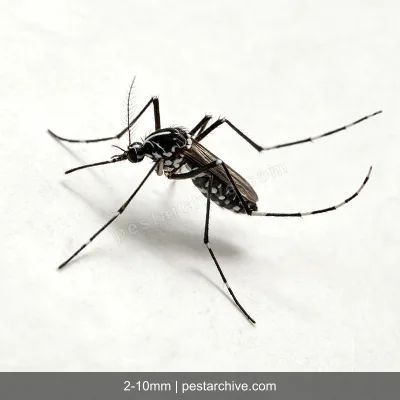
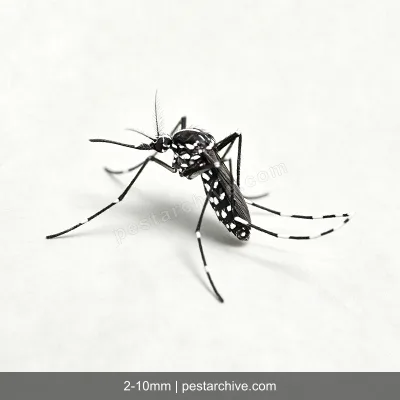
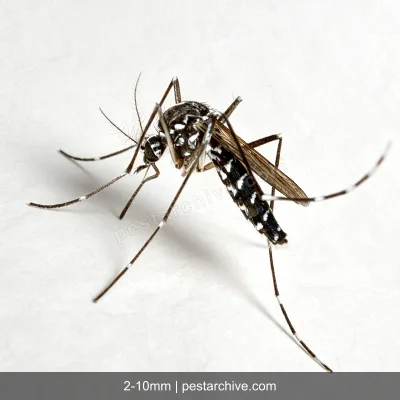
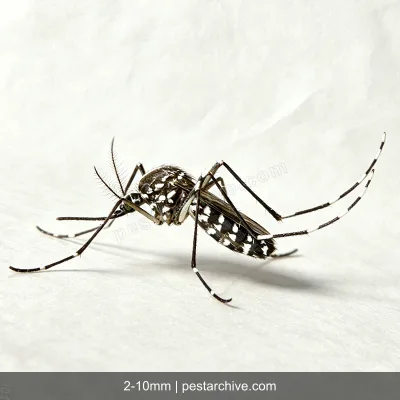
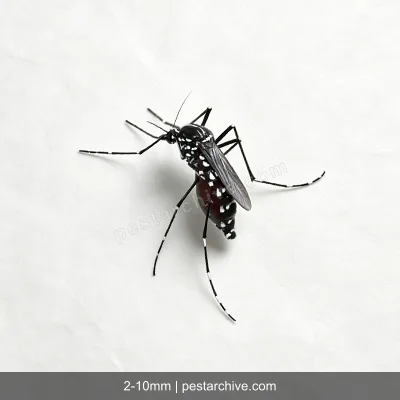
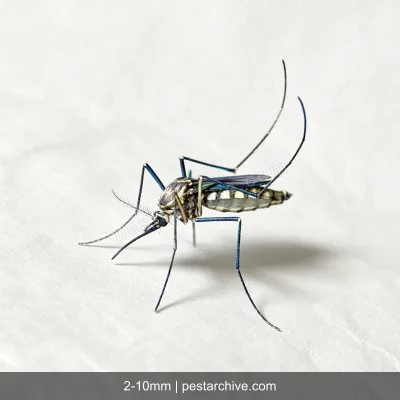
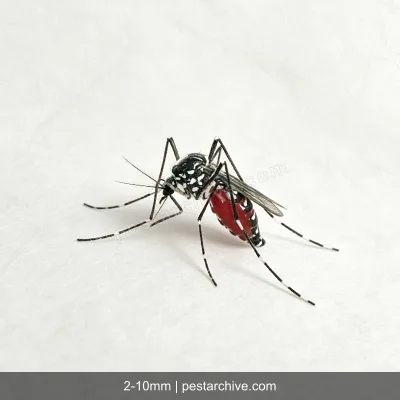
Asian Tiger Mosquitoes Control & Removal Guide
(Tiger mosquito, Forest day mosquito)*Aedes albopictus*
How They Get In
- Yard container breeding: small amounts of water in flower pot trays, discarded tires, old buckets, pet water bowls, and toys are sufficient for reproduction.
- Egg attachment and transport: dried eggs attached to container walls survive months; containers moved to new locations with water trigger hatching.
- Door/window entry: same as other mosquitoes — damaged screens or open doors.
- Plant import: small water volumes in hydroponic plant containers and aquatic plant roots support breeding.
How to Get Rid of Them
- Eliminate Small Water Containers (most critical measure): Asian tiger mosquitoes need only bottle-cap-sized water to breed. Weekly thorough inspection and emptying of ALL small water containers — flower pot trays, pet water bowls, discarded tires, buckets, toys, bottle caps, tin cans. Change hydroponic plant water weekly AND scrub container inner walls to remove attached eggs. Containers that cannot be emptied (e.g., rain barrels) must be tightly covered or covered with fine mesh.;
- Daytime Protection (different from Culex): Asian tiger mosquitoes bite during the DAY. Exercise precautions during daytime yard activities and when opening doors/windows. Install intact screens (mesh 1mm or less) on all windows and doors — also needed during daytime. Do not leave discarded containers or tarps that can collect water in the yard.;
- Indoor Residual Spraying: Apply residual surface treatment to door frames, window frames, and dark wall corners — tiger mosquitoes commonly enter indoors during daytime. Use pyrethroid-based indoor insecticides.;
- Personal Protection: Wear light-colored long sleeves and long pants during daytime outdoor activity. Apply repellent containing DEET or picaridin to exposed skin.;
- Community Collaboration: Asian tiger mosquitoes fly only about 200 meters — if neighbors have breeding sources, the entire area remains affected. Coordinate with neighbors to inspect and eliminate water sources, or contact community health authorities for coordinated treatment. Used tire imports and international cargo transport are the primary global dispersal pathways for this species.
Prevention & Follow-Up
Empty small water-holding containers weekly — plant saucers, buckets, tires, and the like — and scrub the inside walls. Keep window screens in place during the day too, since these mosquitoes bite in daylight. Don't let old containers or tarps pile up in the yard. Apply a repellent with DEET.