Bethylid Wasps vs. Ants: What's the Difference?
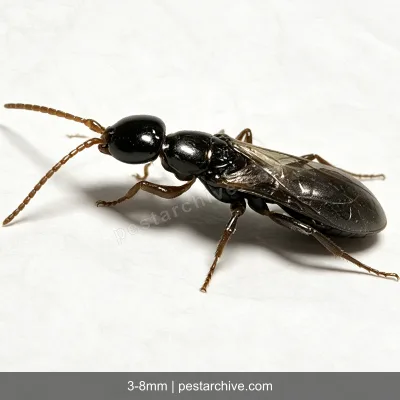
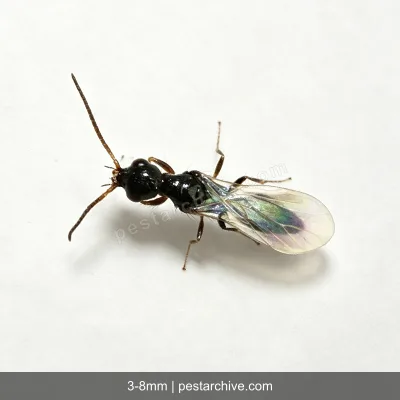
What's the Difference Between Bethylid Wasps and Ants?
Bethylid wasps and ants look similar and are often confused. But on close inspection, they differ clearly in several key features.
Appearance Comparison
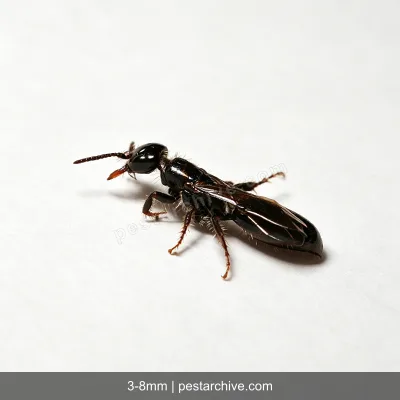
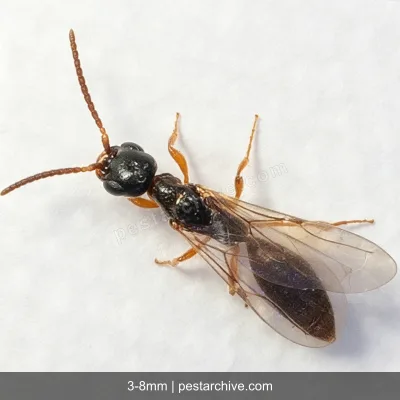
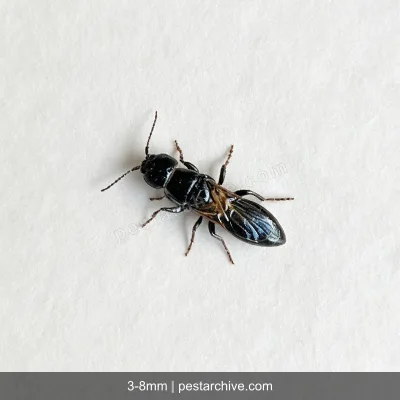
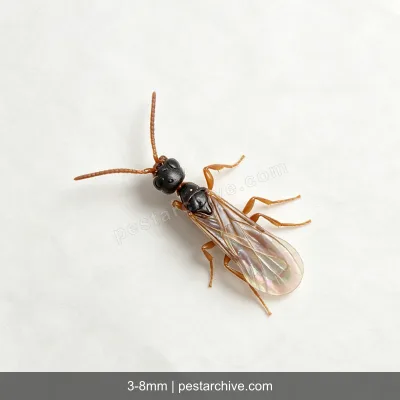
- Wings — Bethylid wasps have two pairs of membranous wings and can fly. Worker ants are wingless; only reproductive ants (during the mating flight) have wings
- Hind legs — Bethylid wasps' hind femurs are noticeably swollen and thickened; ants' legs are uniformly slender
- Waist — Ants have 1-2 distinct nodes (petiole and post-petiole, the "narrow waist") between the thorax and abdomen; bethylid wasps also have a narrow waist but the structure is different
- Antennae — Both have elbowed antennae, but bethylid wasps have more segments (12-13) compared to ants (usually 11-12)
Behavior Differences
- Bethylid wasps are capable fliers; worker ants cannot fly
- Bethylid wasps are solitary — they operate alone; ants are social and travel in lines
- Bethylid wasps are found near wood structures; ants can appear anywhere
Size Differences
Bethylid wasps: 3-8 mm; common ants (pharaoh ants, carpenter ants): 2-5 mm. Bethylid wasps are generally slightly larger than most ants.
Quick Identification Tip
The simplest rule: if you see a winged "ant" with thick hind legs moving alone — it's a bethylid wasp. If it's wingless, walking in a line, with uniformly slender legs — it's an ant.