In which season are rove beetles most abundant?
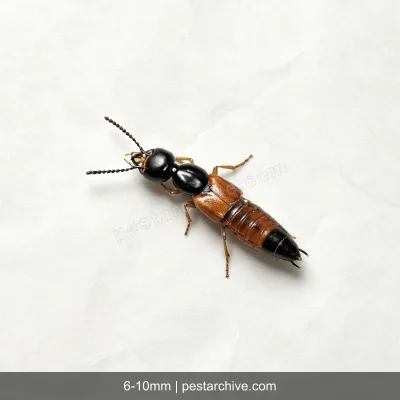
In which season are rove beetles most abundant?
Rove beetle activity has a distinct seasonal pattern, concentrated in summer and autumn. Understanding their activity patterns helps with prevention:
Peak season: June-September
This is the most active period for rove beetles for the following reasons:
- Suitable temperatures (25-35°C) for their activity.
- Higher humidity, especially after the rainy season.
- Lush plant growth; farmland and grasslands provide abundant habitats and food.
Daily activity periods
- Rove beetles hide in grass, crop fields, and leaf piles during the day and are almost inactive.
- They emerge in the evening and at night to move, feed, and mate.
- They are especially active on hot, stuffy nights after rain when humidity is high and air pressure is low.
- They are phototactic and are attracted to indoor lights at night, entering through window gaps and door gaps.
Regional differences
- Southern regions: hot, rainy seasons are longer; rove beetles may be active from April to October.
- Northern regions: activity is mainly concentrated in June-August; numbers decrease significantly after autumn temperatures drop.
- Rural and suburban areas: farmland, vegetable fields, and livestock farms have the highest densities.
- Urban areas: more common in neighborhoods with good landscaping, near parks, and in lower-floor residences (1st-5th floors).
How to prevent during this season
- Install screens on windows and doors, especially bedroom windows. Rove beetles are small; check ordinary screens for damage.
- Minimize lighting at night in summer, or draw curtains to reduce light leakage.
- Check the bedroom before sleeping, look for rove beetles on walls and ceilings.
- If a rove beetle enters the room, do not swat it with your bare hand! Wrap it in tissue and discard, or gently brush it away with a soft object.
- For those living in well-landscaped areas or on lower floors, spray dinotefuran-containing household insecticide on window sills and balconies to form a protective film.