Why Are Booklice So Hard to Get Rid Of?
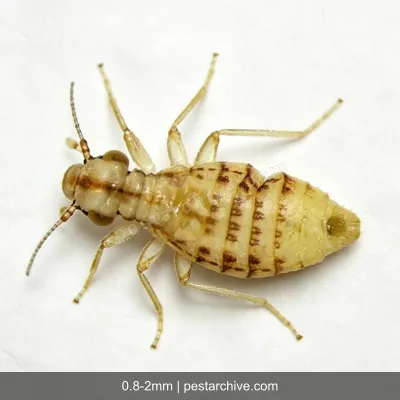
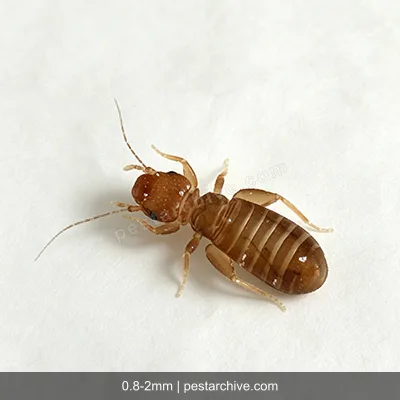
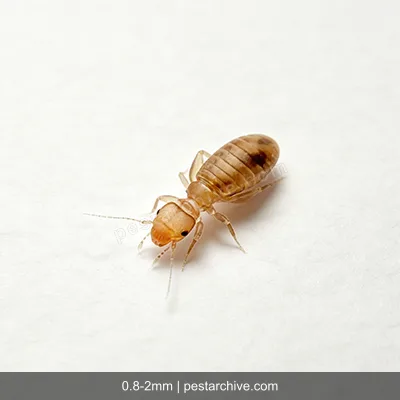
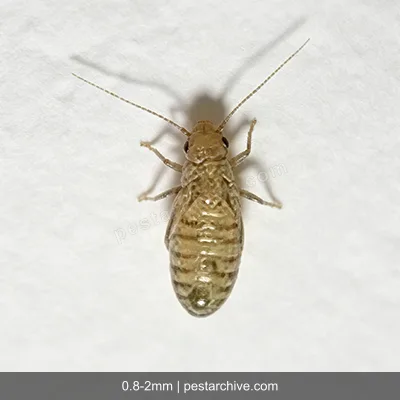
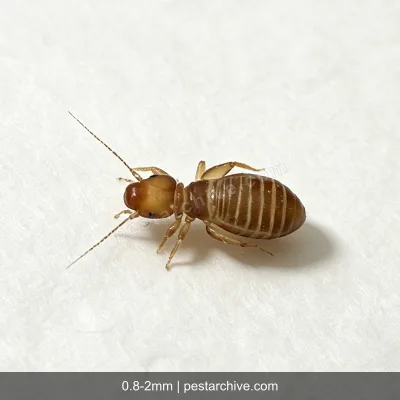
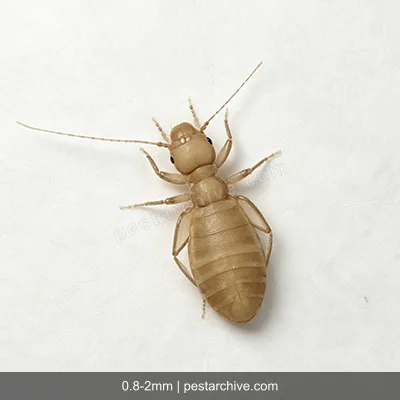
Booklice are difficult to eliminate completely — this is a common frustration. There are several reasons:
- The root cause is humidity
Booklice appear because the environment is damp — not the other way around. If you only spray to kill them but do not address the dampness:
- Mold and fungi in the environment continue to grow.
- Remaining eggs continue to hatch under high humidity.
- New booklice emerge from crevices.
- Booklice keep coming back.
- Booklice are extremely small and easily missed
Booklice are only 1-2 mm long; their eggs are even smaller (about 0.3 mm). They hide in:
- Gaps behind baseboards.
- Spaces between wallpaper and walls.
- Book binding seams.
- Furniture shelf joints.
These locations are hard to find and spraying often misses them.
- Rapid reproduction
Under favorable conditions (humidity above 70%, temperature 25-30°C), booklice develop from egg to adult in just 2-3 weeks. A female can lay dozens of eggs in her lifetime. Even if a few are missed, a large population returns within weeks.
- Wide food sources
Booklice do not feed on books themselves, but on mold and fungal spores. As long as the environment is damp, mold grows on walls, cardboard, fabrics, and wooden furniture — providing a continuous food supply.
How to truly eliminate booklice?
Only by systematically addressing the following three issues can booklice be completely eliminated:
- Control humidity — reduce indoor relative humidity below 50% using a dehumidifier.
- Remove mold — treat moldy walls and wallpaper with mold remover.
- Clear habitats — discard damp cardboard boxes, old books, and clutter to reduce hiding places.
- Chemical control — after completing the above three steps, apply dinotefuran-containing household insecticide as a residual spray.
Remember: spraying is only the final step — dehumidification is the foundation.