Why Ants Keep Coming Back After Treatment
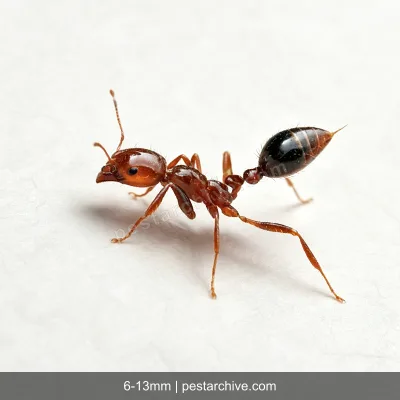
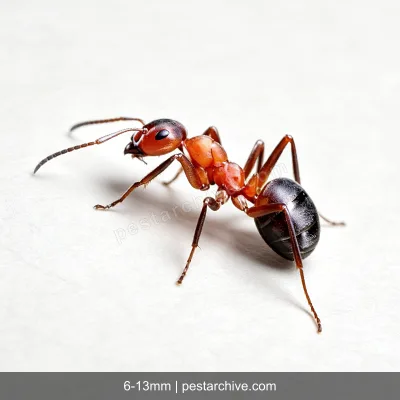
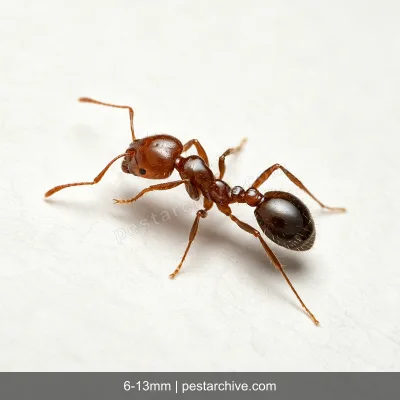
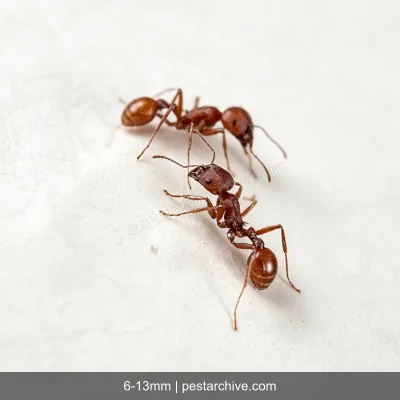
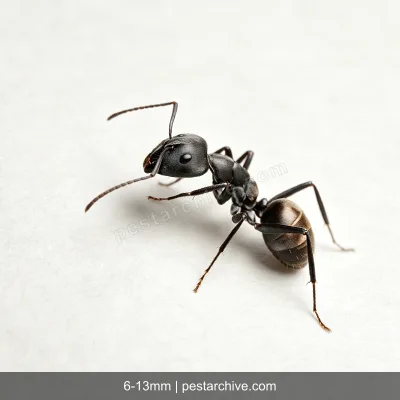
You sprayed, baited, cleaned, and sealed — and two weeks later, the ants are back. This frustrating cycle is the most common complaint in ant control. The reason is not that your treatment failed; it is that ant colony structure makes partial elimination ineffective unless you address the root cause.
### Reason 1: You Killed Workers, Not the Queen
Ant colonies operate on a queen-centered model. The queen (or queens, in multi-queen species like Pharaoh Ants and Argentine Ants) produces all new workers. Killing 90% of workers without eliminating the queen means the colony will recover to full strength within 2–4 weeks.
Solution: Use bait that workers carry back to the nest. Gel bait and granular bait are designed to be slow-acting — workers feed, survive long enough to return to the nest, share the bait with the queen and larvae, and then die. This is the only way to reach the queen, who never leaves the nest.
### Reason 2: Multi-Queen Colonies Fragment
Species like Argentine Ants and Pharaoh Ants have multiple queens per colony (2–200). Killing one queen leaves others producing replacement workers. When disturbed by sprays, these species fragment into sub-colonies — each with at least one queen — that scatter throughout the building, *increasing* the infestation.
Solution: Never spray multi-queen ant species. Use sustained bait programs (4–6 weeks minimum) to reach all queens across all sub-colonies.
### Reason 3: Satellite Nests
Many ant species (Carpenter Ants, Odorous House Ants) maintain a main nest outdoors plus several "satellite" nests indoors. Killing the indoor satellite nest eliminates visible ants, but the outdoor main nest continues sending new workers through the same entry points.
Solution: Locate and treat the outdoor main nest in addition to indoor satellite nests. Seal entry points after eliminating both.
### Reason 4: Unsealed Entry Points
Ants follow pheromone trails. Even after killing a colony, the chemical trail persists on surfaces for weeks. New colonies (or surviving satellite colonies) can follow the old trail back into your home through the same gaps.
Solution: Wash pheromone trails with soapy water. Then seal every entry point permanently.
### Reason 5: Unresolved Food and Water Sources
Ants return because the conditions that attracted them still exist:
- Food residue on surfaces, in gaps, and behind appliances.
- Moisture from leaks, condensation, or poor drainage.
- Accessible garbage and pet food.
- Sweet substances (honey drips, juice spills, sugar residue).
Solution: Eliminate all food and water sources permanently — daily cleaning, sealed storage, fixed leaks.
### Reason 6: Adjacent Colony Networks
Argentine Ants form supercolonies spanning entire neighborhoods. Treating your home while neighbors' properties harbor the same supercolony means ants will continuously re-invade from adjacent colonies.
Solution: Coordinate neighborhood-wide baiting. In severe Argentine Ant infestations, professional perimeter baiting every 3–6 months is often the only sustainable management approach.
### The Correct Sequence for Permanent Ant Control
- Identify the species — multi-queen species (Pharaoh, Argentine) require bait-only treatment; single-queen species (Carpenter, Pavement) can be treated with bait + targeted spray.
- Apply bait — slow-acting gel bait or granular bait that reaches the queen(s).
- Wait 2–4 weeks — do not spray during baiting period.
- Seal entry points — caulk, door sweeps, vent screens.
- Remove food and water — daily cleaning, sealed storage, fix leaks.
- Destroy pheromone trails — soapy water wash.
- Monitor — weekly checks for new ant activity.