How to Get Rid of Ants Without Chemicals
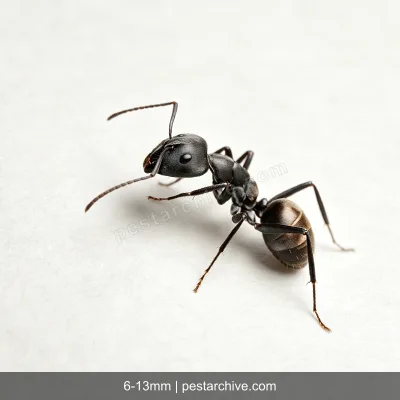
Many homeowners want to eliminate ants without using insecticides — whether because of children, pets, environmental concerns, or personal preference. The good news is that the single most effective ant control method (source reduction and exclusion) requires no chemicals at all. The less-good news is that "natural repellents" (vinegar, cinnamon, essential oils) provide only temporary, superficial results.
### Method 1: Eliminate Food Sources — The #1 Non-Chemical Strategy
Ants enter homes to forage for food. Remove the food, and they stop coming:
- Store all pantry items in sealed containers — ants follow scent trails to open food.
- Clean kitchen surfaces, floors, and countertops daily — even invisible crumbs and grease residue attract ants.
- Wipe up spills immediately, especially sweet liquids (juice, honey, syrup).
- Take garbage out daily and use sealed trash cans.
- Do not leave pet food out — feed pets at set times and remove bowls afterward.
- Rinse recyclable containers before placing them in bins — ants recruit to soda cans and food jars.
### Method 2: Seal Entry Points
- Caulk gaps around windows, doors, and pipe penetrations where ants enter.
- Install door sweeps on exterior doors.
- Seal cracks in foundations and walls.
- This physically prevents entry — no chemical needed.
### Method 3: Soap and Water — Destroys Trail Chemistry
Ants navigate using pheromone trails laid by scout ants. Washing surfaces with soapy water destroys these trails, disorienting the colony:
- Spray ant trails with a mixture of 1 tablespoon dish soap + 1 quart water.
- Wipe surfaces along trail paths with the same solution.
- Repeat daily for 2–3 days until ants stop using the route.
This does not kill the colony but disrupts foraging long enough for you to seal entry points and remove food sources.
### Method 4: Diatomaceous Earth — Mechanical Desiccation
Diatomaceous earth (DE) is a natural powder made from fossilized diatom shells. It kills ants by abrading their exoskeleton and causing dehydration — no chemical toxin involved:
- Apply food-grade DE along baseboards, entry points, and ant trails.
- DE works only in dry conditions — it becomes ineffective when wet.
- Reapply after rain or humidity changes.
- Safe for humans and pets when using food-grade DE; avoid pool-grade DE (it contains crystalline silica, a respiratory hazard).
### Method 5: Boiling Water — Kills Outdoor Nests
For ant mounds in the yard:
- Pour 2–3 gallons of boiling water directly onto the mound entrance.
- This kills ants on contact but may not reach the queen deep in the nest.
- Repeat 2–3 times over several days.
- Use with caution near plants — boiling water kills grass and roots.
### Method 6: Boric Acid — Low-Toxicity Bait
Boric acid is a naturally occurring mineral with low mammalian toxicity but effective ant-killing properties. Use it as a bait, not a spray:
- Mix 1 teaspoon boric acid + 10 teaspoons sugar + 1 cup warm water.
- Place small amounts in bait stations (small plastic containers with ant-sized holes) along trails.
- Ants feed on the sugar and ingest boric acid, which kills them slowly (allowing them to carry it back to the nest).
- Keep bait stations away from children and pets — boric acid is low-toxicity but not zero-toxicity.
### What Does NOT Work
- Vinegar spray — kills trail pheromones temporarily but ants re-establish trails within hours.
- Cinnamon/pepper barriers — ants eventually cross them.
- Essential oil sprays — evaporate in minutes; no residual effect.
- Coffee grounds — no measurable ant repellency in controlled tests.
- Chalk lines — ants walk over them without hesitation.