How to Prevent Scabies from Spreading in Your Home
What Do Scabies Mites Look Like?
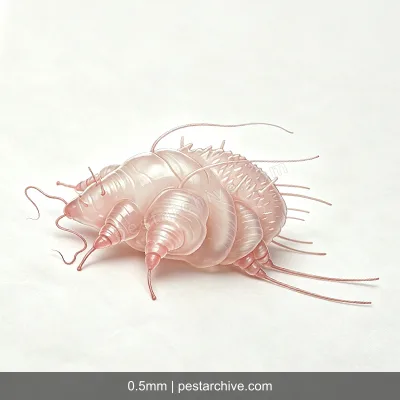
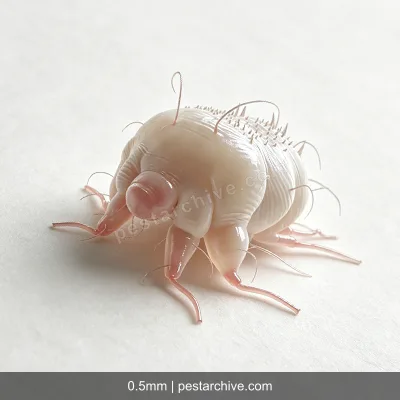
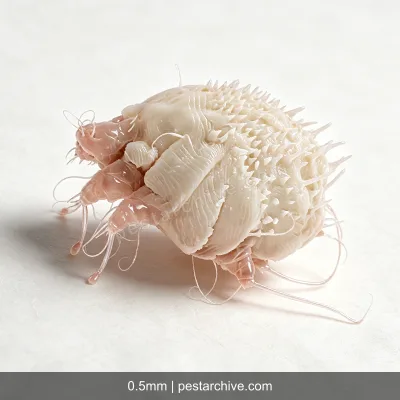
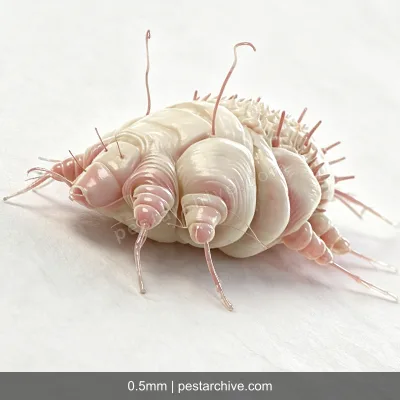
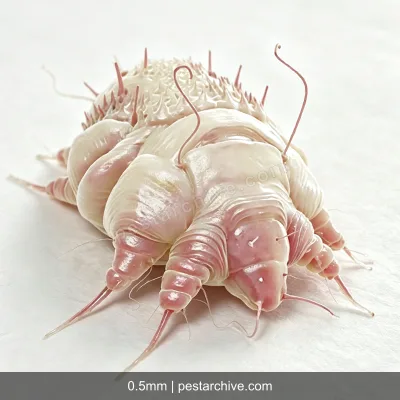
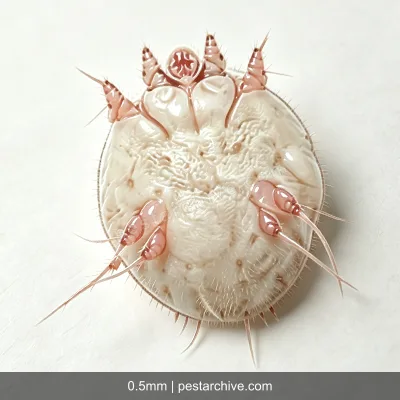
The scabies mite (*Sarcoptes scabiei*) is an extremely tiny mite. Understanding what it looks like helps with correct identification and distinguishing it from other skin problems.
Adult Appearance
- Size: Scabies mites are very small. Females measure 0.3-0.5 mm; males are even smaller (0.2-0.3 mm).
- To the naked eye: Under good light, you can barely make out a tiny white dot, about the size of a pin tip.
- Under magnification: The body is round or oval, resembling a miniature turtle or spider, with four pairs of stubby legs (the front two pairs have suckers; the rear two pairs have long bristles).
- Color: Milky white or pale yellow, semi-transparent.
- Features on the back: The dorsal surface has transverse ridges, scale-like projections, and bristles.
Key Features
As a type of mite, scabies mites have several distinctive characteristics:
- Extremely tiny. You need a magnifying glass or microscope to see details.
- Legs are short and sturdy, adapted for burrowing through the stratum corneum.
- Females are larger than males because they carry large numbers of eggs.
- The body wall is soft, without a hard outer shell.
Different Life Stages
- Egg -- Oval, milky white, about 0.1 mm. Laid inside tunnels in the stratum corneum. Each egg hatches in 3-5 days.
- Larva -- Has 3 pairs of legs, smaller than the adult. After hatching, it crawls to the skin surface, then digs a small molting chamber in a hair follicle or skin crevice.
- Nymph -- Has 4 pairs of legs, smaller than the adult. Continues developing.
- Adult -- Has 4 pairs of legs. After mating, the male dies and the female lays eggs inside skin tunnels.
How Scabies Is Actually Diagnosed
Most patients are not diagnosed by directly seeing the mites with the naked eye. Clinical diagnosis typically relies on:
- Classic symptoms (intense nighttime itching, rash in specific areas).
- Finding grayish-white linear burrows on the skin.
- Scraping skin debris from a burrow and identifying the mite or eggs under a microscope.