Old House Borer Larvae vs. Common Wood Borers: What's the Difference?
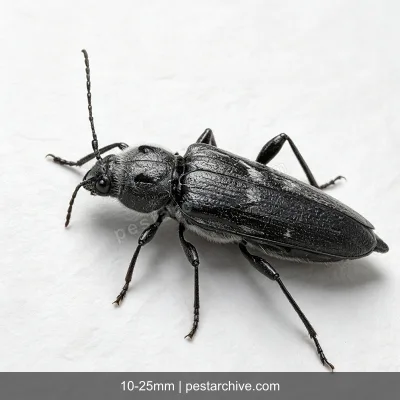
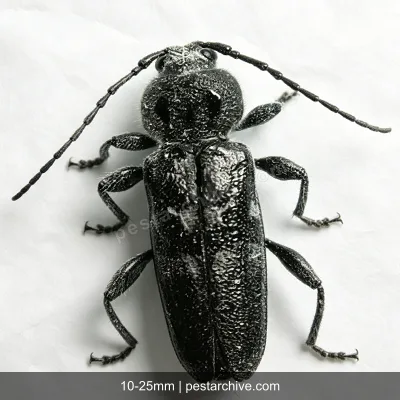
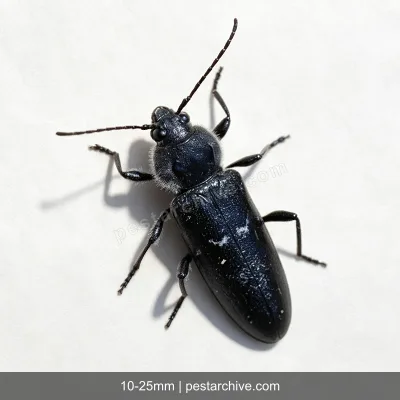
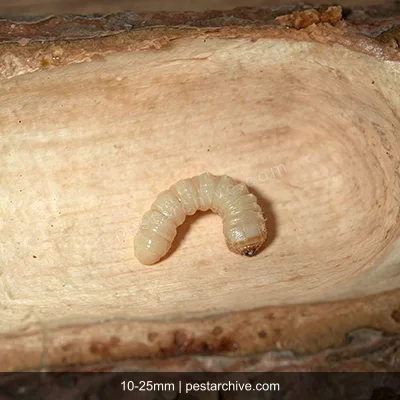
What’s the Difference Between Old House Borer Larvae and Common Wood Borers?
Old house borer larvae and common wood borers (like powderpost beetle larvae) both live inside wood, but they’re very different in size, appearance, damage pattern, and the level of destruction they cause.
Size comparison
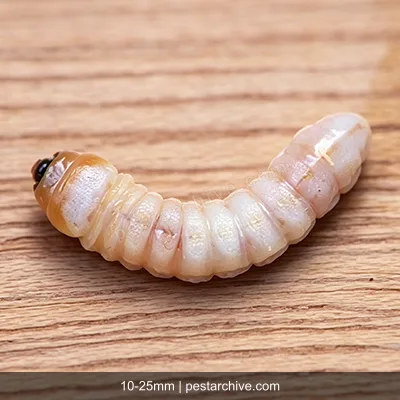
- Old house borer larvae: Chunky body, grows to 3–5 cm—about as thick as your pinky finger
- Common wood borers (powderpost beetles, etc.): Only 3–5 mm long—the size of a grain of rice
Appearance comparison
- Old house borer larvae: Creamy white body with a dark brown head. The pronotum has distinctive markings or patterns. Body segments are clearly defined, with three pairs of well-developed legs.
- Common wood borers: Creamy white body, curled into a C shape. Legs are reduced or barely visible.
Exit hole comparison
- Old house borer holes: Oval-shaped, 1–2 cm in diameter—as wide as your fingertip
- Common wood borer holes: Round, 1–2 mm in diameter—the size of a pinhead
Frass (wood dust) comparison
- Old house borer: Coarse shavings and fibers, like rough sawdust. Feels gritty to the touch.
- Common wood borers: Fine powder, as fine as flour. Feels smooth to the touch.
Damage comparison
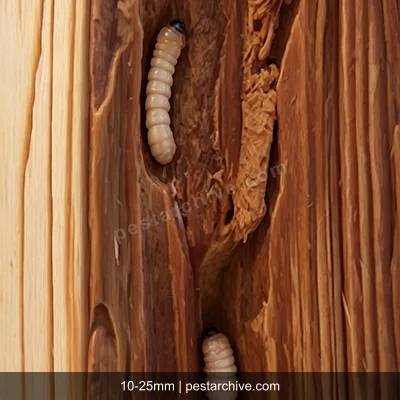
- Old house borer: Tunnels are thick. They can cause serious structural damage in a short time. A beam can be hollowed out.
- Common wood borers: Tunnels are tiny. Even though there may be many holes, they don’t threaten structural integrity in the short term—the damage is mainly cosmetic.
Wood preference
- Old house borer: Strongly prefers softwoods (pine, fir, etc.). Mainly attacks structural timber.
- Common wood borers: Can survive in both hardwoods and softwoods. Mainly attack furniture and wood flooring.
One more obvious difference—sound
At night when the house is quiet, put your ear close to infested wood. Old house borer larvae are big enough that you can hear a distinct crunching or clicking sound as they chew. Common wood borers are too small—you won’t hear them at all.
How to tell them apart quickly
Look at the wood dust: coarse, gritty shavings like sawdust mean old house borer. Fine, smooth powder like flour means common wood borers. You can tell with just your fingertips.