Which pest can bore large holes in wooden beams?
Which pest can bore large holes in wooden beams?
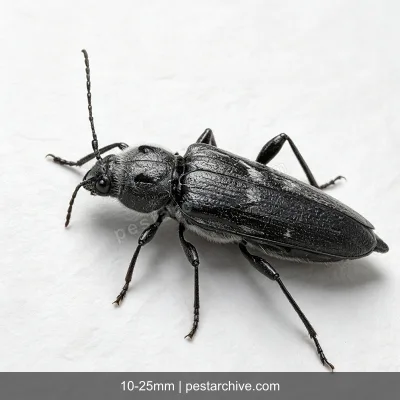
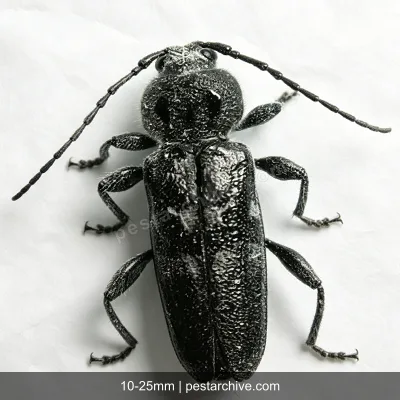
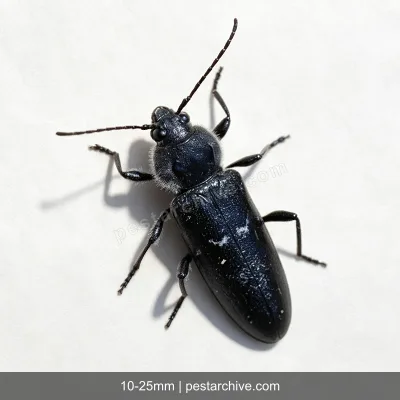
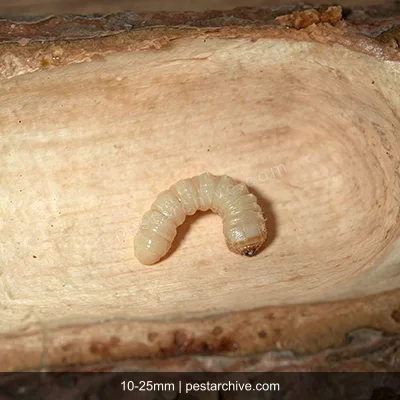
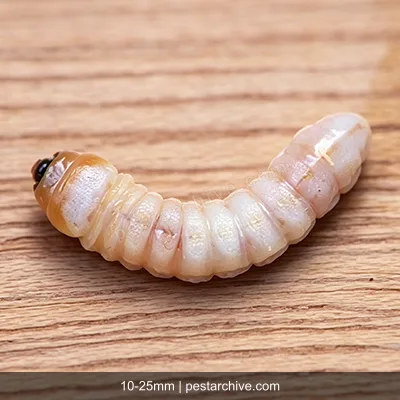
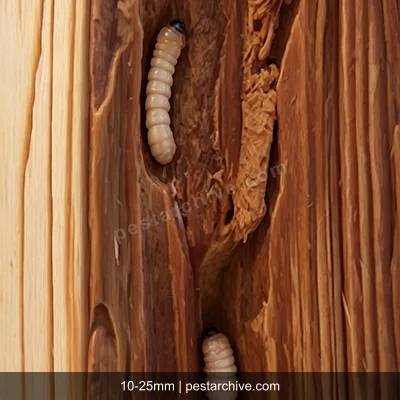
The one that can bore large holes in wooden beams is usually the larva of the house longhorn beetle (also called the old house borer). Adult house longhorn beetles are 1.5-3 cm long, dark brown, with antennae longer than their bodies. They are among the most dangerous pests of wooden structures.
Damage caused by house longhorn beetle larvae
House longhorn beetle larvae bore into wood, creating flattened, oval tunnels about as thick as a finger (1-2 cm in diameter). They continually push wood shavings and frass out of the holes, piling them up under the beams. The affected beam may look intact on the surface, but the interior is already riddled with tunnels.
What wood do house longhorn beetles prefer?
House longhorn beetles prefer coniferous wood, especially:
- Pine (Korean pine, larch, etc.)
- Cedar/China fir (Cunninghamia lanceolata)
- Spruce
- Fir
Old houses with pine beams and fir columns are most commonly affected. The resin and odor of these woods attract house longhorn beetles.
Concealment of damage
The larval stage of the house longhorn beetle is very long, lasting 3-10 years or even longer. During this time, they continuously gnaw inside the beam. From the outside, there may be only one or a few small holes, but a large portion of the wood inside has already been hollowed out.
When is it discovered?
- Piles of coarse wood shavings appear under the beam.
- Oval holes appear on the surface of the beam.
- Tapping the beam with a screwdriver produces a hollow sound.
- In severe cases, the beam may crack or sag.
- In severe cases, the beam may break.
What to do if found
Locate fresh frass holes (holes with wood shavings coming out), clear the shavings, and repeatedly spray dinotefuran-containing household insecticide into the holes to allow the liquid to penetrate the tunnels. If the beam is severely damaged, a professional should assess and replace it.