Sand Flies vs. Mosquitoes: The Difference
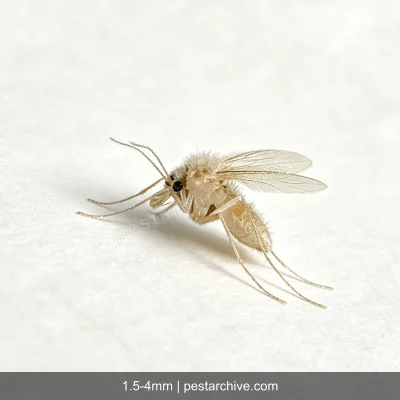
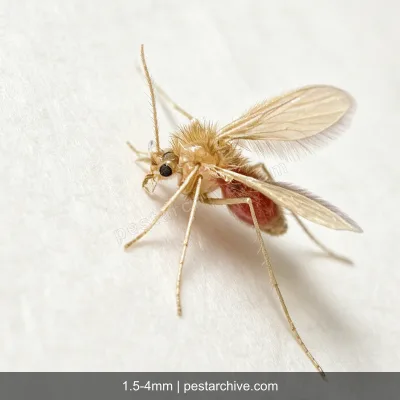
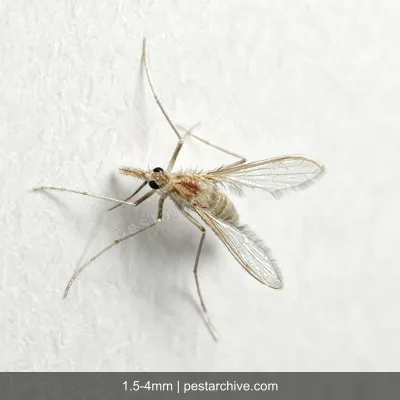
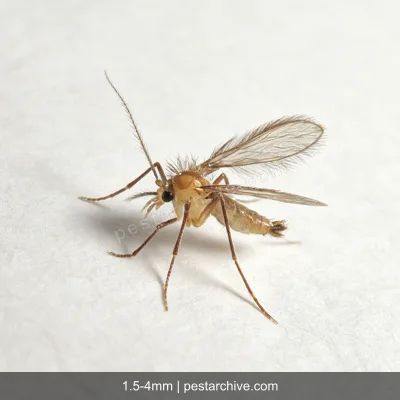
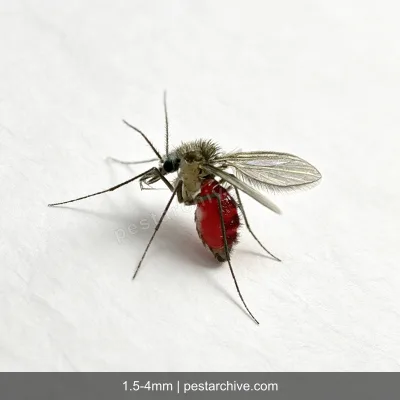
What's the Difference Between Sand Flies and Mosquitoes?
Sand flies and mosquitoes both bite and feed on blood, but they differ in multiple ways. Knowing these differences helps you target your control more effectively:
Size and appearance
- Sand flies: Very small, about one-third the size of a mosquito (1.5-3 mm). Their bodies are covered in fine hairs, giving them a fuzzy look. Color is yellowish-brown. Wings are relatively broad and held upright in a V-shape when at rest.
- Mosquitoes: Larger (3-6 mm). Bodies are smooth and hairless. Color is gray-black or brown with white markings. Wings lie flat along the sides of the body when at rest.
Flight characteristics
- Sand flies: Their flight is silent — no sound at all, so it's very hard to notice them approaching. They fly slowly and don't go far, usually staying within a few dozen meters of their breeding site. Weak fliers.
- Mosquitoes: They make the distinctive buzzing sound in flight because their wings beat fast. Strong fliers that can travel hundreds of meters or more.
Activity times
- Sand flies: Become active after dusk, peaking around midnight. Mainly nocturnal, but may bite in dark indoor areas during the day too.
- Mosquitoes: Different species have different activity times. *Aedes* mosquitoes are active during the day. *Culex* and *Anopheles* mosquitoes are active at night.
Bite characteristics
- Sand flies: The bite reaction tends to be more intense — itchier, and the redness and swelling last longer (up to a week). Because sand fly mouthparts are short, they repeatedly stab to find a blood vessel, causing more tissue damage.
- Mosquitoes: Bites produce ordinary redness, swelling, and itching that usually subside in 2-3 days.
Disease transmission
- Sand flies: Transmit visceral leishmaniasis (kala-azar), sand fly fever, and other diseases, primarily in tropical and rural areas worldwide.
- Mosquitoes: Transmit malaria, dengue fever, Japanese encephalitis, Zika, and more. Multiple species, wide impact range.
Control differences
Because sand flies are tiny, weak fliers that love to rest on walls, control focuses more on residual surface treatment of walls and fine-mesh screens. Mosquitoes are strong fliers and require a combination of coils, bed nets, screens, traps, and other methods.