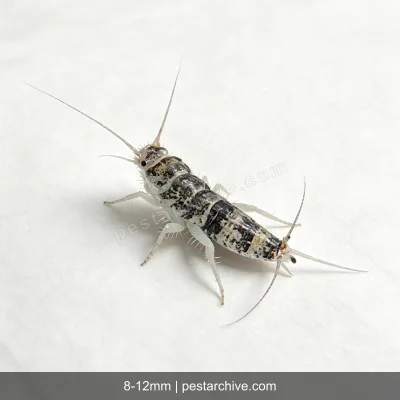
Firebrats
(Hot silverfish, Kitchen bristletail)*Thermobia domestica*
Identification & Appearance
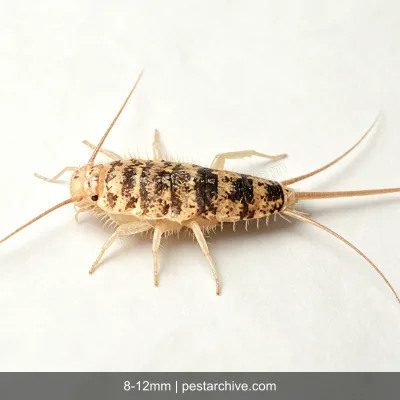
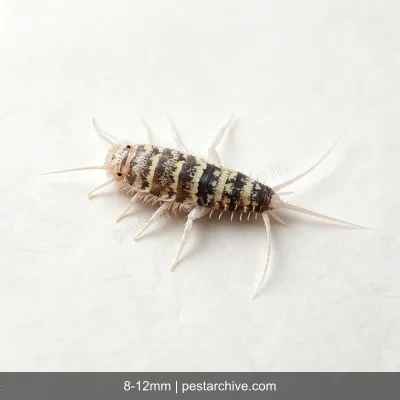
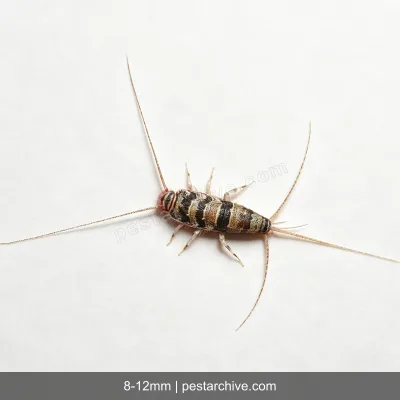
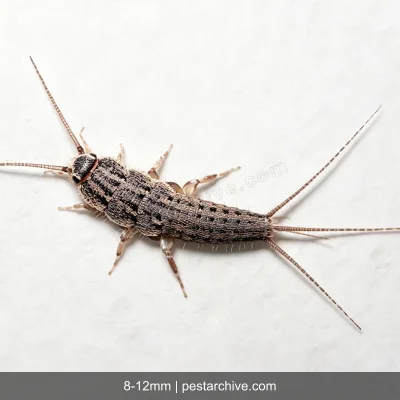
Firebrats (Thermobia domestica) are close relatives of common silverfish but with far greater heat tolerance. Adults measure 8-12mm, brown-gray to dark gray, spindle-shaped and wingless, covered with gray scales, with dark stripes and spots. They have 3 long tail filaments and long, threadlike antennae. Their defining characteristic is heat tolerance — they remain active and thrive at 35-45 C, which sets them apart from common silverfish that prefer moderate temperatures. This difference drives their distinct habitat preferences.
Habits & Hiding Places
Firebrats are nocturnal, hiding in cracks and crevices during the day and emerging at night to feed. They are omnivorous, consuming carbohydrates and proteins: paper, glue, starch, sugar, rayon, and cotton. Their key distinction from common silverfish is their habitat: they concentrate in high-temperature areas — boiler rooms, laundry rooms, around water heaters, behind dryers, and behind ovens. They breed year-round; females lay 10-20 eggs per batch and hundreds over a lifetime. Their long lifespan (2-3 years) means established populations persist for years if conditions remain favorable.
Health Risks & Damage
- Damage books, paper, wallpaper, photographs, stamps, and other paper-based items.;
- Can damage fabrics (cotton, rayon).;
- Can contaminate stored starchy and sugary foods in pantries.;
- Large numbers around water heaters and dryers cause psychological disgust.
Season & Region
Global distribution. Year-round indoor activity in heated environments. Prefers elevated temperatures of 35–45 °C; remains active even in summer near heating appliances and equipment.
| Region | Active Period | Peak Season | Notes |
|---|---|---|---|
| N. Hemisphere Temperate | Year-round(Indoors) | Summer(Jun–Aug) | Year-round activity in heated environments |
| N. Hemisphere Subtropical to Tropical | Year-round | No distinct seasonal peak | Year-round activity |