What Are Firebrats and How to Get Rid of Them?
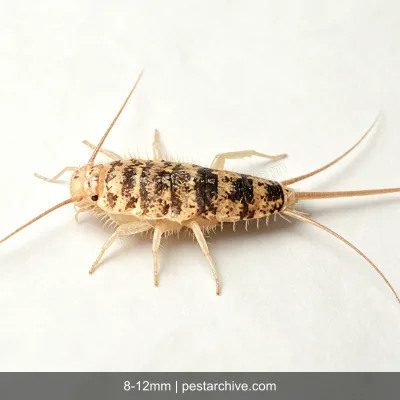
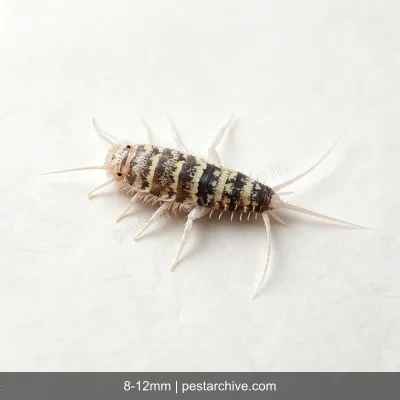
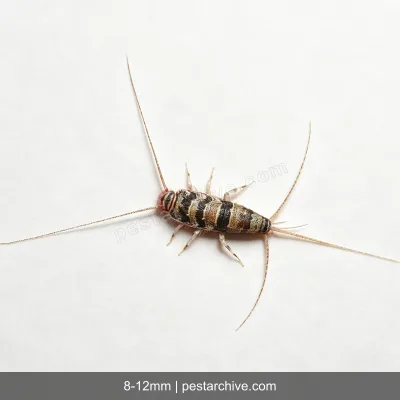
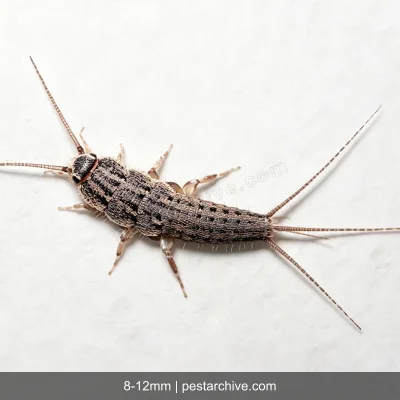
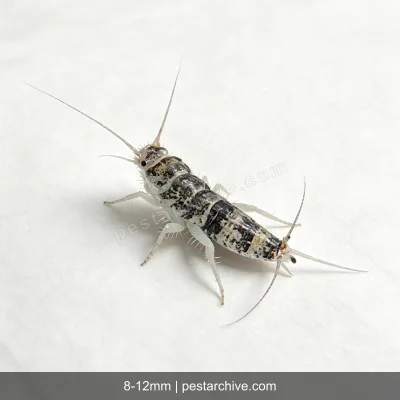
Firebrats (*Thermobia domestica*) are the close relatives of Silverfish that you find in the hottest spots of your home — around boilers, behind ovens, inside furnace rooms, near hot-water pipes, and in attics during summer. Where Silverfish prefer cool, damp areas, Firebrats thrive at 32–41°C (90–106°F) and actually avoid humidity below 75%.
Visually, Firebrats look similar to Silverfish — carrot-shaped body, three tail appendages, and scaly covering — but they are mottled gray-brown rather than silvery, and they prefer heat over moisture.
### What Firebrats Eat
Firebrats are carbohydrate feeders that damage:
- Book bindings and paper (especially wallpaper)
- Starch in clothing and textiles
- Glue and adhesive in book bindings, envelopes, and wallpaper paste
- Dead insects and other organic debris
- Rayon, silk, and linen fabrics
- Dried cereals and pet food (when accessible)
### How to Get Rid of Firebrats
Step 1: Reduce heat and humidity in harborage areas.
Firebrats require both high temperature and high humidity. Make their preferred areas less hospitable:
- Improve ventilation in furnace rooms, boiler areas, and attic spaces.
- Run a dehumidifier in affected areas — target humidity below 60%.
- Insulate hot-water pipes to reduce surface temperature and eliminate the heat gradient Firebrats follow.
- Fix any leaks contributing to moisture in warm zones.
Step 2: Remove food sources.
- Store books and papers in sealed plastic bins.
- Keep starch-based items (glue, paste, adhesives) in sealed containers.
- Clean up dead insects and organic debris regularly.
- Keep pet food in sealed containers.
Step 3: Apply diatomaceous earth.
- Sprinkle food-grade diatomaceous earth along baseboards, behind appliances, around pipe penetrations, and in attic corners.
- DE abrades the Firebrat's exoskeleton, causing lethal dehydration.
- Reapply after humidity changes or cleaning.
Step 4: Sticky traps for monitoring and capture.
- Place sticky traps near hot-water pipes, behind the oven, and in furnace rooms.
- Traps catch foraging Firebrats and serve as monitoring tools to gauge population density.
Step 5: Residual insecticide for persistent infestations.
- Apply a residual pyrethroid spray (deltamethrin or permethrin) along baseboards and around hot-water pipes in infested rooms.
- Professional application recommended for large or persistent infestations.
### Firebrats vs. Silverfish — Quick Comparison
| Feature | Firebrats | Silverfish |
|---------|-----------|------------|
| Color | Mottled gray-brown | Silvery metallic |
| Preferred temperature | 32–41°C (90–106°F) | 21–28°C (70–82°F) |
| Preferred humidity | >75% | >75% |
| Found near | Boilers, ovens, furnace rooms | Bathrooms, basements, damp areas |
| Active season | Summer + heating season | Year-round in damp homes |