Phorid Flies
(Scuttle flies, Humpback flies, Coffin flies)*Megaselia scalaris* / Phoridae
Identification & Appearance
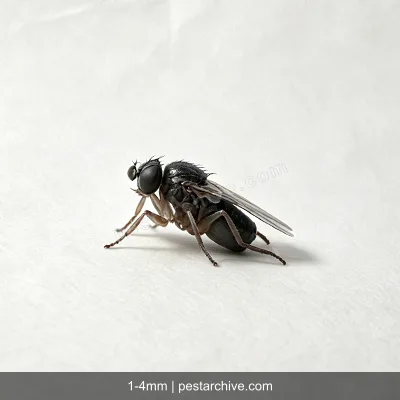
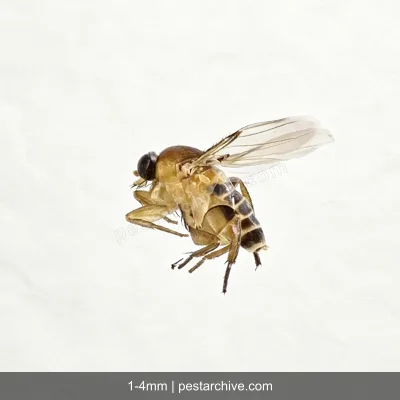
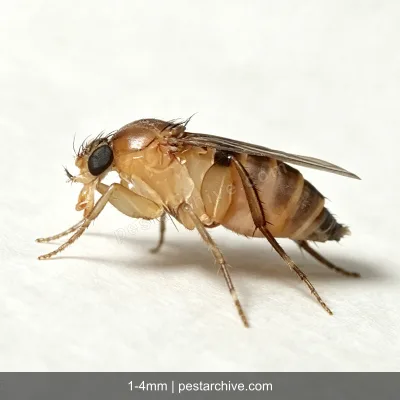
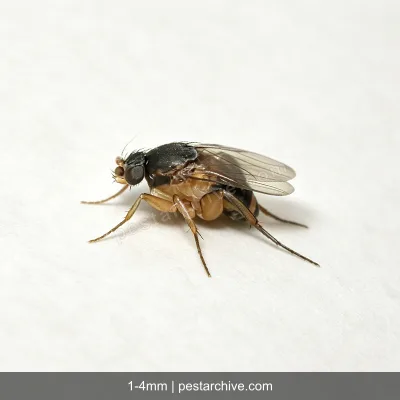
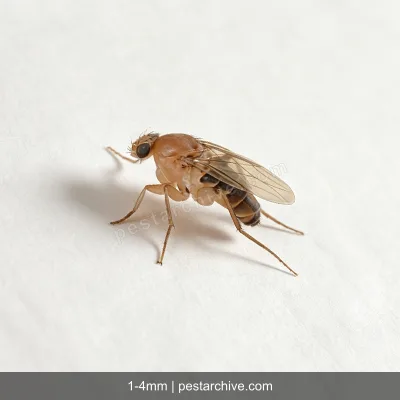
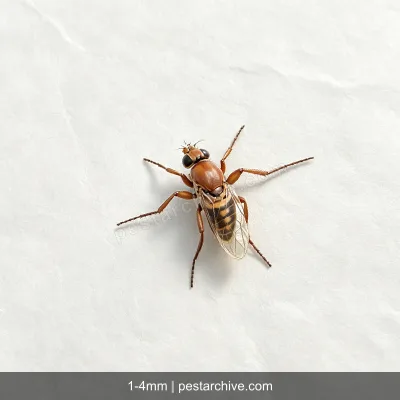
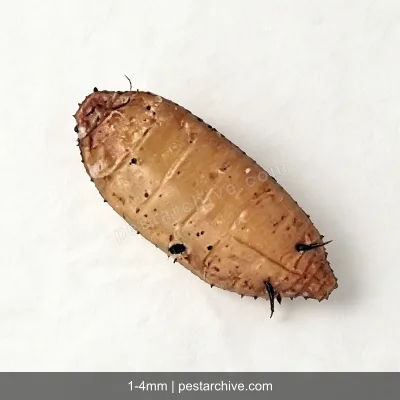
Phorid flies (family Phoridae), also called humpbacked flies, are tiny flies of kitchens and damp areas. Adults measure 1-4mm, dark brown to black, with a distinct humpbacked thorax — their most recognizable feature. They are strong jumpers, leaping away when disturbed rather than immediately flying. Larvae measure 2-5mm, white to pale yellow, slender. They develop in decaying organic matter: kitchen waste, rotting produce, drain sludge, and animal carcasses. At 22-30 C, the cycle takes 3-4 weeks with multiple generations per year. A single pair can produce hundreds of offspring within weeks.
Habits & Hiding Places
Phorid fly larvae feed on decaying organic matter. Indoors, they concentrate around kitchen trash cans (primary breeding site — kitchen waste provides ideal larval food; adults fly out when trash is opened), kitchen sink drains (organic sludge in pipes supports breeding), under refrigerators and in cabinet crevices (condensation and accumulated food debris), and balconies and storage rooms with rotting plants. Adults are strong jumpers and short-distance fliers, staying within a few meters of breeding sites. They are diurnal, resting on walls and ceiling corners at night. Activity peaks in summer.
Health Risks & Damage
- Adults crawl and land on food, cutting boards, and kitchenware, contaminating kitchen hygiene. Their bodies carry bacteria from decaying garbage and drains.;
- Dozens of flies jumping and flying around the kitchen disrupt daily life.;
- Heavy infestations signal poor kitchen sanitation — unemptied trash, uncleaned cans, organic drain sludge. Killing only adults leads to re-emergence within 2-3 weeks.;
- Core solution: daily trash removal, weekly hot-water cleaning of trash cans, monthly drain flushing with boiling water or pipe cleaner.
Season & Region
Cosmopolitan. Favors moist, decaying organic matter. Main occurrence period spring–summer (Apr–Aug); mass breeding occurs 2–3 weeks after organic matter begins decomposing. Compact body with characteristic humpbacked thorax; agile fliers. Commonly breed in decaying plant material, flowerpot saucer water, etc.
| Region | Active Period | Peak Season | Notes |
|---|---|---|---|
| N. Hemisphere Temperate | Apr–Oct | May–Aug | Highest density in warm-humid season |
| N. Hemisphere Subtropical to Tropical | Year-round | Apr–Sep | Year-round occurrence in southern regions |