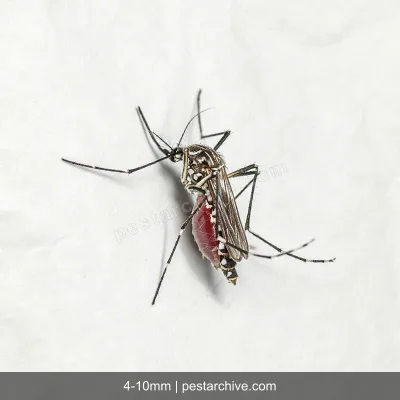
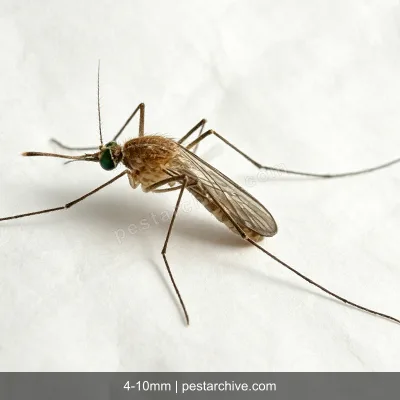
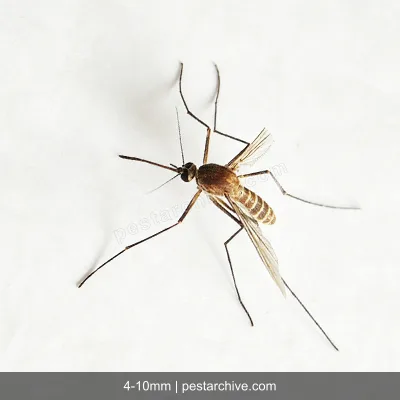
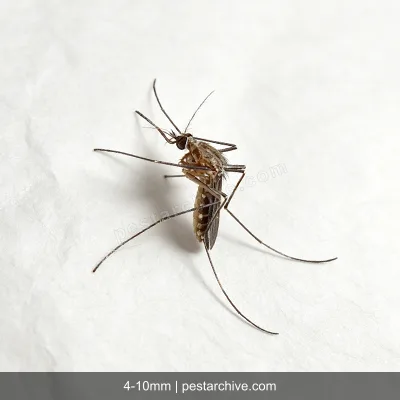
House Mosquitoes
(Common mosquito, Culex, West Nile vector)*Culex pipiens pallens* / *C. quinquefasciatus*
Identification & Appearance
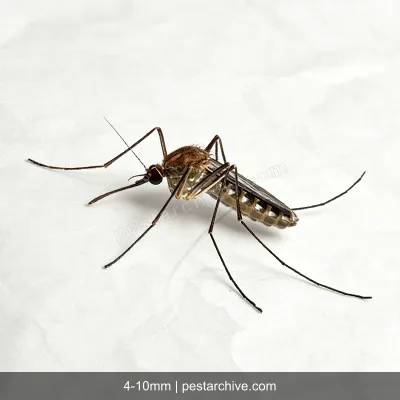
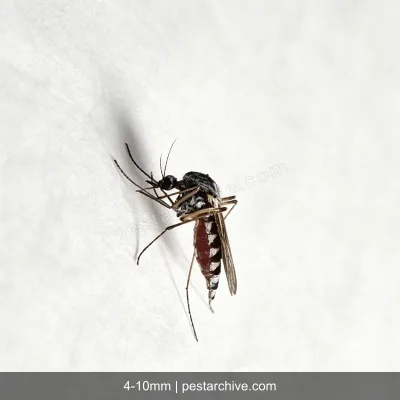
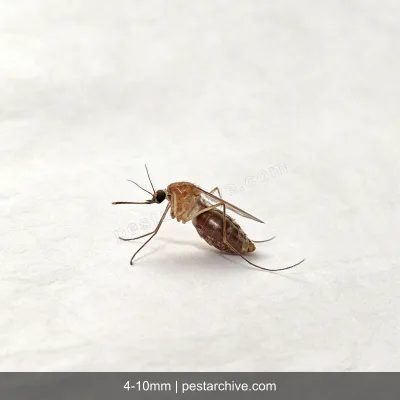
House mosquitoes (Culex spp.) are among the most common indoor mosquitoes. Adults measure 4-10mm, gray-brown or tan, with bodies and wings covered in scales. Their mouthparts are piercing-sucking. At rest, the abdomen is held parallel to the landing surface (distinguishing them from Aedes and Anopheles mosquitoes). Females require a blood meal for egg development; males feed on plant nectar. They are the most common blood-feeding mosquitoes in urban and suburban areas.
Habits & Hiding Places
Most active from dusk to dawn; daytime resting in cool, damp places (vegetation, garages, basements). Sensitive to CO2, body odor, and heat from humans. Females lay eggs glued together in floating rafts of 100-300 on the water surface. The egg-to-adult cycle takes about 7-10 days through egg, larva (wriggler), pupa, and adult stages. They prefer permanent standing water: ponds, marshes, neglected pools, rain barrels.
Health Risks & Damage
- Bites cause itching and redness, disrupting sleep.;
- Primary vector of West Nile virus, causing West Nile fever and potentially fatal encephalitis.;
- Vector of St. Louis encephalitis virus.;
- Vector of Japanese encephalitis virus (in Asia).;
- Vector of lymphatic filariasis (tropical regions globally).
Season & Region
Cosmopolitan. Peak activity Jun–Sep in temperate zones (May–Oct in subtropical). Year-round activity and reproduction in tropical regions.
| Region | Active Period | Peak Season | Notes |
|---|---|---|---|
| N. Hemisphere Temperate | May–Oct | Jun–Sep | Summer peak |
| N. Hemisphere Subtropical | Apr–Nov | May–Oct | Longer active season |
| Tropical | Year-round | Rainy season | Year-round activity; highest density in rainy season |