Kissing Bugs
(Assassin bug, Cone-nosed bug, Triatomine bug)*Triatoma infestans* / Triatoma spp.
Identification & Appearance
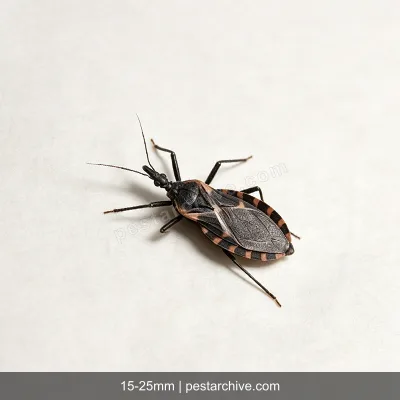
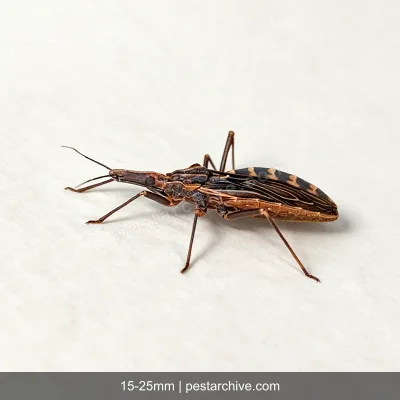
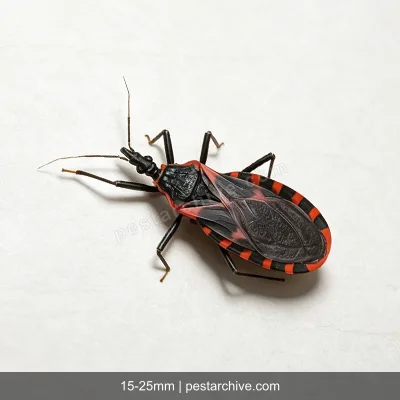
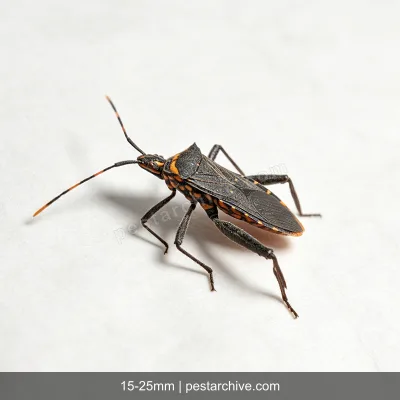
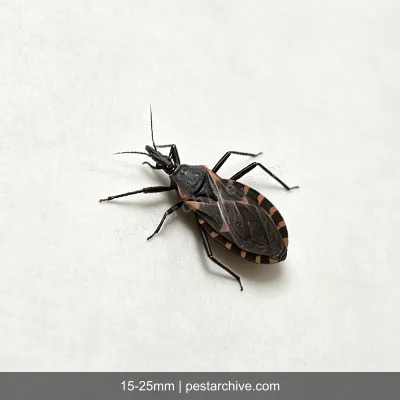
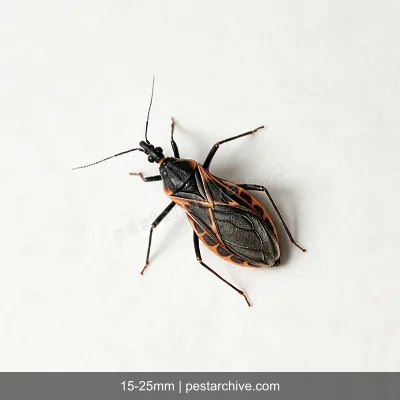
Kissing bugs (subfamily Triatominae), also called conenose bugs or assassin bugs, are the vectors of Chagas disease (American trypanosomiasis). Adults measure 15-25mm, brown to black, with a broad flattened body, a cone-shaped head with large compound eyes, and a slender piercing-sucking proboscis. Adults have well-developed wings and are capable fliers with strong phototaxis. They are named for their habit of biting humans on the face, especially around the lips and eyes where the skin is thin.
Habits & Hiding Places
Kissing bugs are nocturnal, hiding during the day in wall cracks, roof gaps, under furniture, and under pet bedding. At night, they are attracted by the host's body heat and exhaled CO2 to emerge and feed. They preferentially bite the face and exposed skin. During feeding, they defecate near the bite wound — the feces contain Trypanosoma cruzi parasites which enter the body when the person scratches the bite area. Primarily endemic in Latin America but also found in the southern US, mainly in substandard housing: adobe houses, thatched roofs, and old wooden homes.
Health Risks & Damage
- Bites transmit Chagas disease (American trypanosomiasis), caused by Trypanosoma cruzi. The acute phase features fever and eyelid swelling (Romana sign); the chronic phase causes severe heart disease (cardiomyopathy, arrhythmias, heart failure) and gastrointestinal megacolon and megaesophagus. An estimated 6-7 million people are infected worldwide.;
- Bite sites and mucous membrane areas may show local allergic reactions and swelling.;
- Allergens in kissing bug saliva can cause severe allergic reactions including anaphylaxis.
Season & Region
Primarily distributed in Latin America; also present in the southern United States. Nocturnal. Most active during warm months and on summer nights.
| Region | Active Period | Peak Season | Notes |
|---|---|---|---|
| Tropical to Subtropical Americas | Year-round | Summer(May–Sep) | Primary distribution range; highest density in warm season |
| Southern US (temperate margin) | Apr–Oct | Jun–Aug | Most active on summer nights |