What Are Kissing Bugs and Are They Dangerous?
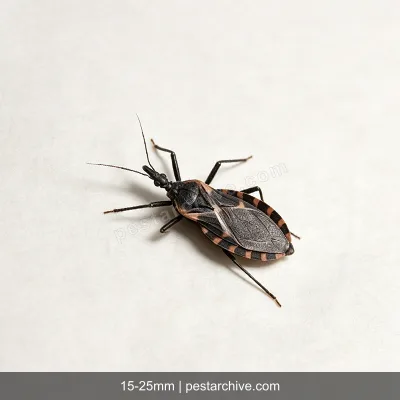
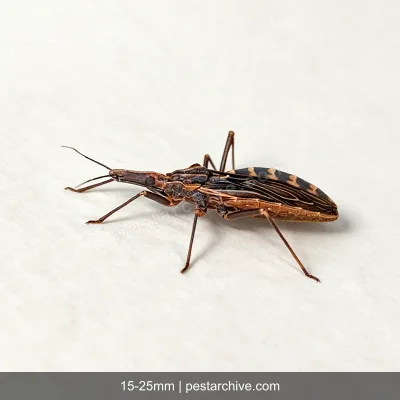
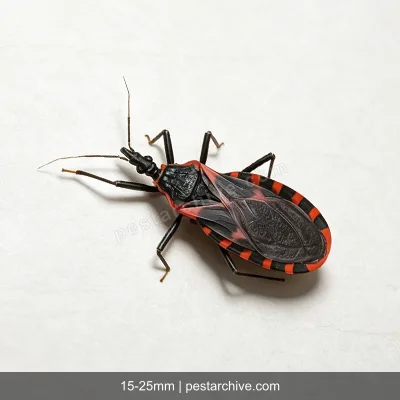
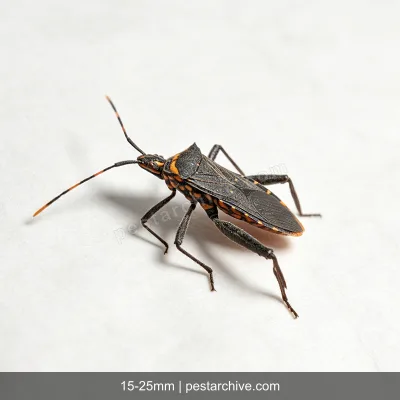
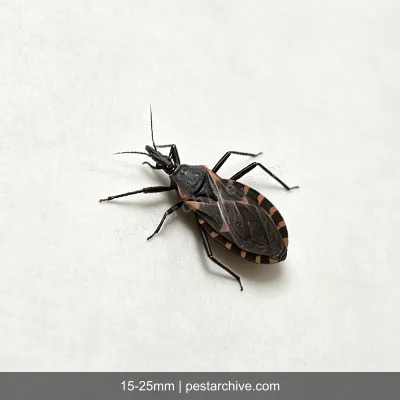
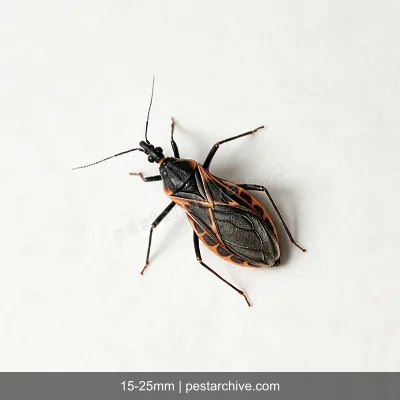
Kissing Bugs — also called conenose bugs or triatomine bugs — are large (15–30 mm), dark-bodied insects with distinctive cone-shaped heads and orange-striped sides. They are not cute despite the nickname: "kissing bug" refers to their tendency to bite around the mouth and eyes while a person sleeps, not to any affectionate behavior.
The danger of Kissing Bugs is not the bite itself (which is usually painless) but what they carry: *Trypanosoma cruzi*, the parasite that causes Chagas disease. Chagas can cause chronic heart failure, intestinal damage, and sudden death decades after the initial infection — and most infected people never know they were bitten.
### Where Kissing Bugs Live
Kissing Bugs are found from the southern United States through Mexico, Central America, and into South America. In the U.S., they are most common in Texas, Arizona, New Mexico, and parts of California, Florida, and Louisiana. They live outdoors in:
- Woodrat nests and rodent burrows
- Under piles of rocks, logs, and debris
- In dog kennels and chicken coops
- In cracks of adobe and stucco walls
- In attics and crawl spaces of homes in rural and suburban areas
They enter homes at night attracted by lights and CO2 from sleeping humans, feed on blood, and then defecate near the bite wound. The parasite enters the body when the person rubs the feces into the bite or into mucous membranes (eyes, mouth) — not through the bite itself.
### Kissing Bug Life Cycle
- Eggs are laid in hidden cracks and crevices.
- Nymphs (5 instar stages) must feed on blood to develop — each stage requires at least one blood meal.
- Adults feed every 1–2 weeks and can live 1–2 years.
- They are nocturnal and hide during daylight in cracks, under mattresses, behind pictures, and in wall voids.
### Identifying Kissing Bugs vs. Similar Insects
Many insects are mistaken for Kissing Bugs. True Kissing Bugs have:
- A cone-shaped head that is narrow and elongated, about half the body length.
- Orange/red stripes along the sides of the abdomen (visible on the connexivum, the lateral margin).
- A straight, elongated body — not oval or round like stink bugs.
- No thick antennae — unlike leaf-footed bugs which have expanded segments.
- Size 15–30 mm — significantly larger than most household bugs.
Common misidentifications: Western conifer seed bugs, leaf-footed bugs, assassin bugs, and stink bugs. If you are unsure, photograph the insect and submit it to your local extension office or university for identification — do not handle it bare-handed.
### Chagas Disease: The Hidden Threat
- Acute phase (weeks 1–2): Mild fever, body aches, rash, swelling at the bite site (chagoma). Often entirely asymptomatic — most people never notice.
- Chronic phase (decades later): 20–30% of infected individuals develop serious cardiac complications (cardiomyopathy, arrhythmia, heart failure) or gastrointestinal complications (megaesophagus, megacolon). Can be fatal.
- Diagnosis: Blood test for *T. cruzi* antibodies — most infected people are diagnosed only during the chronic phase when heart damage appears.
- Treatment: Benznidazole or nifurtimox — effective in the acute phase but less effective in chronic phase. Early diagnosis is critical.
### Safety If You Find a Kissing Bug
- Do NOT touch it with bare hands. Capture it in a container or with gloves.
- Report it. Many state health departments collect Kissing Bugs for Chagas testing. Contact your local health department for instructions.
- If bitten, wash the bite area thoroughly, save the bug for identification, and consult a physician about Chagas testing.
- Do NOT squash it. Crushing a Kissing Bug releases its feces, which contain the parasite — this is exactly how infection occurs.