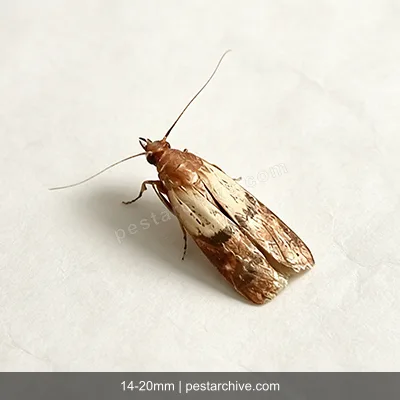
Indian Meal Moths
(Pantry moth, Flour moth, Cereal moth)*Plodia interpunctella*
Identification & Appearance
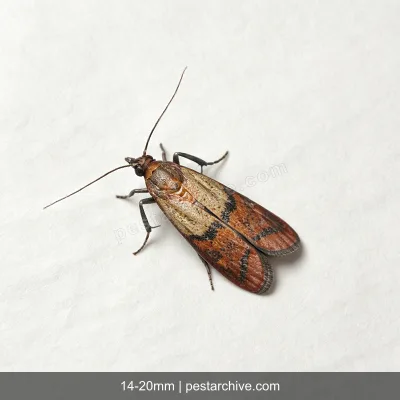
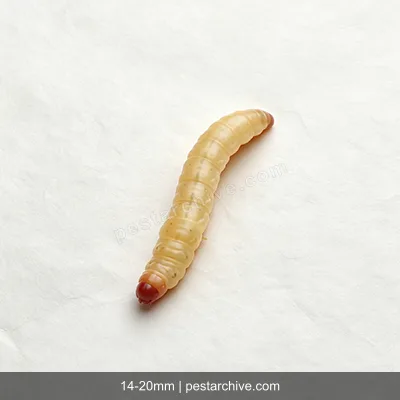
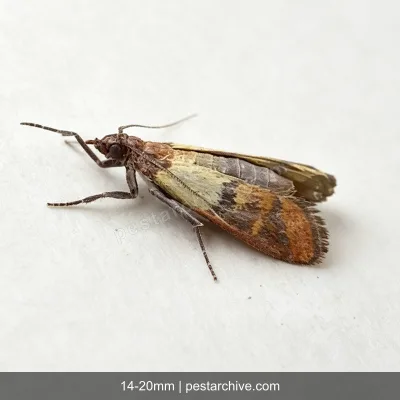
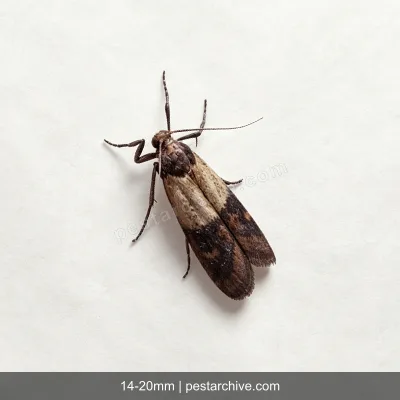
Indian meal moths (Plodia interpunctella) are the most common stored-product moths worldwide. Adults have a 14-20mm wingspan with distinctive two-tone forewings: basal half pale gray, distal half reddish-brown to coppery. Larvae measure 10-15mm, white to pale yellow, and produce copious silk while feeding, webbing food particles together into clumps. At 25-30 C, the cycle takes 4-6 weeks with 4-6 generations per year. Adults do not feed and live 1-2 weeks.
Habits & Hiding Places
Larvae are generalist feeders on grains, flour, nuts, dried fruits, chocolate, pet food, birdseed, spices, and Chinese herbs. Nuts and dried fruits are their most preferred foods. Indoors, they concentrate in kitchen cabinets and food storage areas. Adults are attracted to light and fly at dusk. Larvae produce silk tunnels throughout infested food, binding particles together. They breed year-round in heated homes.
Health Risks & Damage
- Larvae contaminate food with silk webbing, frass, and shed skins, rendering it inedible.;
- Infestations can spread across multiple food types in a pantry within weeks.;
- Adults flying around kitchens and landing on surfaces create hygiene concerns.;
- Larvae and pupae hide in packaging folds and crevices, making detection difficult.;
- Worldwide distribution, common in homes, supermarkets, warehouses, and food processing plants.
Season & Region
Cosmopolitan. Thermophilic; optimal development at 24–30 °C, RH 70–80 %. 4–6 generations per year; overwinters as larva. Overwintered generation begins adult emergence in Apr; successive generations emerge and cause peak damage May–Sep. Larvae spin silk webbing over grain surfaces; severe infestations completely cover the grain surface.
| Region | Active Period | Peak Season | Notes |
|---|---|---|---|
| N. Hemisphere Temperate | Apr–Oct | Jun–Sep | Overlapping generations; summer peak damage |
| N. Hemisphere Subtropical to Tropical | Year-round | May–Sep | More generations in southern regions |