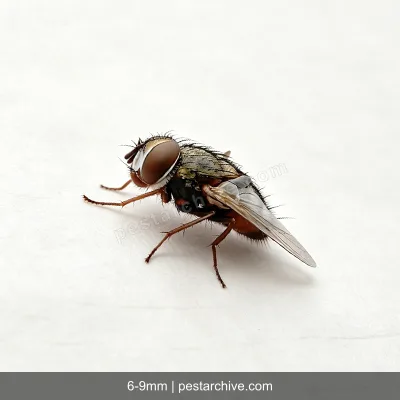
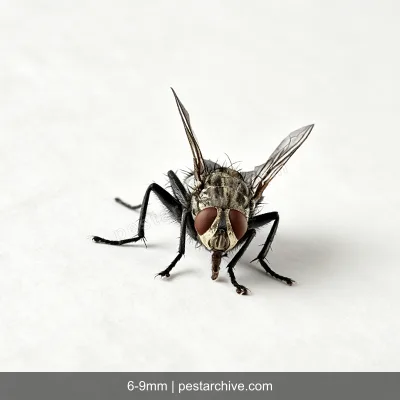
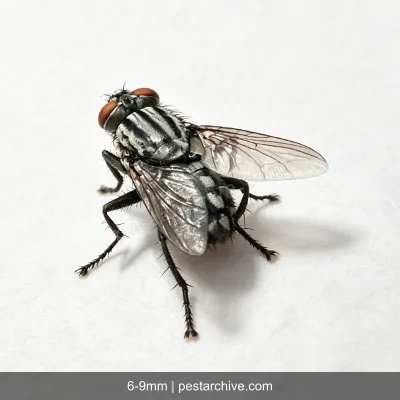
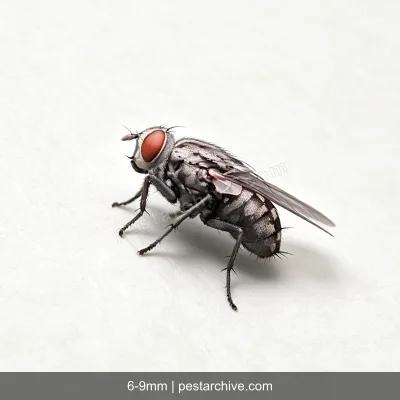
Flesh Flies
(Grey flesh flies, Carrion flies)*Sarcophaga* spp. / Sarcophagidae
Identification & Appearance
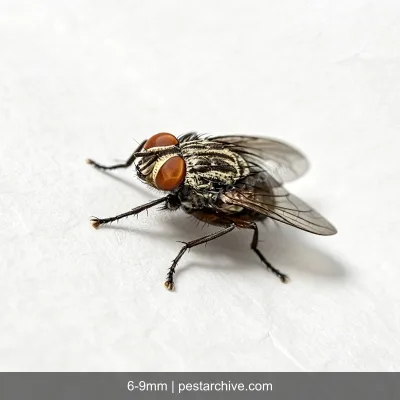
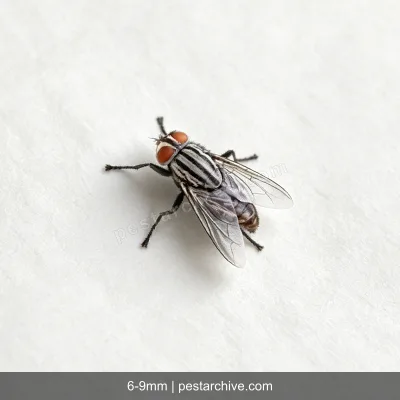
Flesh flies (family Muscidae) are medium to large flies commonly found indoors. Common species include Muscina stabulans and Fannia canicularis. Adults measure 6-9mm, gray-brown to dark metallic, with two dark stripes on the thorax. Larvae (maggots) measure 8-12mm, white to pale yellow. They feed on decaying organic matter: kitchen waste, animal feces, rotting vegetables, and carcasses. At 22-30 C, the cycle takes 2-4 weeks with 4-6 generations per year. Unlike house flies, flesh flies tend to breed outdoors and fly indoors to forage, though they can also breed indoors in poor sanitation conditions.
Habits & Hiding Places
Flesh flies are attracted indoors by the odors of kitchen waste, rotting food, and garbage. Indoors, they hover around door and window areas (primary entry), kitchen trash cans and counters, trash areas, and bathroom and balcony damp zones. They are strong fliers covering several kilometers. They can detect rotting organic matter odors from a kilometer away. Most active in summer; seek indoor shelter as autumn temperatures drop. Low-level activity continues year-round in heated homes.
Health Risks & Damage
- Their bodies carry dozens of pathogens: E. coli, Salmonella, Shigella, Staphylococcus aureus. They transfer these to food and surfaces after feeding on garbage and filth.;
- Buzzing flight disrupts rest and daily activities. Landing on skin causes irritation.;
- In poor sanitation, females can lay eggs directly on indoor rotting food or garbage, with maggots causing secondary contamination.;
- Prevention: install tight screens, use door curtains, seal garbage, and remove waste daily.
Season & Region
Cosmopolitan. Appears May–Oct; bimodal density peaks in Jun and Aug–Sep. Adult flies feed on fruits, carrion, or animal excrement. Overwinters predominantly as pupa. Shorter active season in temperate zones; year-round activity in southern regions.
| Region | Active Period | Peak Season | Notes |
|---|---|---|---|
| N. Hemisphere Temperate | May–Oct | Jun、Aug–Sep | Bimodal peaks; highest summer density |
| N. Hemisphere Subtropical to Tropical | Year-round | May–Sep | Year-round activity; high summer density |