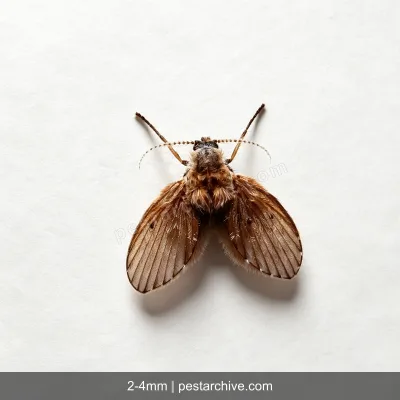
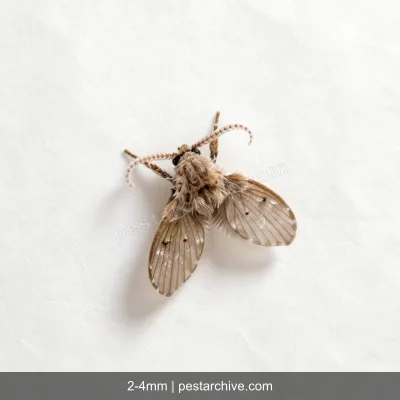
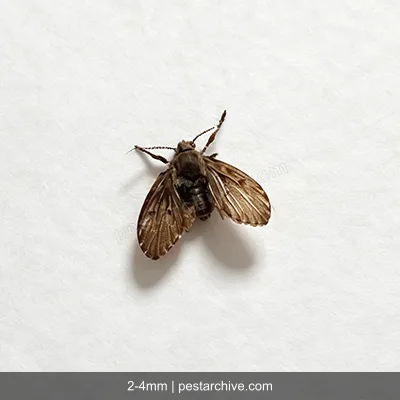
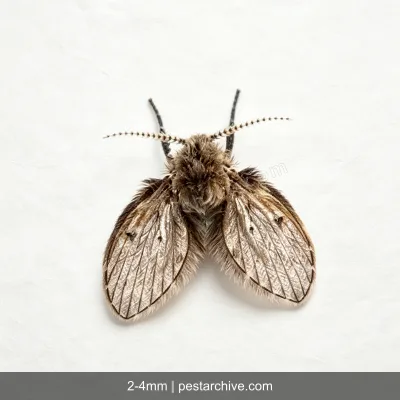
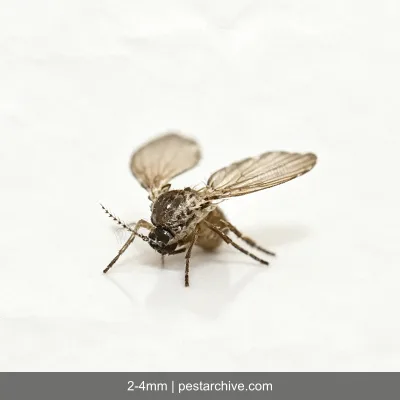
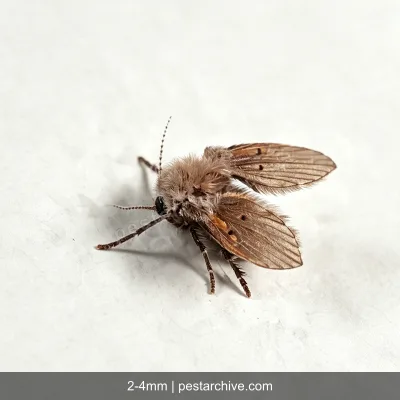
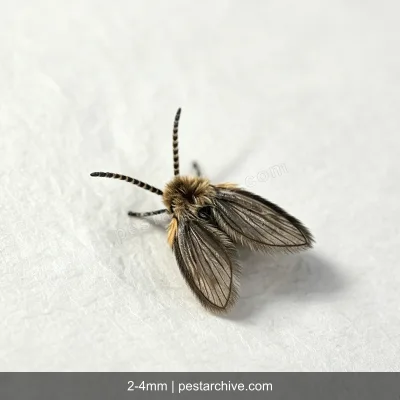
Drain Flies Control & Removal Guide
(Moth flies, Sewer flies, Filter flies)*Clogmia albipunctata* / Psychodidae
How They Get In
- Adults emerge directly from drains, floor drains, sink pipes, and toilet base gaps where larvae develop in biofilm.
- Long-standing water in bathroom and balcony dead zones allows self-breeding.
- Rotting debris and trash can bottom water provide breeding substrate.
- Common sewer and garbage chute sources in multi-unit buildings spread through drainage systems.
How to Get Rid of Them
- Pre-Treatment: Clear hair and grime from floor drains and drain openings. Wipe bathroom floor dry. Pour boiling water or pipe cleaner down drains to kill larvae. Close bathroom door.;
- Key Zones: Floor drain openings (ring-spray around opening), sink drain openings, toilet base-floor joints, countertop crevices, dark wall corners, around trash cans.;
- Application: Spray into drain openings for several seconds to let chemical flow into pipes. Remove drain covers before spraying. Lightly spray walls and corners. Close bathroom door for 1 hour.;
- Post-Treatment: Ventilate 30+ minutes. Pour a kettle of boiling water (about 90 C) down drains for dual-action kill with chemical. Repeat boiling water flush every 1-2 weeks.;
- Prevention: Keep bathrooms dry and ventilated — the single most important measure. Run exhaust fans 30+ minutes after showering. Install insect-proof drain covers. Pour boiling water down drains monthly.
Prevention & Follow-Up
Flush sink and floor drains with hot water once a month—the near-boiling water kills drain fly larvae and pupae living inside the pipes. Install an odor-proof, pest-proof drain insert to physically block drain flies from flying out of the drain. Run the bathroom exhaust fan for at least 30 minutes after every shower to keep the room dry. Clean hair and gunk out of drains and drain covers regularly to cut down on the slimy biofilm that drain flies feed on.