Bean Weevils
(Cowpea weevil, Seed beetle, Pulse beetle)*Callosobruchus chinensis* / Bruchidae
Identification & Appearance
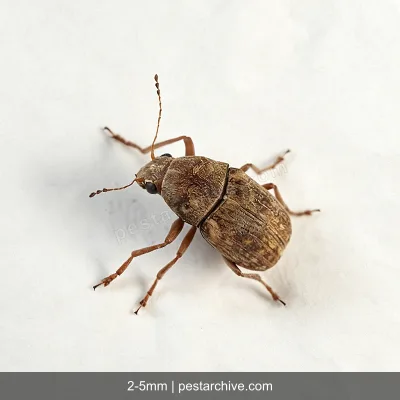
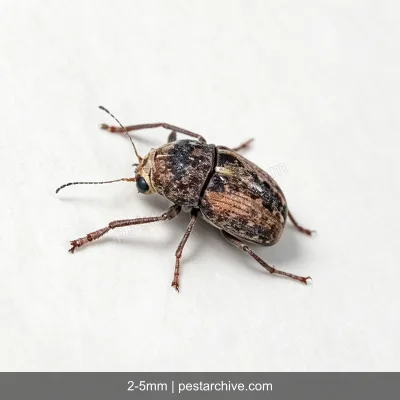
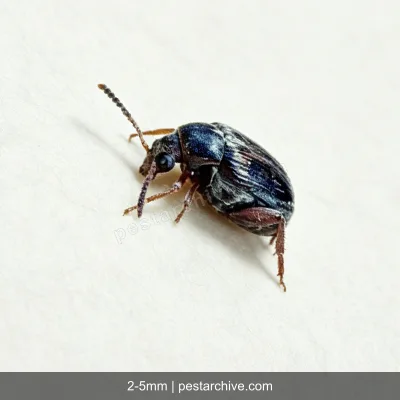
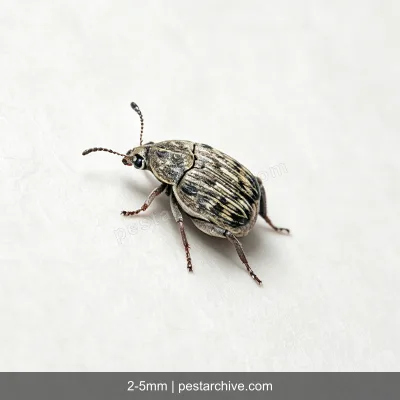
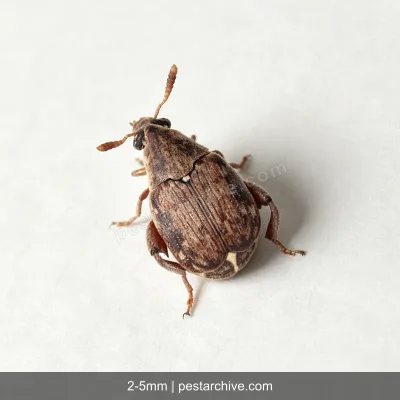
Bean weevils (family Bruchidae) are specialized legume pests. Adults measure 2-5mm, brown to black-brown. Larvae are C-shaped, white, living entirely inside individual beans. The cowpea weevil is the most destructive. Females lay eggs on bean surfaces; larvae bore inside. Development, pupation, and emergence all occur within the bean. At 25-30 C, the cycle takes 4-6 weeks with 4-6 generations per year.
Habits & Hiding Places
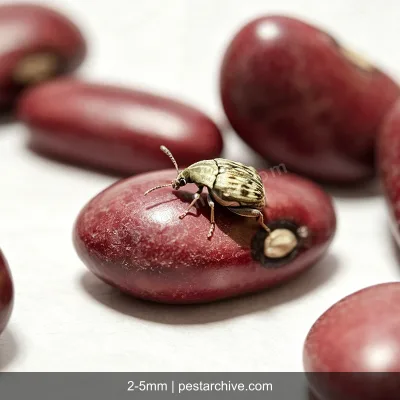
Bean weevils infest mung beans, adzuki beans, soybeans, broad beans, peas, and chickpeas. Different species show host specificity. Indoors, they concentrate in legume storage containers and cabinet crevices. Adults are capable fliers. Year-round breeding occurs in heated homes.
Health Risks & Damage
- Each bean can be hollowed by 1-2 larvae. Over 80% of beans can show exit holes in severe cases.;
- Contaminated beans lose all food quality, cannot sprout, and develop off-flavors.;
- A small infestation can destroy an entire container in 2-3 months at room temperature.;
- Prevention: buy small quantities, freeze, use sealed containers.
Season & Region
Cosmopolitan. Overwinters as adult; emerges to disperse and oviposit after spring warming. Feeds on legume seeds; damages both field crops and stored products. Multiple generations per year; optimal temperature 28–35 °C.
| Region | Active Period | Peak Season | Notes |
|---|---|---|---|
| N. Hemisphere Temperate | May–Oct | Jul–Sep | Highest density in hot summer season |