Scale Insects
(Mealybugs, Soft scales, Giant mealybug)*Drosicha corpulenta* / Coccidae
Identification & Appearance
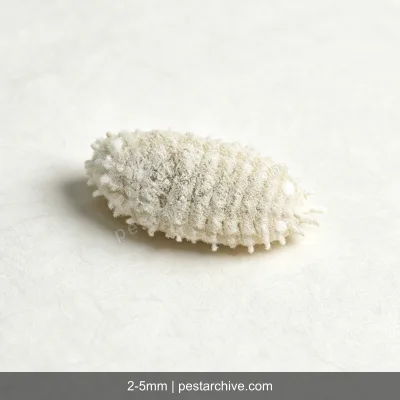
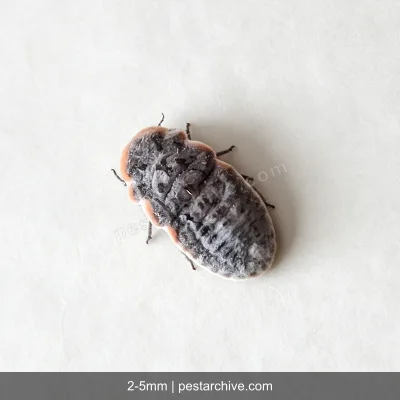
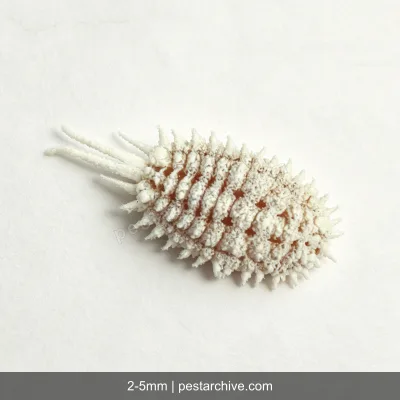
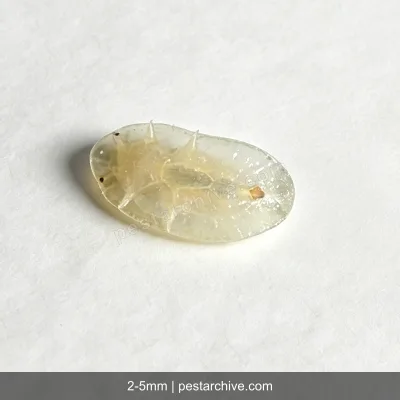
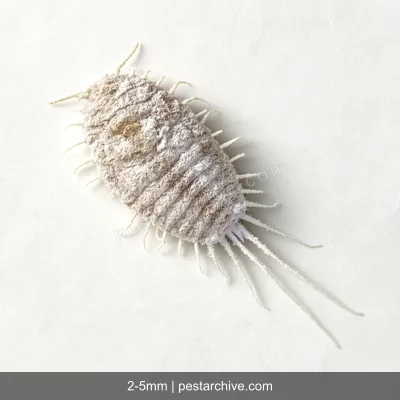
Scale insects (superfamily Coccoidea) are among the most common sap-sucking pests of houseplants. Adults measure 2-5mm, oval to elongate-oval, gray-brown to white, covered in white waxy powder or filaments. Females are wingless and permanently fixed to the plant, sucking sap. Males are tiny and winged. First-instar nymphs (crawlers) are mobile before settling. At 22-28 C, the cycle takes 4-8 weeks with 2-4 generations per year. Their waxy coating provides strong resistance to contact insecticides, making control challenging once established.
Habits & Hiding Places
Scale insects feed on plant sap from a wide range of hosts: pothos, money trees, dracaena, succulents, citrus, and many ornamentals. Indoors, they attach to stems, leaf axils, and leaf undersides. Crawlers move on pot soil surfaces and pot rims seeking feeding sites. They spread through plant-to-plant contact, shared trays, and drainage holes. Newly purchased plants are the primary introduction source. They favor warm, humid conditions with poor ventilation.
Health Risks & Damage
- Sap-feeding causes leaf yellowing, curling, premature drop, and growth stunting. Severe infestations kill branches and entire plants.;
- They excrete honeydew that drips onto leaves and surfaces, promoting sooty mold growth that blocks photosynthesis.;
- A single female can produce dozens to hundreds of crawlers, rapidly infesting all nearby plants.;
- The waxy coating makes standard insecticides ineffective. Use products with penetrative action or treat during the crawler stage.;
- Physical removal with a soft brush and soapy water is effective for light infestations. Quarantine new plants for 2-4 weeks.
Season & Region
Distributed in North, South, and Central China. One generation per year; overwinters as eggs in soil. Nymphs begin hatching and ascending trees Jan–Feb; peak ascent Feb–Mar; peak female adult damage Apr–May. Sucks tree sap; severe infestations cause branch dieback.
| Region | Active Period | Peak Season | Notes |
|---|---|---|---|
| N. Hemisphere Temperate (N/C China) | Jan–Jun | Apr–May | Early spring damage; descend to soil for summer diapause and overwintering |
| N. Hemisphere Subtropical (S China) | Jan–May | Mar–Apr | Earlier onset in southern regions |