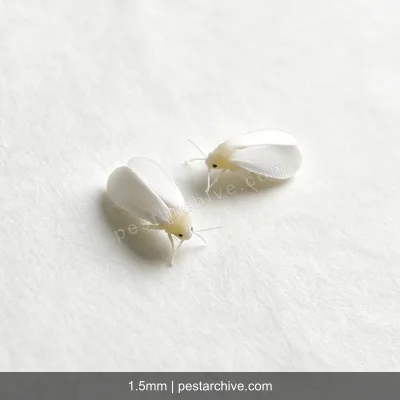
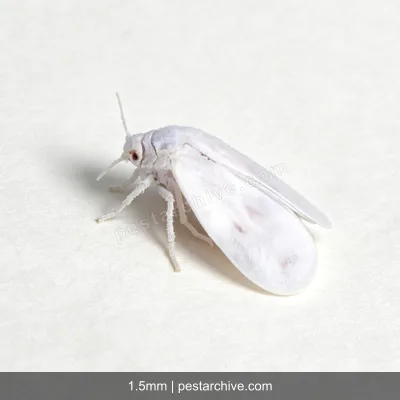
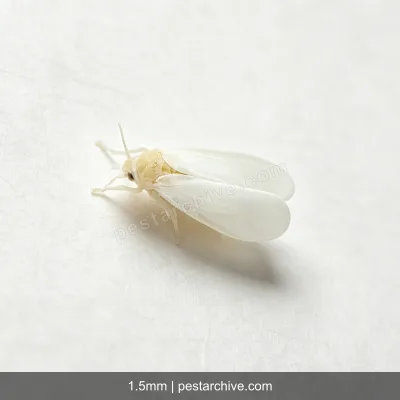
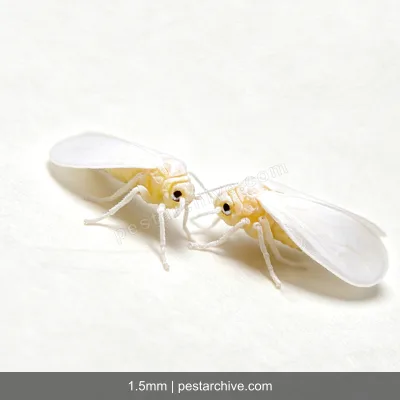
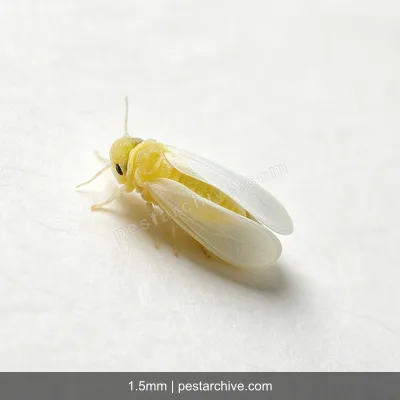
Whiteflies Control & Removal Guide
(Greenhouse whitefly, Silverleaf whitefly, Bemisia)*Trialeurodes vaporariorum* / *Bemisia tabaci*
How They Get In
- New plants carry whitefly eggs laid on leaf undersides — eggs are 0.2mm and invisible to the naked eye.
- Adults at 1-1.5mm enter through window gaps and screens.
- Whiteflies from neighboring balconies and landscaping blow in on wind.
- Overcrowded plants with poor ventilation create ideal outbreak conditions.
How to Get Rid of Them
- Pre-Treatment: Isolate affected plants on a balcony or ventilated area. Hang yellow sticky traps above plants. Ventilate to reduce humidity. Remove pets, children, and food.;
- Key Zones: Leaf undersides (all life stages are here — this is the priority), outer pot surfaces, balcony edges, windowsill gaps, leaf upper surfaces.;
- Application: Spray from below upward — ensure leaf undersides are fully covered. Work slowly and gently to minimize adult dispersal. Spray each leaf underside, then the top. Spray pot exteriors. Avoid indoor spraying toward faces.;
- Post-Treatment: Let dry in ventilated area. Repeat at 7-day intervals for 2-3 treatments (eggs and pupae resist single applications). Maintain yellow sticky traps.;
- Prevention: Quarantine new plants 2-3 weeks. Maintain plant spacing and ventilation. Install insect netting on balconies. Ventilate heated rooms in winter — whiteflies breed fastest in warm, enclosed conditions.
Prevention & Follow-Up
Check the undersides of leaves regularly. If tiny white insects flutter up when you brush the plant, isolate it right away. Hang yellow sticky traps above your plants to catch adult whiteflies. Keep new plants in quarantine for 2–3 weeks—only add them to your plant collection once you are certain they are whitefly-free. Space your plants so air flows well between them. If you heat your home in winter, ventilate regularly—whiteflies can explode in numbers in sealed-up, warm rooms.