What Are Booklice and How to Get Rid of Them?
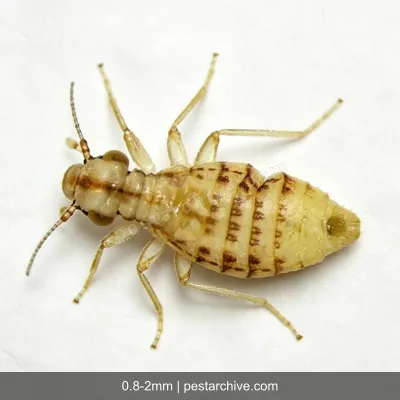
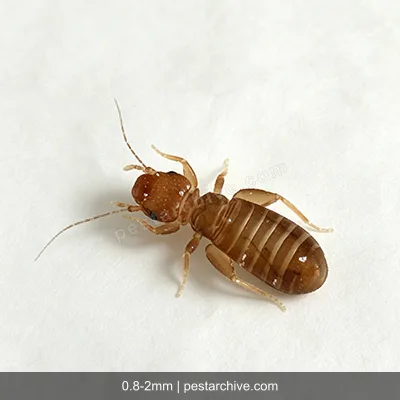
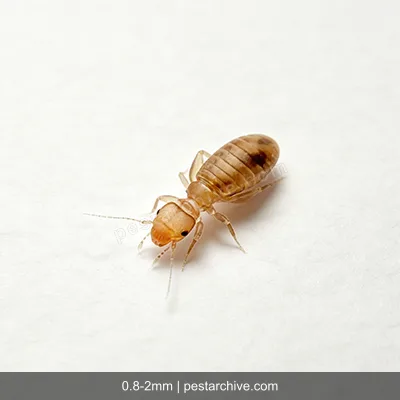
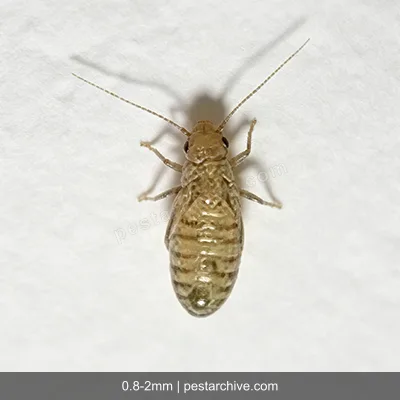
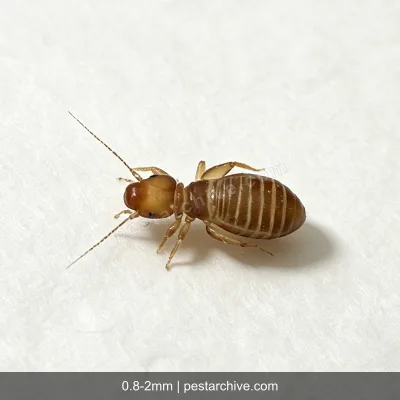
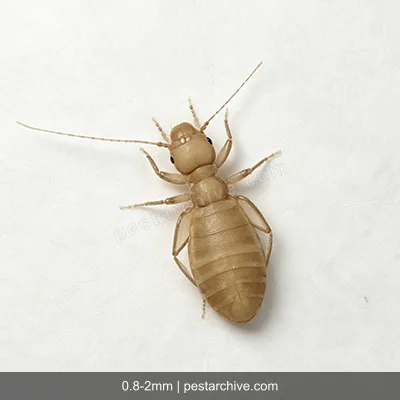
The short answer: Booklice are tiny (1–2 mm) pale insects that feed on mould and starch, they are not true lice and don’t bite. They appear in damp, humid environments (humidity >60%). The simplest control: reduce humidity below 50%, they will dehydrate and die. Also remove mouldy paper, cardboard, and damp clutter. They are harmless but annoying.
- Confirm it’s booklice
- Size 1–2 mm, pale yellowish-white or greyish, soft-bodied, no wings.
- Long thread-like antennae, they crawl fairly fast.
- Often found on damp walls, in old books, behind wallpaper, and in cardboard boxes.
- They are not lice, they belong to a different order (Psocoptera).
- Where do they come from?
- They thrive in high humidity, new renovations with damp wallpaper, basements, and bathrooms are common.
- They feed on mould spores and starchy glues, book bindings, wallpaper paste, cardboard adhesives.
- They can be introduced with infested cardboard, books, or furniture.
- Step 1: reduce humidity (the golden rule)
- Use a dehumidifier to bring indoor relative humidity below 50%, at this level, booklice cannot survive.
- Ventilate rooms, open windows or use exhaust fans.
- Fix leaks and dry out wet areas.
- I’ve seen booklice vanish within 3–4 days of consistent dehumidification.
- Step 2: remove mould and food sources
- Wipe down walls, shelves, and baseboards with a damp cloth to remove mould.
- Throw away damp cardboard boxes, old newspapers, and mouldy paper, these are their main food.
- Store books in dry, ventilated places, use silica gel packs in bookcases.
- Clean behind furniture and in cupboards to eliminate dust and mould.
- Step 3: seal cracks and clean
- Caulk cracks in walls and baseboards to remove hiding places.
- Vacuum corners and crevices to remove eggs and adults.
- Use a HEPA vacuum to trap allergens from mould spores.
- Step 4: chemical control (rarely needed)
- Since they die from dryness alone, insecticides are usually unnecessary.
- However, if you have a persistent problem, you can spray dinotefuran-containing insecticide along baseboards and in wall voids, but it’s overkill if humidity is controlled.
- Long-term prevention
- Keep your home well-ventilated and dry.
- Regularly inspect areas prone to moisture, under sinks, around windows, and in basements.
- Use a hygrometer to monitor humidity, target 40–50%.
Common mistakes
- ❌ Using insecticides without reducing humidity, they will come back.
- ❌ Ignoring mould, it’s their primary food; remove it.
- ❌ Storing items in damp basements, dry them out or relocate.
Mini FAQ
Q: Do booklice damage books?
A: They can feed on the paste and mould on book bindings, but they don’t eat paper fibres like silverfish do.
Q: Can booklice live on humans?
A: No, they are not parasitic; they need fungi and high humidity.
Q: How do I know if my humidity is too high?
A: Use a hygrometer; if it reads above 60%, you’re at risk.
Your booklice control list
- Measure humidity, aim <50%.
- Run dehumidifier and fans.
- Remove damp cardboard, paper, and mouldy items.
- Wipe down shelves with vinegar solution.
- Seal cracks and vacuum.
- Monitor humidity weekly, prevention is simple.